
What Is the Best Laser CNC Machine for Business?
Choosing the best laser cnc machine for business is not simply a matter of buying the most powerful model. The right choice depends on your materials, production volume, workspace, budget, and customer expectations. A small sign studio may need a compact CO2 machine with a reliable exhaust system. A metal fabrication shop may require a fiber laser, stronger cooling, and precise motion control. These differences make general recommendations risky.
Real-world performance often becomes clear beside the machine, not inside a brochure. Consider a workshop cutting acrylic sheets at 3 p.m., with fumes moving toward the operator and unfinished orders waiting nearby. Bed size, cutting speed, autofocus accuracy, noise, maintenance access, and software compatibility can affect daily output. A machine that appears affordable may become expensive through replacement lenses, downtime, energy use, and weak technical support. Service matters.
There is no universal winner. That answer sounds unsatisfying, but it is more honest. Business owners should compare verified specifications, sample cuts, warranty terms, training, and local service availability. Ask suppliers to demonstrate your actual materials, including plywood thickness, acrylic color, or coated metal. Keep production records after installation. Early assumptions may prove wrong. A slower machine with dependable support can outperform a faster model that frequently stops. Safety systems, ventilation, electrical requirements, and operator training also deserve careful evaluation. This guide examines these practical factors, helping businesses choose a laser cnc machine based on evidence, workflow demands, and long-term reliability rather than attractive marketing claims.
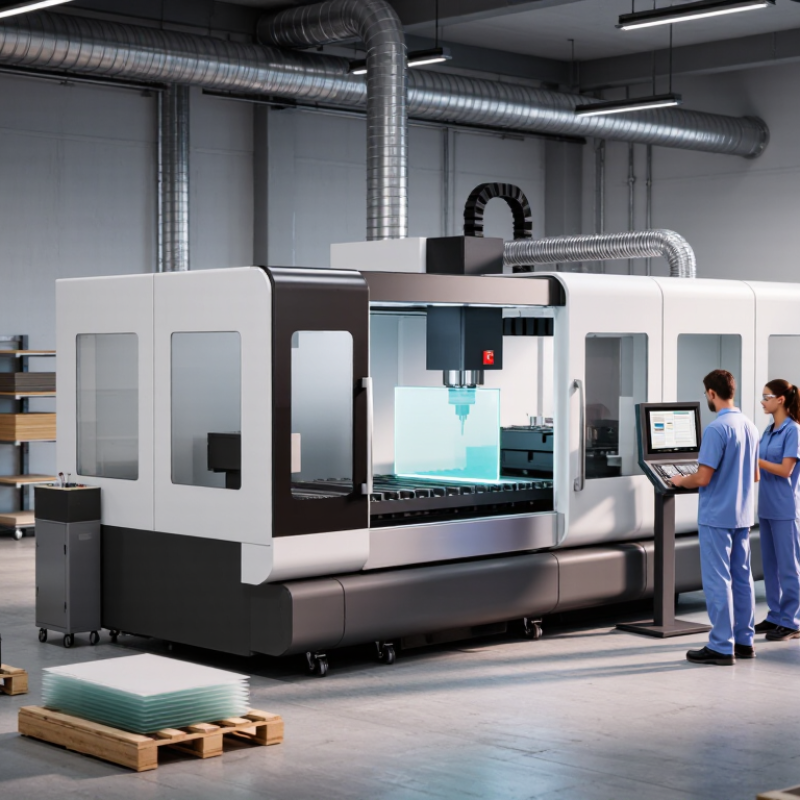
Define Business Requirements: Materials, Thickness, Volume, and Tolerance
What Is the Best Laser CNC Machine for Business?
The best laser CNC machine starts with your actual production requirements. List the materials first: mild steel, stainless steel, aluminum, wood, or acrylic. Each material absorbs energy differently and produces different edge conditions. Then record the maximum and minimum thickness you cut weekly. A machine rated for 25-millimeter steel may perform poorly on delicate 0.8-millimeter sheets. According to Grand View Research, the global laser cutting machine market was valued at approximately USD 5.87 billion in 2023. This growth reflects wider industrial adoption, but market growth does not identify the right machine for every workshop.
Volume changes the decision. A small fabricator may need flexible setup and low maintenance, while a contract manufacturer may require automatic loading, nesting software, and stable cycle times. Measure real jobs for several weeks. Include setup, unloading, cleaning, and failed cuts. I often find that quoted cutting speed looks impressive, yet material handling controls the actual output. That is an easy mistake.
Tolerance must be measurable. Define the required dimensional accuracy for holes, slots, and outside profiles. ISO 9013 provides recognized quality classifications for thermally cut surfaces, while ISO 2768 helps communicate general dimensional tolerances. Ask suppliers for test parts using your material and thickness. Inspect them at room temperature. A claimed tolerance without inspection conditions is incomplete. Your first calculation may be optimistic. Revise it with production evidence.
What Is the Best Laser CNC Machine for Business? - Define Business Requirements: Materials, Thickness, Volume, and Tolerance
| Business Requirement | Typical Requirement | Recommended Machine Profile | Typical Laser Configuration | Practical Capacity | Expected Production Benefit |
|---|---|---|---|---|---|
| Thin sheet metal and prototypes | Carbon steel, stainless steel, or aluminum up to approximately 3 mm; low to medium daily volume; general fabrication tolerance | Compact flatbed fiber laser with manual or semi-automatic loading | Fiber laser, approximately 1–2 kW; nitrogen or compressed-air cutting for many thin-sheet applications | Common bed sizes around 1,500 × 3,000 mm; suitable for short runs, prototypes, and mixed jobs | Lower initial investment, quick job changeover, and reduced setup time compared with mechanical cutting |
| General job-shop production | Carbon steel up to approximately 12 mm; stainless steel and aluminum up to approximately 6–8 mm; varied orders throughout the day | Industrial flatbed fiber laser with automatic height sensing, nesting software, and shuttle-table capability | Fiber laser, approximately 3–6 kW; oxygen for some mild-steel work and nitrogen for cleaner stainless-steel or aluminum edges | Bed sizes commonly from 1,500 × 3,000 mm to 2,000 × 4,000 mm; designed for multi-shift flexibility | Balanced cutting capability, faster material exchange, better sheet utilization, and broad material coverage |
| High-volume sheet production | Repeated orders, large batches, thin-to-medium sheet metal, and extended daily operating hours | High-power fiber laser with automatic loading, unloading, pallet exchange, and production monitoring | Fiber laser, approximately 6–12 kW; automated material handling is often more important than maximum laser power alone | Large-format beds up to approximately 2,000 × 6,000 mm; suitable for continuous or multi-shift production | Higher machine utilization, fewer manual handling steps, improved repeatability, and lower labor cost per part |
| Thick carbon-steel components | Carbon steel approximately 16–25 mm; moderate volume; edge quality and piercing reliability are important | Rigid high-power fiber laser with a reinforced cutting head, stable gas delivery, and automated focus control | Fiber laser, approximately 6–12 kW; oxygen is frequently used for thicker mild-steel cutting, subject to process qualification | Typical working areas from 1,500 × 3,000 mm upward; actual thickness depends on grade, surface condition, power, and process settings | Cuts thick plate without dedicated tooling, while maintaining flexible digital production for different part geometries |
| Tube and structural-profile fabrication | Round, square, rectangular, or channel profiles; repeatable hole and joint features; medium production volume | Combination sheet-and-tube laser or dedicated tube laser with rotary chuck and profile nesting software | Fiber laser, approximately 2–6 kW; power should match the profile material and wall thickness | Common tube capacities are approximately 20–220 mm across, depending on chuck and machine design | Combines cutting and feature creation in one operation, reducing secondary drilling, sawing, and fixture work |
| Non-metal sheets and signage | Wood, acrylic, paper, leather, textiles, or similar non-metals; thin materials; clean edges and low heat input | CO₂ laser with suitable extraction, air assist, honeycomb or knife bed, and material-specific presets | CO₂ laser, commonly approximately 60–150 W for general cutting and engraving applications | Working areas commonly from approximately 600 × 400 mm to 1,300 × 900 mm; maximum thickness varies substantially by material | Good versatility for engraving, personalization, signage, packaging, and short-run decorative products |
| Precision components | Thin stainless steel, spring steel, or specialty alloys; dimensional tolerance around ±0.05–0.10 mm after process validation | Precision fiber laser with calibrated motion system, closed-loop control, stable temperature, and high-quality nesting | Fiber laser, approximately 1–3 kW; fine-cut parameters and controlled assist gas are essential | Usually optimized for thin sheet and smaller batch sizes; tolerance depends on material, geometry, heat, calibration, and inspection method | Improves repeatability and minimizes burrs, but critical dimensions may still require secondary finishing or inspection |
| Large-format architectural or industrial work | Oversized sheets or long profiles; low-to-medium volume; part size is more important than maximum cutting speed | Large-format fiber laser with extended rails, reinforced table, and material support designed for long sheets | Fiber laser, approximately 3–12 kW; select power according to the thickest regular material rather than occasional jobs | Working lengths may reach approximately 6,000–12,000 mm; floor space and loading access must be confirmed in advance | Reduces splicing and repositioning, supports larger finished parts, and can improve nesting for long components |
Related Posts
-
How to Choose a Laser CNC Machine for Your Business
-
How to Choose the Best Laser Cutter Engraver?
-
How to Choose the Right Laser Cutting Table?
-
China Best Laser Cutting and Engraving Machine Supplier?
-
Top 10 Laser Cutter Engraver Machines for Global Buyers
-
10 Tips for Choosing a Laser Cutter Engraver?
