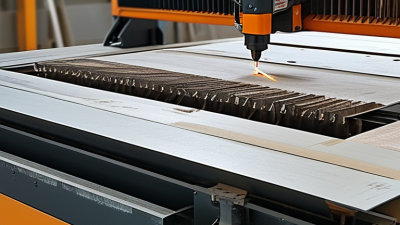
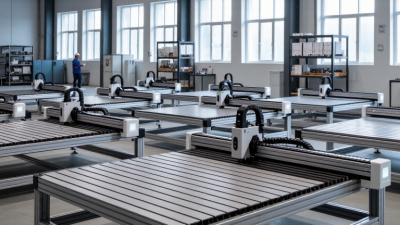
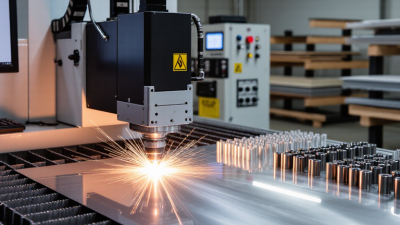
China has become a significant manufacturing base for industrial laser equipment and its supporting components. This includes the laser table, which supports cutting, welding, engraving, and automated material handling. A stable table directly influences positioning accuracy, cutting speed, and long-term operating costs.
Industry reports show continued demand. Grand View Research valued the global laser technology market at approximately USD 18 billion in 2023 and expects strong growth through 2030. MarketsandMarkets also identifies automation, fiber lasers, and precision manufacturing as major market drivers. These trends create opportunities for Chinese laser table manufacturers and suppliers. However, market growth does not guarantee consistent quality.
Small details matter.
A well-built table should provide a rigid frame, reliable leveling, suitable load capacity, and effective fume management. Buyers should also examine welding quality, surface treatment, replacement parts, installation support, and documented testing procedures. Suppliers with ISO 9001 systems, traceable production records, and practical export experience usually offer stronger purchasing confidence. CE-related documentation may also matter for buyers serving regulated markets, but certificates should be verified rather than accepted casually.
This guide reviews China’s leading laser table manufacturers and suppliers through a practical purchasing lens. It considers engineering capability, customization, production experience, quality control, delivery performance, and after-sales service. Some supplier information changes quickly, and public claims are not always equally reliable. Therefore, factory audits, sample testing, and clear technical specifications remain essential. A polished catalog is useful. Real performance is better.
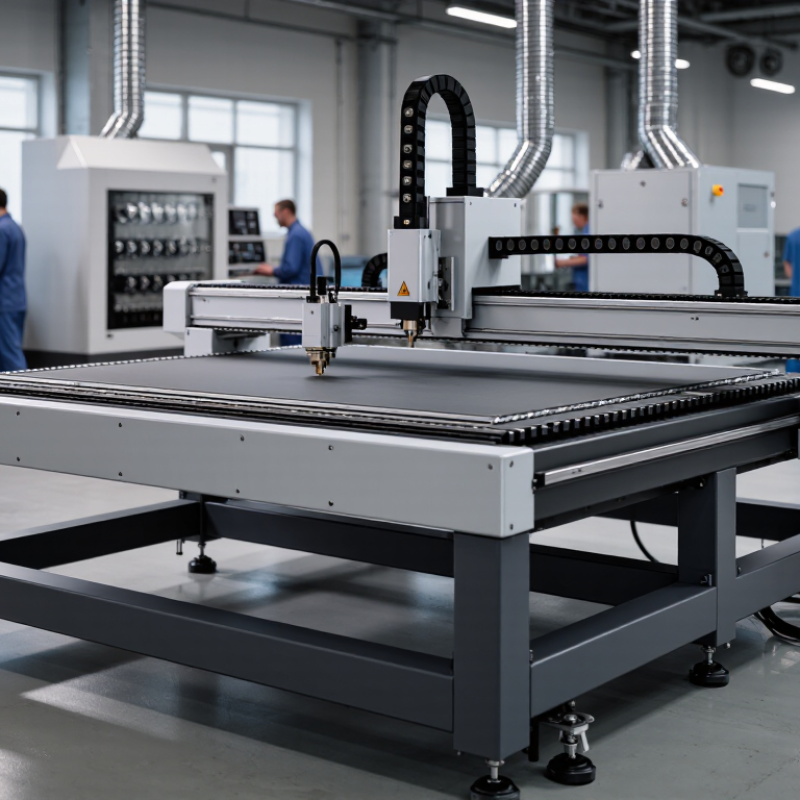
A laser table is the working platform beneath a laser cutting head. It supports metal, wood, acrylic, or other approved sheet materials during processing. Common designs use metal slats, pins, or a honeycomb surface. These structures reduce contact with the material and allow smoke to move downward. The table may also include a water bed, exhaust channels, or adjustable supports.
During operation, the laser head follows digital cutting paths. A focused beam concentrates heat into a tiny area, melting, burning, or vaporizing the material along that path. Assist gas helps remove debris and can improve the edge finish.
An extraction system draws away smoke and fine particles. The table itself does not create the laser beam. It provides stability, ventilation, and controlled clearance beneath the workpiece.
In workshop practice, small height errors can produce rough edges or incomplete cuts. This detail is easy to miss. A dependable table should resist vibration, maintain a flat surface, and allow simple cleaning. Buyers comparing Chinese manufacturers and suppliers should check load capacity, slat replacement, extraction design, software compatibility, and documented safety testing. Material guidance also matters. Unknown plastics may release dangerous fumes, so operators should verify composition before cutting. The system is useful, but not foolproof. Regular inspection remains necessary.
China Top Laser Table Manufacturers and Suppliers
Key Types of Laser Tables Available in China
China’s laser-table market serves metal fabrication, signage, furniture, and laboratory applications. MarketsandMarkets projects the global laser cutting machine market to grow from about USD 7.3 billion in 2023 to USD 11.3 billion by 2028. This expansion increases demand for stable, accurately engineered worktables.
Honeycomb tables suit acrylic, wood, leather, and other thin materials. Their grid structure reduces contact marks and supports air extraction below the workpiece. Blade and slat tables are stronger choices for steel and aluminum sheets. They allow debris to fall through, although their surfaces need regular cleaning and alignment checks. Pin tables offer adjustable support for irregular or delicate materials. Flatbed tables, often paired with CNC motion systems, support larger sheets and repetitive production. Some Chinese suppliers also provide modular frames, vacuum beds, and water-cooled platforms for specialized operations.
Tips: Match the table to material, thickness, and cutting power. Ask for load tests, flatness reports, and sample-cut records. Inspect welds and rail alignment before purchase. A polished surface is not proof of accuracy. Noise, smoke extraction, and maintenance access also matter.
In my experience, buyers sometimes choose the largest table available. That can waste floor space and increase operating costs. A smaller, rigid table may produce better results. No design is perfect. Thin slats can deform, while heavy frames may complicate installation. ISO 230-2 testing principles can help verify positioning accuracy, but suppliers should explain their actual measurement method clearly.
Laser tables in China are commonly supplied in several configurations for optical experiments, laser processing, metrology, and precision manufacturing. The chart compares representative nominal table thicknesses used in standard product specifications; it is not a market-share comparison.
Interpretation: Optical breadboards are generally thinner and easier to install, while honeycomb, active vibration-isolation, granite, and rolling laser tables use thicker or more rigid structures to improve stability, load capacity, and vibration control.
Evaluating Chinese laser table manufacturers requires more than comparing online prices. In practical sourcing, I inspect material records, welding quality, and dimensional reports before discussing volume orders. Ask whether the table uses certified steel or aluminum, and request batch traceability. A reliable supplier should explain its cutting, welding, grinding, and surface treatment processes clearly.
Check the working surface with a calibrated straightedge. Small gaps can affect positioning accuracy. Ask for load tests, flatness tolerances, and corrosion-resistant coating details. Photos of a factory floor help, but they are not enough. Request a live video inspection showing measuring tools, production areas, and finished tables. Sample units reveal more than polished brochures. Look closely at weld beads, corner finishing, hole alignment, and packaging protection.
Communication is another practical test. The manufacturer should answer technical questions directly and provide drawings, inspection records, and replacement-part policies. Confirm production capacity, lead times, export experience, and support after delivery. A strong supplier will discuss possible limitations instead of promising perfect results. No factory is flawless. I have seen attractive samples arrive with weak packaging and minor alignment problems. That experience makes pre-shipment inspection essential. It adds cost, but ignoring it may cost more. Evaluate consistency, not just one impressive table.
China’s laser table manufacturing base is concentrated in Guangdong, Jiangsu, Zhejiang, Shandong, and Hubei. These regions combine metalworking clusters, electronics supply chains, and experienced CNC engineers. Guangdong suppliers often serve export-oriented fabrication markets. Jiangsu and Zhejiang support precision machining and automation components. Shandong remains strong in heavy plate processing.
Market data shows sustained demand. Fortune Business Insights valued the global laser cutting machine market at about USD 5.97 billion in 2023. It projects approximately USD 10.22 billion by 2030, with a 7.9% compound annual growth rate. Figures differ across reports. That difference deserves attention, because research firms use different product definitions.
Supplier capability matters more than location alone. A qualified factory should demonstrate cutting tests, positioning accuracy records, and repeatable results on actual customer materials. Inspect the table frame, rack-and-pinion system, laser source compatibility, and fume extraction design. Ask for samples using thin stainless steel, carbon steel, and thicker plate. Real evidence is better than catalog claims.
Many established manufacturers now integrate automatic height sensing, remote diagnostics, nesting software, and loading systems. Some also provide operator training and replacement-part support. However, smaller suppliers may outsource critical components, creating uneven quality between batches. Buyers should audit process control, calibration schedules, electrical safety documentation, and after-sales response times. A factory visit can reveal more than a polished video.
China Top Laser Table Manufacturers and Suppliers
Choosing a Chinese laser table supplier requires more than comparing prices. Start with the table’s actual working conditions. Ask about material thickness, maximum load, laser type, and expected operating hours. A honeycomb bed suits many cutting tasks, while a slat table may handle heavier workpieces better. The choice matters.
Request dimensional drawings and measurable tolerances. Check table flatness, frame squareness, weld quality, and surface treatment. A reliable supplier should explain its inspection process clearly. Ask for inspection records, material certificates, and photographs from production. Do not accept vague claims. During one evaluation, I found a low-cost table with uneven support feet. It looked acceptable in pictures but failed a simple level check.
Communication also reveals engineering ability. Send a detailed specification, including dimensions, mounting holes, electrical requirements, and packaging needs. The supplier should confirm each point in writing. Discuss sample approval before full production. Clarify lead times, spare parts, installation guidance, and response times after delivery. These details are easy to overlook.
A capable factory can provide test data and adapt designs without hiding limitations. Check whether its quality system supports consistent production, not just one impressive sample. Independent audits or a pre-shipment inspection can reduce risk. Still, no document replaces practical verification. Ask how the table is protected against vibration, moisture, and transport impact. A strong wooden crate, sealed hardware, and clear labeling can prevent expensive surprises. The cheapest offer may become costly after delays and modifications.
| Evaluation Dimension | What to Check | Practical Requirement or Reference Data | Documents or Tests to Request | Priority |
|---|---|---|---|---|
| Laser Table Type | Confirm whether the product is a laser cutting bed, welding table, optical breadboard, or modular fixture table. | The table design should match the process, including cutting, welding, engraving, positioning, or optical testing. | Technical drawing, application description, load rating, and installation instructions. | High |
| Working Area and Dimensions | Compare usable working area with the machine envelope and the largest planned workpiece. | Common industrial formats include approximately 1,500 × 3,000 mm and 2,000 × 4,000 mm, but the required size depends on the machine configuration. | Dimensioned CAD drawing, tolerance table, and final inspection report. | High |
| Load Capacity | Review static load, concentrated load, and load distribution across the complete table. | The stated load rating should exceed the maximum workpiece weight and fixture weight with a clear safety margin. | Load-capacity specification, calculation method, and load test record. | High |
| Table Material | Evaluate the steel grade, plate thickness, structural reinforcement, and resistance to heat and impact. | Laser cutting beds commonly use fabricated carbon-steel structures; stainless or coated components may be selected for corrosion-sensitive environments. | Material certificate, weld procedure, structural drawing, and coating specification. | High |
| Flatness and Alignment | Check the flatness of the working surface and the alignment between the table, rails, fixtures, and machine frame. | Require a clearly stated flatness tolerance, measurement length, measurement method, and temperature conditions; do not accept an unspecified “high precision” claim. | Inspection report, calibrated measuring-tool records, and acceptance criteria. | High |
| Hole Pattern and Positioning | Verify hole diameter, pitch, thread type, datum location, and compatibility with existing fixtures. | Common fixture standards include M6 or M8 metric threads and 1/4-20 imperial threads; the selected pattern must match the application. | Hole-pattern drawing, thread-gauge inspection, and sample fixture test. | High |
| Surface Protection | Assess resistance to sparks, slag, abrasion, oxidation, and frequent fixture changes. | Typical options include heat-resistant coatings, replaceable slats, nitrided surfaces, or corrosion-protection treatment, depending on the process. | Coating datasheet, surface-hardness information, salt-spray data where applicable, and maintenance instructions. | Medium |
| Slat or Fixture Replacement | Determine whether worn parts can be replaced without replacing the complete table. | Replaceable consumable parts should be available with defined dimensions, material, and compatible mounting details. | Spare-parts list, replacement procedure, and spare-part quotation. | High |
| Vibration and Structural Stability | Consider vibration, resonance, frame rigidity, leveling feet, and anchoring requirements. | For precision positioning or optical work, request measured vibration or stiffness data rather than relying only on structural appearance. | Structural calculation, vibration test data, anchoring plan, and installation requirements. | High |
| Fume and Waste Management | For cutting applications, check slag collection, extraction openings, drainage, and cleaning access. | The table should support the machine’s fume-extraction design and allow safe removal of slag and accumulated waste. | Airflow or extraction layout, maintenance procedure, and compatibility confirmation. | High |
| Customization Capability | Review the supplier’s ability to produce custom sizes, hole layouts, supports, cut-outs, and automation interfaces. | A capable supplier should provide a controlled drawing approval process before production begins. | Approved production drawing, revision-control record, prototype or sample approval. | Medium |
| Manufacturing Quality Control | Examine welding quality, machining accuracy, dimensional inspection, coating inspection, and traceability. | Quality records should identify the product, inspection date, measured values, acceptance limits, and inspector or inspection process. | Inspection and test plan, welding inspection records, calibration certificates, and final quality report. | High |
| Certification and Compliance | Confirm the certifications relevant to the product, factory, destination market, and intended use. | Request current, verifiable certificates such as an ISO 9001 quality-management certificate where applicable; product-specific compliance depends on the final system and market. | Certificate copies, certificate verification details, material declarations, and applicable compliance documents. | High |
| Lead Time and Production Capacity | Separate engineering time, material procurement, fabrication, finishing, inspection, and shipment preparation. | The quotation should state a realistic production lead time, delivery terms, order quantity, and conditions that may affect the schedule. | Written production schedule, milestone plan, capacity statement, and agreed delivery terms. | Medium |
| Packaging and Export Shipping | Assess protection against moisture, impact, deformation, and corrosion during international transport. | Large steel tables generally require rigid support, lifting points, moisture protection, and packaging suitable for the selected transport method. | Packaging photographs, packing list, lifting instructions, and shipping marks. | High |
| Installation and After-Sales Support | Confirm availability of installation guidance, technical response, spare parts, and warranty conditions. | Support terms should define warranty duration, exclusions, response channel, spare-part availability, and responsibility for installation. | Warranty document, installation manual, service process, and spare-parts policy. | Medium |
| Total Cost of Ownership | Compare purchase price with freight, installation, consumables, maintenance, replacement parts, and downtime risk. | The lowest quotation is not necessarily the lowest-cost option if table replacement, poor flatness, or unavailable parts create operating delays. | Itemized quotation, freight estimate, maintenance schedule, consumables list, and warranty terms. | High |
Note: Actual specifications should be confirmed against the approved technical drawing, inspection standard, machine configuration, and destination-market requirements before purchase.
Please fill out this form and we will get an order or estimate ready for you. Please give us as much detail as you can for us to get started, and we will contact you to finsh the work order.