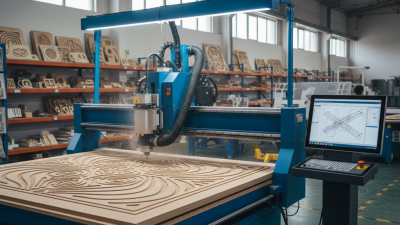
China’s CNC manufacturing sector is becoming more visible among global woodworking, signage, and plastic-fabrication buyers. A cnc router table now combines high-speed spindles, vacuum beds, automatic tool changers, and increasingly precise motion controls. These features matter when cutting plywood sheets, acrylic panels, aluminum composites, or solid wood components.
Market data supports this demand. Grand View Research estimates that the global CNC machine market reached approximately USD 83.99 billion in 2023. It also projects continued growth through 2030, driven by automation, labor shortages, and digital production systems. The International Federation of Robotics reported 541,302 industrial robots installed worldwide in 2023. CNC routers are not robots in the strict classification, but both markets reflect the same manufacturing shift: more repeatable production with fewer manual steps. Definitions vary across reports. That deserves attention.
Manufacturing automation expert Professor Yoram Koren wrote, “The major goal of flexible automation is to increase productivity.” His statement explains why buyers compare more than price. They also examine positioning accuracy, gantry rigidity, software compatibility, service response, spare-parts availability, and documented quality control. This guide reviews ten Chinese manufacturers serving international customers, using practical purchasing criteria rather than promotional claims alone. Factory audits, sample-cutting tests, warranty terms, and export experience should still be verified independently. No ranking is perfect. A machine that performs well in a catalog may behave differently beside a dusty workshop, unstable power supply, or inexperienced operator. That is where careful evaluation begins.
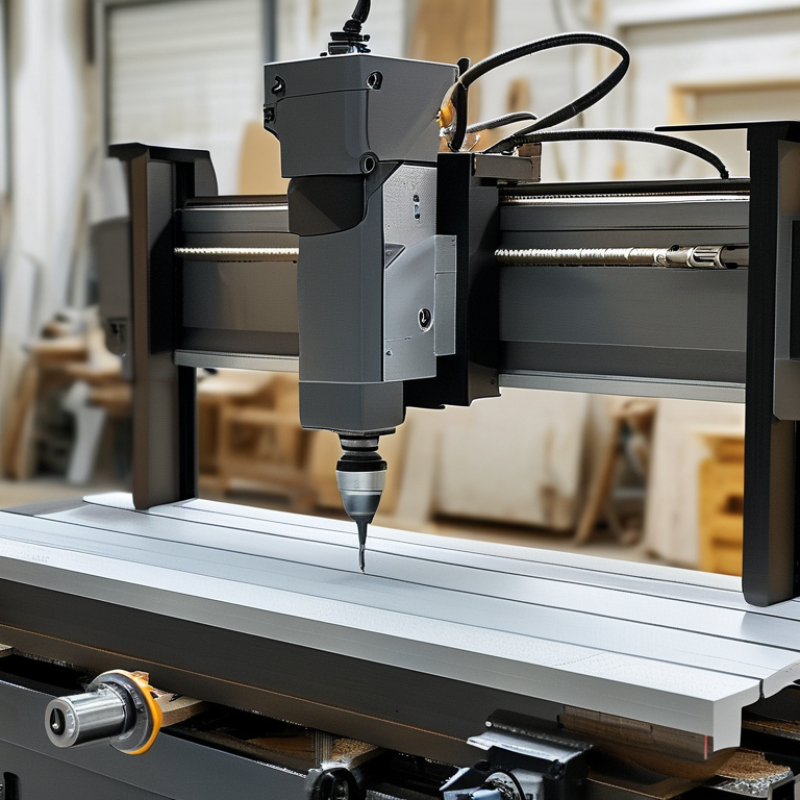
A CNC router table is a computer-controlled cutting system for wood, plastics, composites, and selected non-ferrous materials. It uses a gantry, spindle, bed, and motion controls to follow digital toolpaths. The table holds the workpiece flat while the cutter removes material with measured passes. Its real value is repeatability. A correctly calibrated machine can produce matching panels, signs, cabinet parts, and templates across many production cycles.
Industrial applications vary by material and workload. Furniture factories use routers for nesting sheets and cutting joints. Sign workshops shape lettering and recessed graphics. Manufacturing teams process foam patterns, insulation boards, and lightweight composite panels. A vacuum bed can reduce movement, but it must match the material’s surface and porosity. Poor hold-down causes vibration, damaged edges, and inaccurate dimensions. Small details matter.
Machine selection requires more than comparing cutting size. Buyers should examine spindle power, axis accuracy, software compatibility, dust collection, service access, and operator training. In practical shop testing, feed rate and cutter choice often affect results more than advertised speed. Faster is not always better. I have seen clean designs fail because the table was not leveled carefully. That weakness deserves attention. Regular calibration, tool inspection, and dust control support safer, more consistent production. A reliable supplier should provide clear specifications, traceable quality information, and responsive technical guidance.
Understanding CNC Router Tables and Their Industrial Applications
The chart compares representative CNC router table work envelopes commonly specified for major industrial applications. Values show approximate usable table area in square metres and are based on standard working formats used for sheet goods, panels, composites, foam, and prototypes. Larger work envelopes generally support higher production flexibility, while smaller tables are often preferred for compact workshops and educational use.
Selecting China’s top ten CNC router table manufacturers requires more than online rankings. The comparison begins with documented production experience, engineering depth, and export records. Reviewers examine factory age, machining capacity, controller options, and evidence of repeat orders. A polished website is not enough. It rarely is.
Technical files are requested before scoring begins. These may include spindle specifications, working-area drawings, tolerance data, electrical diagrams, and maintenance schedules. Factory visits add practical evidence. Inspectors watch frame welding, gantry alignment, cable routing, and final calibration. They also question operators about recurring faults. Small details matter. Sample cuts reveal more than brochures. Test pieces are checked for edge quality, dust control, cutting speed, and dimensional consistency. Manufacturers are compared through the same test conditions whenever possible, reducing promotional bias.
Reliability receives a separate score. Reviewers assess warranty language, spare-parts availability, remote support, packing methods, and typical response times. They also check whether electrical documentation and safety provisions match the buyer’s destination requirements. Independent customer references strengthen the assessment, but references can be selective. No ranking is perfectly objective. Some suppliers disclose limited production data, while others provide impressive figures without verifiable records. For this reason, scores should be updated after new inspections, shipment feedback, and service cases. The final list reflects available evidence, not permanent status.
Brand-neutral evaluation table based on measurable technical, compliance, quality, export, and after-sales criteria. Buyers should verify every supplier claim with current documents, machine demonstrations, and reference checks.
| No. | Evaluation Dimension | Weight | Evidence-Based Benchmark | How Global Buyers Compare Suppliers | Verification Documents or Tests |
|---|---|---|---|---|---|
| 1 | Machine Configuration Range | 15% | Availability of 3-axis, 4-axis, or rotary-capable CNC router configurations for wood, plastics, composites, and non-ferrous materials. | Compare whether the manufacturer offers suitable configurations rather than evaluating a single standard model. | Technical catalogue, configuration sheet, sample machining videos, and machine acceptance checklist. |
| 2 | Working Area and Structural Design | 12% | Common industrial router formats include working areas around 1,300 × 2,500 mm, 1,500 × 3,000 mm, and larger custom sizes. | Check usable cutting area, gantry clearance, table flatness, frame construction, and suitability for the buyer’s sheet dimensions. | Dimension drawings, machine layout, frame specifications, flatness test, and factory inspection report. |
| 3 | Spindle and Cutting Capability | 12% | Router spindle power commonly ranges from approximately 3 kW to 12 kW, depending on material, tooling, and production duty. | Compare rated power, maximum speed, collet compatibility, cooling method, duty cycle, and demonstrated cutting results. | Spindle datasheet, electrical rating plate, tooling list, sample workpieces, and load-test records. |
| 4 | Positioning and Repeatability | 12% | Positioning accuracy and repeatability must be stated with a defined test method; figures should not be compared without the same measurement conditions. | Give higher scores to suppliers that provide measured results, test conditions, calibration records, and acceptance tolerances. | Factory inspection report, laser or dial-indicator test, calibration certificate, and buyer-approved FAT protocol. |
| 5 | Control System and Software Compatibility | 10% | Industrial CNC routers should support common toolpath workflows, emergency stop functions, homing, limit protection, and parameter backup. | Compare file compatibility, operator training, remote diagnostics, multilingual manuals, and ease of restoring machine parameters. | Control-system specification, supported file formats, software manual, training plan, and backup-file procedure. |
| 6 | Table, Vacuum, and Workholding System | 10% | Options may include T-slot tables, vacuum tables, hybrid tables, zone control, and dedicated vacuum pumps. | Assess holding force, zoning, sealing method, pump capacity, maintenance access, and compatibility with porous materials. | Vacuum-table layout, pump nameplate, measured vacuum test, zone diagram, and workholding demonstration. |
| 7 | Safety and Regulatory Readiness | 10% | Safety evaluation should cover guarding, emergency stops, electrical protection, dust control, warning labels, and risk assessment. CE marking is a conformity declaration, not a universal quality rating. | Prefer suppliers that provide a complete technical file and adapt electrical and safety documentation to the destination market. | Risk assessment, electrical diagrams, declaration of conformity where applicable, safety manual, and factory safety test. |
| 8 | Quality Management and Traceability | 8% | An ISO 9001-certified quality management system can provide documented process control, but certification should be checked for scope and validity. | Compare incoming inspection, assembly records, serial-number traceability, final inspection, and corrective-action procedures. | Valid certificate, certificate scope, inspection forms, component traceability records, and nonconformity process. |
| 9 | Export Packaging and Documentation | 6% | Export-ready delivery should include a commercial invoice, packing list, shipping marks, installation instructions, spare-parts list, and electrical documentation. | Compare packaging design, moisture protection, lifting points, container loading plan, and completeness of shipping documents. | Packing photos, packing specification, loading plan, sample document set, and insurance or damage-claim procedure. |
| 10 | Technical Support and Total Cost of Ownership | 5% | Supplier value should include commissioning, operator training, spare-parts availability, response times, maintenance guidance, and warranty terms. | Compare the full delivered cost, consumables, replacement parts, service coverage, downtime risk, and expected maintenance workload. | Warranty terms, service-level agreement, spare-parts quotation, training agenda, response-time policy, and customer references. |
| Total Weighted Evaluation Score | 100% | Final ranking should be based on documented evidence, application testing, factory audit results, and destination-market compliance requirements. | |||
China’s leading CNC router table manufacturers serve different production needs, from custom furniture to aluminum sign work.
The strongest suppliers usually operate integrated factories, with machining, electrical assembly, testing, and export teams under one roof.
Some focus on high-speed woodworking tables, while others build heavy gantry systems for longer duty cycles.
Several manufacturers also provide rotary axes, vacuum beds, dust collection, and automatic tool changers.
These options matter when buyers compare real production requirements, not brochure claims.
A reliable manufacturer should show factory videos, machine test records, and clear component specifications.
Ask about spindle brands, control systems, table accuracy, warranty coverage, and spare-part availability.
Experienced suppliers can explain cutting results using material samples.
They should also identify limits honestly.
One supplier may offer impressive speed but weaker rigidity.
Another may provide stronger frames but slower tool changes.
I have found that this trade-off is often overlooked. It deserves closer review.
Tips:
Request a sample cut before ordering. Confirm voltage, software compatibility, packaging, installation support, and operator training.
Check whether service engineers respond within a practical time zone.
Read recent buyer feedback, but treat every review carefully.
A perfect record may sound attractive, yet it can hide missing details.
Inspect the final contract twice. Small omissions can become expensive delays.
For global buyers, the top ten CNC router table manufacturers should be compared through measurable specifications, not attractive catalogs. Check working area, spindle power, positioning accuracy, repeatability, table structure, and maximum material thickness. A 1325 machine may suit standard panels, while larger tables support cabinet or sign production. Ask for cutting samples.
Certifications also require careful checking. ISO 9001 can indicate controlled production processes, but it does not prove machine performance. CE documentation may support European market access, while EMC and electrical safety reports should match the exact machine model. RoHS compliance matters when restricted substances are a purchasing concern. Verify certificate numbers and issuing bodies. Do not rely on copied logos.
Export capability is equally practical. Experienced manufacturers should provide clear quotations, HS codes, wooden-case packing details, manuals, spare-part lists, and realistic lead times. Confirm whether prices use FOB, CIF, or another Incoterm. Remote installation, operator training, warranty response, and local service partners can reduce downtime. In my experience, response speed often reveals more than a polished website. Still, communication quality can change during peak seasons. That deserves a written agreement. A factory may offer impressive accuracy, yet poor packaging can damage that advantage before delivery. Ask for factory inspection records, final testing videos, and a signed acceptance checklist before shipment.
Choosing a Chinese CNC router table supplier requires more than comparing prices. The right partner should prove machine accuracy, service capacity, and export experience. The International Federation of Robotics reported 541,302 industrial robots installed worldwide in 2023. This growth reflects stronger automation demand, but it does not guarantee every factory has reliable production control.
Ask suppliers for test-cut videos, calibration records, spindle specifications, and sample workpieces. Check whether the machine holds tolerance after several hours of operation, not only during a showroom demonstration.
Request references from buyers in your region. Verify response times, spare-part availability, installation support, and technician training. Small details matter.
A supplier should also explain compliance with ISO 12100 and IEC 60204-1 principles. These standards help buyers assess machinery risk and electrical safety. Grand View Research estimates the global CNC machine market will expand strongly through 2030, increasing supplier competition. More choices can help, but brochures often hide limitations. A spreadsheet can still lie.
Use a factory audit when the order value is significant. Review assembly areas, inspection tools, software testing, packaging, and final-run records. Confirm the contract states accuracy tolerances, delivery terms, warranty coverage, and acceptance procedures. I would avoid paying entirely on promised performance. Independent inspection costs money, yet one missed tolerance can cost much more. A top-ten list is useful for screening, not proof of suitability.
Please fill out this form and we will get an order or estimate ready for you. Please give us as much detail as you can for us to get started, and we will contact you to finsh the work order.