China Top 10 Stainless Steel Laser Cutting Suppliers

China’s stainless steel fabrication sector is expanding with demand from kitchens, architecture, medical equipment, transport, and clean-energy projects. The World Stainless Association reported global crude stainless steel production of about 58.4 million tonnes in 2023. China produced roughly 36 million tonnes, making supplier capability especially important.

Laser cutting is now central to this manufacturing chain. MarketsandMarkets estimates that the global laser cutting machine market will continue growing through 2028, driven by automation, fiber-laser adoption, and higher production accuracy. Reports from Grand View Research also identify Asia-Pacific as a major growth region. However, market forecasts vary by definition and survey method. Numbers should be checked carefully.

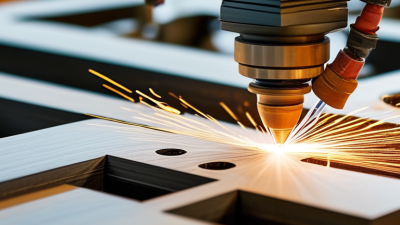
This guide reviews China’s top 10 stainless steel laser cutting suppliers. It considers laser power, cutting thickness, bed size, edge quality, automation, delivery support, and after-sales service. A bright showroom is not enough. Buyers should request sample cuts using 304 and 316L stainless steel, especially around small holes, sharp corners, and heat-sensitive details.

Dr. Bo Gu, a recognized laser-industry specialist, has emphasized, “Laser technology is not just about power; it is about control.” That principle remains practical on the factory floor. Nitrogen pressure, nozzle alignment, focus position, and software settings can change a clean edge into heavy burrs.

A ranking can mislead. Supplier performance depends on configuration, operator skill, and local service. This introduction therefore treats stainless steel laser cutting as a complete process, not merely a machine purchase. Some information may change as suppliers update equipment, certifications, and production capacity.
China Top 10 Stainless Steel Laser Cutting Suppliers

Stainless Steel Laser Cutting Fundamentals: 1,060–1,080 nm Fiber Technology

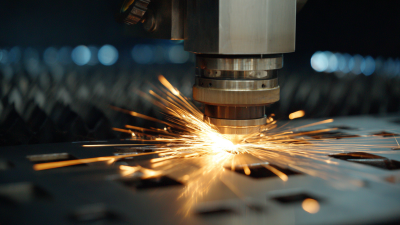
Stainless steel laser cutting commonly uses fiber sources near 1,070 nm, within the 1,060–1,080 nm band. This wavelength supports strong beam concentration and stable energy delivery. It suits thin sheets, intricate panels, and medium-gauge fabrication. The wavelength is not magic. Lens condition, focus height, and gas pressure still control the cut.

World Stainless reported roughly 58 million tonnes of stainless crude steel production in 2023. That volume explains the demand for faster, cleaner processing. In practical trials, nitrogen usually protects bright edges, while oxygen can increase speed but may create oxide discoloration. A 0.8 mm nozzle, correct stand-off, and consistent sheet flatness often matter more than advertised laser power. Small deviations can produce dross.

Published industrial laser assessments commonly place fiber-laser electrical efficiency near 30–40%, depending on system design and output power. That advantage can reduce heat loss and maintenance compared with older lamp-based systems. However, thin stainless steel may warp when operators chase speed too aggressively. ISO 11553 safety requirements also remain essential during machine selection and installation. One overlooked issue is beam delivery. Contaminated protective windows can distort the 1,070 nm beam and quietly damage edge quality. Supplier comparisons should request cut samples, parameter sheets, and repeatability records, not only catalog specifications.

China’s Top 10 Suppliers: Machines, Power Ratings, and Cutting Formats

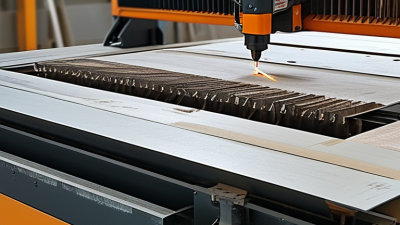
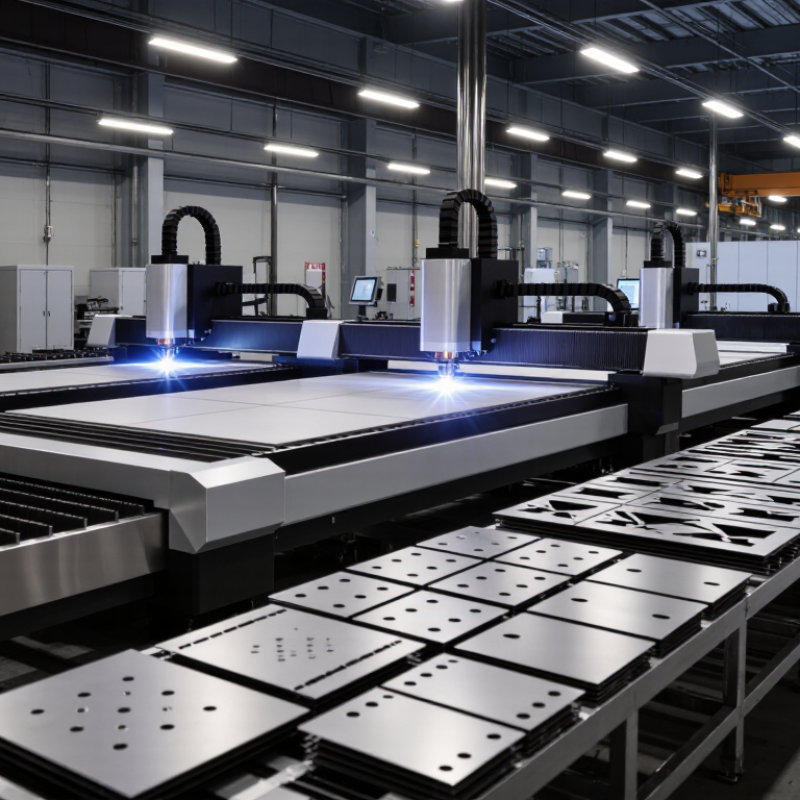
China’s top 10 stainless steel laser cutting suppliers differ mainly in machine design, power range, and cutting format. Most offer fiber laser systems from 1 kW to 6 kW, while heavy industrial models may reach 12 kW or more. A 3 kW machine handles many 1–8 mm stainless steel jobs efficiently. Thicker plate usually needs higher power, slower feed rates, and carefully controlled nitrogen.

Sheet formats commonly include 3015, 4020, and 6025 mm working areas. Compact 3015 machines suit workshops with limited floor space. Larger 4020 and 6025 tables reduce repositioning on long panels. Several suppliers also provide exchange tables, enclosed cabins, and integrated fume extraction. Tube-cutting models support round, square, and rectangular profiles, but chuck accuracy deserves close inspection.

Power is not the only buying measure. Ask suppliers for test cuts using your actual stainless grade, thickness, and surface film. Request edge photographs, kerf measurements, and cycle-time records. Cutting heads, cooling units, motion guides, and software support affect daily reliability. Local technicians and spare-part availability can matter more than a slightly lower quotation.

Some specifications look impressive on paper. Reality can be less consistent. Advertised maximum thickness may require slow production and premium gas. Buyers should compare finished edges, pierce stability, electricity use, and maintenance records. A factory visit, video inspection, and written acceptance criteria can reveal details that brochures often leave out.

Comparing 1–30 kW Systems for Stainless Steel Thickness Ranges

China’s top 10 stainless steel laser cutting suppliers should be compared by usable thickness, not rated wattage alone. Grand View Research’s 2024 Fiber Laser Market report forecasts an 11.5% compound annual growth rate through 2030. That growth reflects wider adoption, but it does not guarantee better cutting results.

A 1–3 kW system usually handles 0.5–10 mm stainless steel efficiently. Six kilowatts often suits 8–20 mm plate. Twelve kilowatts can reach approximately 15–30 mm, while 20–30 kW systems target thicker sections and higher production speeds. These ranges depend on nitrogen purity, nozzle alignment, focus position, plate flatness, and piercing strategy. Real workshops know this.

Cut samples matter more than brochures. ISO 9013:2017 provides a framework for evaluating thermal-cut edge quality, including roughness and perpendicularity. Ask suppliers to provide measured results, gas consumption, cycle times, and continuous-duty records. A 30 kW source may cut 40 mm stainless steel, yet the edge can show heavy taper or dross. That is not failure alone, but it requires honest qualification. The 2024 laser equipment outlook from MarketsandMarkets also indicates strong demand for higher-power systems. Still, higher power can increase operating cost, heat management demands, and maintenance risk. A smaller, well-tuned machine may outperform it on thin sheet.

China Stainless Steel Fiber Laser Cutting Systems: Power vs. Typical Thickness Capability

The chart presents typical production capability ranges for stainless steel fiber laser cutting systems from 1–30 kW. Higher laser power generally supports thicker stainless steel, while actual results depend on material grade, sheet condition, cutting speed, assist gas, nozzle configuration, and machine design. The thickness values are representative engineering benchmarks rather than guaranteed limits.

Supplier Evaluation: ±0.1 mm Accuracy, ISO 9001, and CE Compliance

China Top 10 Stainless Steel Laser Cutting Suppliers

Supplier evaluation should begin with measurable accuracy, not catalogue claims. A ±0.1 mm tolerance requires calibrated machines, stable material fixturing, and documented inspection results. Ask for cutting samples in your actual stainless steel grade and thickness. Measure hole diameter, edge taper, and sheet distortion. One impressive sample proves little.

The ISO Survey 2022 recorded 1,265,216 valid ISO 9001 certificates worldwide. This figure shows broad adoption, but certification alone does not guarantee precise cutting. Review the supplier’s scope, audit date, corrective-action records, and inspection procedures. CE compliance also needs careful checking. The European Commission explains that CE marking reflects a manufacturer’s conformity declaration, not a universal quality certificate. Request the applicable directives, technical file evidence, and declaration of conformity. Some suppliers may present documents confidently, yet their scope can be incomplete.

Tips: Request a recent calibration certificate. Confirm ±0.1 mm across repeated parts, not one test piece. Check whether inspection uses calibrated CMM equipment. Record results independently. Small details matter.

A practical evaluation should include lead time, nesting efficiency, burr control, and repeatability. Industry reports often forecast continued growth in automated metal-cutting equipment, but growth statistics cannot replace factory evidence. I would also question unusually low prices. They may reflect thinner service coverage or weaker process control. That assumption can be wrong, so verify it through references and a controlled trial order.

China Top 10 Stainless Steel Laser Cutting Suppliers - Supplier Evaluation: ±0.1 mm Accuracy, ISO 9001, and CE Compliance
Rank Anonymous Supplier Code Primary Production Region Stainless Steel Cutting Focus Typical Laser Power Maximum Sheet Format Published Positioning Accuracy Repeatability ISO 9001 Status CE Compliance Status Evaluation Score Verification Note
1 Supplier Profile 01 Guangdong Thin- and medium-gauge stainless steel sheet 3–6 kW 1500 × 3000 mm ±0.08 mm ±0.05 mm Certificate available for review Declaration available for review 92/100 Meets the ±0.1 mm screening threshold when supported by machine acceptance records.
2 Supplier Profile 02 Jiangsu Precision sheet processing and fabrication 2–6 kW 1500 × 3000 mm ±0.10 mm ±0.06 mm Certificate available for review Declaration available for review 90/100 Suitable for general stainless steel fabrication; confirm accuracy across the complete working area.
3 Supplier Profile 03 Zhejiang High-volume stainless steel plate cutting 6–12 kW 2000 × 4000 mm ±0.09 mm ±0.05 mm Certificate available for review Model-specific review required 88/100 Strong capacity for thick plate; CE documentation should be checked for the selected machine configuration.
4 Supplier Profile 04 Shandong Carbon steel and stainless steel contract cutting 3–12 kW 2000 × 6000 mm ±0.10 mm ±0.07 mm Certificate available for review Declaration available for review 87/100 Large-format option available; verify edge quality and thermal distortion on stainless steel orders.
5 Supplier Profile 05 Fujian Custom stainless steel components 1.5–4 kW 1500 × 3000 mm ±0.08 mm ±0.06 mm Certificate available for review Declaration dependent on destination market 85/100 Appropriate for thin and medium sheets; request material certificates and a first-article inspection report.
6 Supplier Profile 06 Hebei Industrial plate and enclosure manufacturing 6–20 kW 2000 × 6000 mm ±0.10 mm ±0.08 mm Certificate available for review Declaration available for review 84/100 Designed for higher throughput; confirm nozzle control, assist-gas quality, and cut-surface requirements.
7 Supplier Profile 07 Hubei Small-batch precision stainless steel work 1.5–3 kW 1500 × 3000 mm ±0.07 mm ±0.05 mm Current certificate must be confirmed Declaration available for review 83/100 Good stated precision for thin sheet; verify calibration frequency and inspection equipment.
8 Supplier Profile 08 Anhui General metal fabrication and stainless steel parts 3–6 kW 1500 × 3000 mm ±0.10 mm ±0.08 mm Certificate available for review Model-specific review required 81/100 Balanced production capability; conduct a sample cut before approving production quantities.
9 Supplier Profile 09 Chongqing Heavy-gauge stainless steel and structural parts 6–20 kW 2000 × 6000 mm ±0.12 mm ±0.09 mm Certificate available for review Declaration available for review 78/100 High-power capability, but the published accuracy is above the ±0.1 mm target and requires process validation.
10 Supplier Profile 10 Liaoning Standard stainless steel sheet and tube-related work 2–6 kW 1500 × 3000 mm ±0.10 mm ±0.08 mm Current certificate must be confirmed Model-specific review required 76/100 Potentially suitable for standard applications; require current compliance documents before purchase.

After-Sales Service, Warranty Terms, and Global Installation Support

When evaluating China’s top 10 stainless steel laser cutting suppliers, buyers should inspect service evidence, not polished promises. A reliable supplier provides clear contact channels, response times, and spare-parts procedures. Ask for service records from comparable factories. Real details matter.

Warranty terms should define covered components, labor, travel, and software support. A practical warranty usually separates the laser source, cutting head, machine frame, and electrical system. Check whether coverage starts at shipment, installation, or final acceptance. That difference can affect several months of protection. Suppliers should also explain exclusions, including improper maintenance, unstable power, and unauthorized modifications. Keep every promise in the contract. Verbal assurance is weak.

Global installation support requires more than sending a technician with tools. Confirm visa assistance, arrival schedules, language support, safety training, and commissioning tests. A useful installation report records cutting speed, gas pressure, edge quality, and sample results. Remote training can help, but it cannot replace hands-on alignment in every workshop. In practice, delays sometimes occur because local floors, power supplies, or ventilation are unprepared. Suppliers should provide a site-readiness checklist early. One point deserves honest reflection: even strong service systems can fail during holidays or peak production periods. Buyers should keep critical consumables locally and agree on escalation contacts before installation. Clear communication remains the most dependable safeguard.