
Top Metal Engraving Suppliers for Global Buyers
Choosing reliable metal engraving suppliers requires more than comparing prices and polished catalogues. Global buyers must examine technical skill, material control, production capacity, and communication practices. A supplier may offer beautiful samples but struggle with repeat orders. That gap matters.
Sam Alfano, a respected engraving instructor and professional engraver, often emphasizes that “engraving is a craft built on controlled cuts and patient practice.” His principle applies to industrial suppliers as well. Precise rotary engraving, laser marking, and hand engraving each require different equipment, training, and inspection methods. Buyers should request close photographs of fine lettering, deep cuts, curved surfaces, and small serial details. Ask how suppliers control burrs, uneven depth, discoloration, and alignment.
Details reveal competence.
A dependable supplier should explain its workflow clearly, from artwork verification to final cleaning and packaging. Material experience is equally important. Stainless steel, aluminium, brass, titanium, and coated metals react differently during engraving. Experienced teams adjust speed, power, tooling, and finishing methods accordingly. They should also provide realistic samples before large production begins.
Do not trust promises alone.
A strong evaluation includes factory communication, sample approval, quality records, lead-time evidence, and transparent handling of design changes. Certifications can support credibility, but they do not replace practical verification. Buyers should confirm whether the supplier protects artwork, documents tolerances, and manages export packaging responsibly. Even careful sourcing has weak points. Samples may hide production variation, while attractive websites may reveal little about actual capacity. This guide compares leading metal engraving suppliers through practical criteria, helping global buyers make informed decisions with fewer costly surprises.
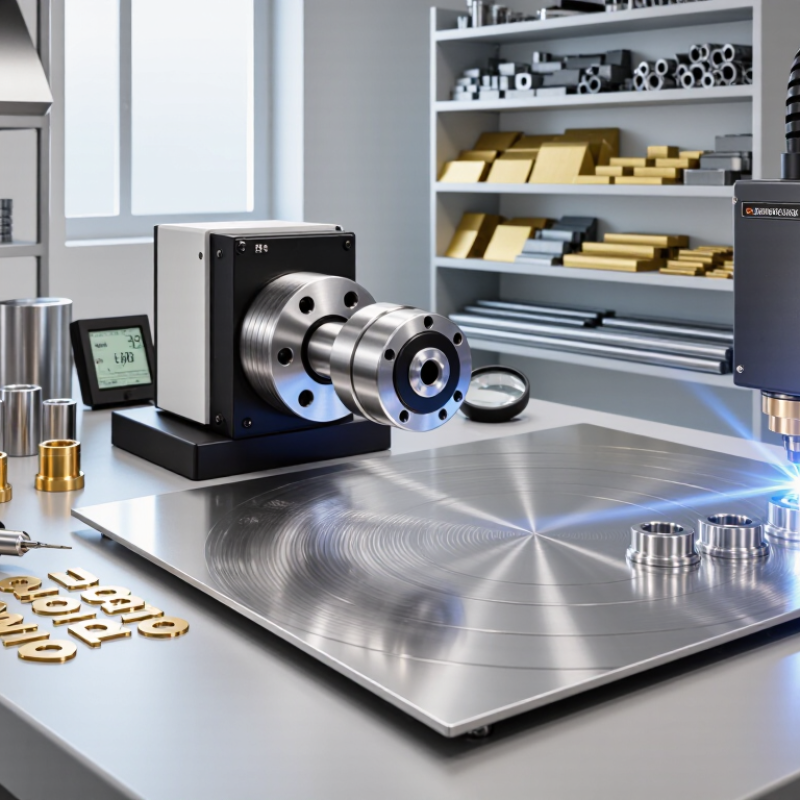
Metal Engraving: Definition, Methods, and Industrial Applications
Metal engraving is the controlled removal or alteration of a metal surface to create readable, durable marks. It supports identification, decoration, measurement, and traceability across industrial products. Unlike printed labels, engraved markings can remain visible after cleaning, handling, and moderate heat exposure.
Common methods include rotary engraving, laser engraving, chemical etching, and CNC engraving. Rotary tools cut physical grooves with a spinning carbide cutter. They work well for nameplates, control panels, and deeper characters. Laser systems change the surface through focused heat, producing fine text, serial numbers, and machine-readable codes. Chemical etching can mark thin sheets efficiently, although chemical handling requires strict process controls. CNC engraving offers repeatable depth on larger metal components.
Material selection changes the result. Stainless steel may need different laser settings than aluminum or brass. Surface finish matters too. A polished panel reflects light differently from a brushed one. Experienced suppliers test samples before production, checking contrast, depth, alignment, and edge quality. Small errors become obvious on a twenty-millimeter label.
Industrial applications include aerospace components, electrical enclosures, medical instruments, tools, valves, and automotive parts. Engraved codes help technicians track parts during maintenance. They also reduce confusion in busy workshops. However, no method suits every order. A first sample can still be wrong. Excessive depth may weaken thin metal, while shallow marks may disappear after finishing. Buyers should request material-specific samples, inspection records, and clear tolerance information before approving production.
Top Metal Engraving Suppliers for Global Buyers - Metal Engraving: Definition, Methods, and Industrial Applications
| Engraving Method | Operating Principle | Suitable Metals | Typical Mark Characteristics | Main Industrial Applications | Key Advantages | Buyer Considerations |
|---|---|---|---|---|---|---|
| Rotary Engraving | A rotating carbide or diamond cutter mechanically removes material from the surface. | Aluminum, brass, copper, steel, stainless steel, and engineering alloys. | Visible recessed grooves; commonly used for shallow to deep engraving, approximately 0.1–3 mm depending on the tool and material. | Control panels, nameplates, machine parts, molds, tools, and identification plates. | Produces tactile marks and supports substantial engraving depth. | Confirm workholding, cutter geometry, minimum character size, burr control, and dimensional tolerances. |
| Fiber Laser Engraving | A focused laser beam changes, ablates, or vaporizes the surface without physical contact. | Stainless steel, carbon steel, aluminum, titanium, brass, copper, and coated metals. | High-resolution permanent marks; surface marking may be micrometre-scale, while deep engraving can reach several tenths of a millimetre in multiple passes. | Serial numbers, QR codes, barcodes, medical instruments, automotive components, electronics, and aerospace parts. | Fast digital changeover, repeatable graphics, low tool wear, and suitability for traceability data. | Specify laser wavelength, mark contrast, heat-affected-zone limits, surface finish, and code-verification requirements. |
| Chemical Etching | A chemically resistant mask protects selected areas while an etchant removes exposed metal. | Stainless steel, copper, brass, nickel, aluminum, and selected specialty alloys. | Uniform recessed graphics with generally shallow depths, often about 0.01–0.5 mm depending on process control. | Decorative panels, instrument scales, electrical nameplates, filters, shims, and precision labels. | Good for thin sheet, fine graphics, batch production, and full-surface decorative patterns. | Review chemical compatibility, waste treatment, undercut limits, edge definition, and environmental compliance. |
| Dot-Peen Marking | A pneumatically or electrically driven stylus creates a series of controlled impact dots. | Steel, stainless steel, aluminum, cast iron, and other durable metal components. | Indented dot-matrix characters and two-dimensional codes; typical indentation depth is controlled by force and material hardness. | Automotive parts, heavy equipment, structural components, tools, and safety-critical traceability marking. | Permanent, readable under wear, and effective on rough or untreated surfaces. | Check vibration, noise, surface deformation, code readability, and whether impact marking is acceptable for fatigue-sensitive parts. |
| Electrochemical Marking | Low-voltage electrical current and an electrolyte transfer or darken a design through a stencil. | Stainless steel, carbon steel, nickel alloys, cobalt alloys, and selected conductive metals. | Dark oxide or light etch marks with shallow penetration, commonly used where heat input must be minimized. | Surgical instruments, food-processing equipment, tools, valves, and stainless-steel identification plates. | Low thermal effect, portable equipment, and clear marking on conductive metal surfaces. | Define stencil life, electrolyte handling, corrosion resistance, cleaning procedure, and mark permanence. |
| CNC Engraving | A computer-controlled cutting tool follows programmed vector paths across flat, curved, or three-dimensional surfaces. | Aluminum, brass, copper, steel, stainless steel, titanium, and hard plastics used with metal assemblies. | Accurate recessed lettering, logos, scales, and geometries; depth is programmable and depends on tool size and machine rigidity. | Aerospace fixtures, industrial machinery, molds, dies, precision panels, and prototype components. | Supports complex geometry, repeatable production, and integration with machining operations. | Request CAD compatibility, axis travel, surface-fixturing capability, tool runout control, and inspection records. |
Related Posts
-
10 Tips for Laser Engraving Metal?
-
7 Best Laser Engraving Machines for Small Business?
-
How to Choose Custom Laser Cutting Services for Your Project?
-
Unlocking Creativity: How Laser Cutting and Engraving Transforms DIY Projects
-
China Best CNC Laser Cutting Services for Global Buyers?
-
Exploring the Future of Manufacturing with Laser Table Technology
