
7 Custom Laser Cutting Tips for Global Buyers
For global buyers, custom laser cutting can turn a digital drawing into flat parts, brackets, panels, and enclosures. The result depends on more than the machine. Material grade, thickness, kerf, edge quality, and finishing choices all affect fit and cost.
Small details matter. A 2 mm hole placed too close to a bend may distort during later forming. A fine slot can collect burrs, while protective film may leave residue after cutting. These issues are easy to miss on a screen. They become obvious when parts arrive and fail to assemble.
A reliable order starts with clear files and a practical review. Share the material specification, thickness, quantity, tolerances, finish, and intended use. Ask how the supplier handles drawing revisions, first-article checks, inspection records, and export packaging. For long-distance shipments, confirm how parts will be separated and protected from scratches or moisture. Photos are useful, but they do not replace agreed measurements. Even a brief review with the design team can catch costly assumptions early.
The seven tips in this guide focus on choices buyers can verify before production, not promises that every job will be perfect. Compare sample cuts where possible, and confirm critical dimensions in writing. Still, some trade-offs remain. Tighter tolerances can raise cost, and the cheapest quote may omit finishing or inspection. That deserves a second look. Thoughtful questions help buyers reduce avoidable delays and make supplier comparisons more meaningful.
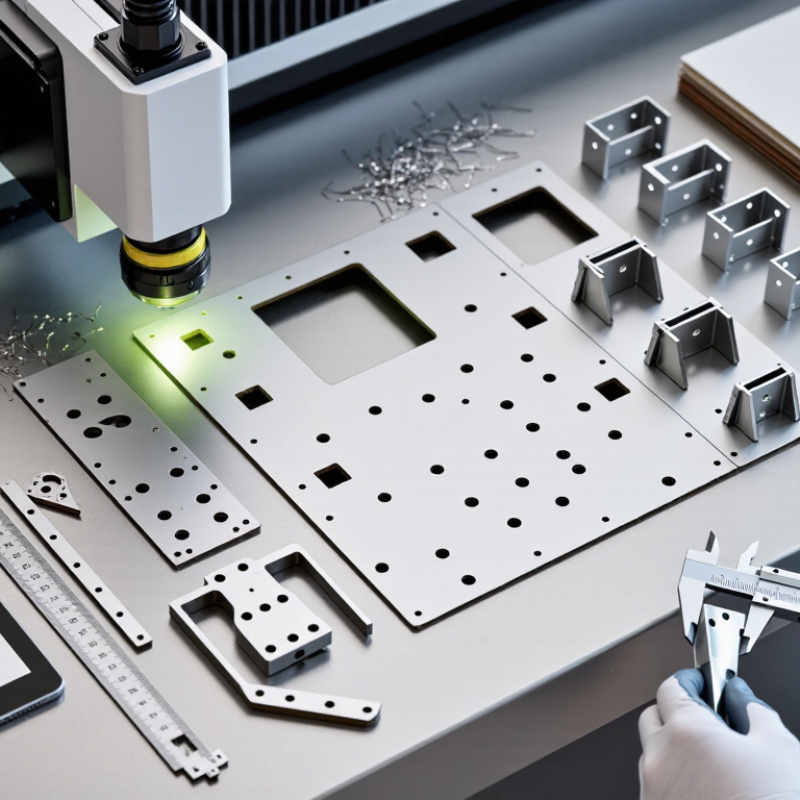
Define the Part Requirements, Materials, and Intended Use
Before requesting a laser-cut part, define what it must do and where it will be installed. Share a dimensioned drawing, units, and the quantity required. Mark critical dimensions separately from features that allow some variation. A mounting hole may need close control, while an outer edge may not. Include bend lines or assembly details if the part will be formed later. Clear requirements reduce guesswork, though a drawing can still miss an important detail.
Choose material for the actual working conditions, not appearance alone. Thin stainless steel can resist moisture, while aluminum may help reduce weight. Consider thickness, heat exposure, contact with other parts, and the finish needed after cutting. Small slots and narrow tabs can behave differently across materials and thicknesses. Ask the fabricator to confirm whether the geometry is practical and whether cutting may leave burrs or heat marks. These details matter. I have seen a tidy drawing become costly when its intended use was unclear.
Tip: Send a sample part or installation photo when possible. State the expected fit, finish, and service conditions. If you are unsure about a tolerance, flag it for review instead of guessing. That small pause can prevent rework.
| Tip | Define This | Example Requirement | Why It Matters for the Intended Use |
|---|---|---|---|
| 1. Specify the part’s function | Describe what the part does, how it is installed, and which features are critical. | A flat mounting bracket with two through-holes; hole spacing is critical for assembly. | Functional priorities help focus inspection and avoid treating noncritical edges or dimensions as equally important. |
| 2. Select a specific material and grade | State the material, grade or alloy, and any required material certification. | 304 stainless steel sheet, with material documentation required for traceability. | Different alloys and grades can vary in corrosion resistance, strength, appearance, and cutting response. |
| 3. Confirm thickness and flatness needs | Provide nominal thickness and any applicable thickness or flatness limits. | 1.5 mm sheet; parts must sit flat against a mating surface after cutting. | Thickness affects fit, weight, stiffness, and process selection; flatness can affect assembly and sealing. |
| 4. Identify critical dimensions and tolerances | Mark critical dimensions on the drawing and assign tolerances only where needed. | A mating slot is specified at 20.0 mm with a stated tolerance; other outline dimensions use agreed general tolerances. | Laser-cut tolerances depend on material, thickness, geometry, and equipment. Confirm achievable limits with the supplier before release. |
| 5. Check holes, slots, and narrow features | Review minimum feature sizes, spacing, and whether holes require a finishing operation. | Small holes are used for fasteners; the supplier reviews their size relative to sheet thickness before production. | Very small or closely spaced features may be affected by material thickness, heat input, and the selected cutting process. |
| 6. Specify edge and surface expectations | State whether burr removal, edge rounding, protective film, or a post-cut finish is required. | Deburred edges for safe handling; no decorative finish required on concealed surfaces. | Clear edge and surface requirements help prevent handling hazards and align appearance with the part’s visibility and use. |
| 7. Share operating conditions and quantity | Include exposure conditions, expected load or use, order quantity, and any inspection or packing needs. | An indoor equipment cover, ordered in a small batch, with parts separated to protect visible faces during transit. | The environment and order plan can influence material choice, finishing, inspection scope, nesting, and protective packaging. |
Note: Examples are for specification planning. Confirm material availability, tolerances, minimum features, and finishing requirements with the cutting supplier for the actual part and process.
Related Posts
-
2026 Top Types of Custom Laser Cutting Services
-

Best Steel Laser Cutting Techniques for Precision and Efficiency?
-

Top 5 Laser Cutting Services You Should Consider Today?
-

Exploring Laser CNC Innovations at the 2025 China 138th Import and Export Fair
-

Top Steel Laser Cutting Solutions for Global Buyers?
-
How to Choose the Right Laser Cutting Table?
