How to Choose a Laser Etching Machine?

Choosing a laser etching machine requires more than comparing wattage and purchase prices. The right system must match the material, marking depth, production speed, workspace, and verification needs. A stainless-steel serial number, a black anodized aluminum logo, and a delicate plastic code require different laser behavior. No machine wins every job.

Industry data shows why this decision deserves careful research. Grand View Research estimated the global laser marking machine market at approximately USD 3.1 billion in 2023, with continued growth projected through 2030. MarketsandMarkets also forecasts strong expansion, driven by traceability, automation, and product identification requirements. These reports indicate rising demand, but their market boundaries and forecasts differ. Treat the numbers as guidance, not certainty.

A practical evaluation should begin with material samples. Test fiber, CO2, or UV sources under real production conditions. Measure contrast, cycle time, heat impact, repeatability, and consumable costs. Watch the edges. They often reveal poor settings before the operator notices them. Software compatibility, rotary attachments, fume extraction, enclosure design, and service response also affect total ownership cost. Safety remains essential; IEC 60825-1 provides a recognized framework for laser product classification and protective controls. A low-cost machine may look attractive, yet downtime can quickly erase the savings. I would also question supplier claims that lack test records, independent specifications, or clear warranty terms. The best choice is not the most powerful machine. It is the system that produces verified results, safely and repeatedly, within the actual workflow.
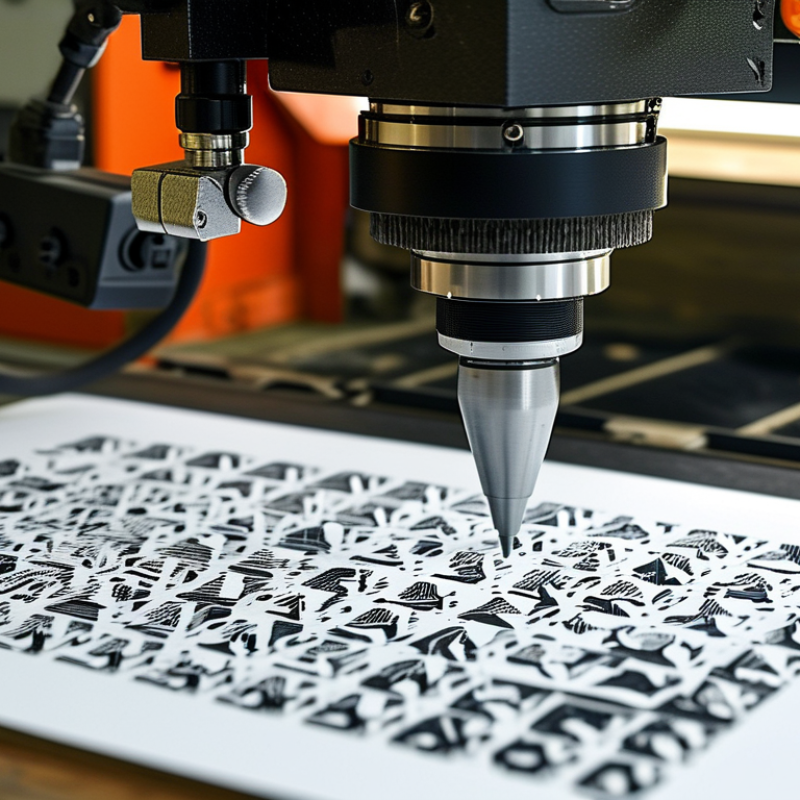
How to Choose a Laser Etching Machine?

Define Your Laser Etching Requirements and Production Goals

Choosing a laser etching machine starts with a clear production brief, not a catalog comparison. Define the material, surface finish, marking area, and required depth. Stainless steel, anodized aluminum, coated plastic, and glass respond differently. Record the smallest text, line width, and symbol you must reproduce. Include photographs of real parts, not only clean samples. A prototype shop may value flexibility, while a factory may need stable cycle times.

Measure daily volume, shift length, and acceptable scrap. If one part requires marking within twelve seconds, test that target with the actual fixture. Request sample trials using your material and production artwork. Inspect contrast, edge sharpness, heat impact, and readability after cleaning.

More power is not always better. Excess energy can distort thin coatings or create unwanted discoloration. My early estimates were too optimistic because I ignored loading time and operator positioning. That mistake changed the calculation.

Specify the work area, focus tolerance, extraction needs, and software workflow before selecting equipment. Check whether operators can adjust recipes without changing critical settings. Request documented maintenance intervals, training, and service response terms. Safety controls should match the installation and local requirements.

Keep test results with machine settings, fixture drawings, and inspection criteria. During one trial, a small fixture shift made the marking appear uneven. The laser was not the real problem. The setup was.

Compare Laser Types, Materials, and Etching Capabilities

Choosing a laser etching machine starts with the material, not the advertised wattage. Fiber lasers suit stainless steel, aluminum, brass, and coated metals. CO2 lasers work better on wood, acrylic, leather, glass, and many polymers. UV lasers create smaller heat-affected zones on sensitive plastics and electronic components. Diode systems can handle selected coatings and wood, but their throughput may be limited.

The difference matters. Marking changes surface color or contrast, while engraving removes material and creates measurable depth. Deep engraving needs stable focus, sufficient pulse energy, and repeated passes. Fine codes need a small spot size and accurate motion control. Grand View Research’s 2024 laser marking machine report estimates the global market will continue expanding at roughly 8% annually through 2030. That growth reflects wider use in traceability, packaging, and industrial components. Still, market growth does not guarantee a suitable machine.

Check samples using your actual material, finish, and production speed. Test scraps matter. The same setting can produce black contrast on steel but unwanted melting on plastic. A 2024 safety report from the U.S. Occupational Safety and Health Administration emphasizes enclosure design, ventilation, and operator protection around industrial lasers. Those features are not optional extras. I have seen buyers compare only power ratings, then discover poor edge quality and excessive fumes. Power is not everything. Confirm wavelength, pulse control, marking field, software support, extraction, and maintenance access before purchasing.

Evaluate Machine Power, Precision, Speed, and Work Area

How to Choose a Laser Etching Machine?

When choosing a laser etching machine, start with power, not marketing claims. Higher power can process materials faster, but it may create excessive heat, dark edges, or unwanted warping. Test samples from your actual material supplier. A small stainless-steel tag and a coated wooden panel can react very differently. In practical trials, I record power, speed, frequency, and pass count for each result. Keep a test log. It saves time later.

Precision depends on more than the stated resolution. Check the laser spot size, focusing method, motion stability, and software control. Fine text needs a steady beam and accurate positioning. Speed matters when production volume grows, yet the fastest setting is not always the most efficient. A rushed pass may produce pale marks or uneven depth.

I once selected a fast setting that looked acceptable on one panel but failed across a larger batch. That mistake changed my testing routine. Never judge performance from one sample.

The work area should match your normal products, with a little extra room for positioning. A larger field can reduce repositioning, but it may affect detail quality or increase equipment cost. Measure your largest workpiece, including fixtures and rotary attachments. Leave clearance around edges. Check ventilation, calibration access, and operator visibility too. Small details matter. Reliable documentation, repeatable test results, and responsive technical support are stronger indicators than impressive specifications alone.

Review Software, Automation, Safety, and Maintenance Features

Choosing a laser etching machine requires more than comparing speed and wattage. In daily production, software often determines consistency. Look for controlled user permissions, revision history, parameter libraries, and job previews. These features reduce accidental edits and make failed batches easier to investigate. Barcode input can also connect each part with the correct marking file. Small details matter.

Automation deserves careful attention. The International Federation of Robotics reported 541,302 industrial robots were installed worldwide in 2023. This growth shows how quickly production environments are becoming connected and automated. A suitable etching machine should support sensors, rotary fixtures, automatic loading, and production data exchange. However, automation without clear fault messages can create expensive confusion. Test recovery procedures before purchase.

Safety features should be practical, not decorative. Check enclosure design, door interlocks, emergency stops, extraction systems, and access controls. The laser’s wavelength and material can affect fumes, reflections, and required protective measures. OSHA and IEC 60825-1 guidance should inform the risk assessment, not replace it. Maintenance access also matters. Inspect lens cleaning, filter replacement, calibration, lubrication, and service records. A machine that needs specialist support for every minor issue may lose production time. I would not trust impressive demonstrations alone. Run sample jobs, interrupt them, and examine the restart behavior. Perfect software is unlikely; transparent failures are more valuable.

Calculate Total Cost and Select the Right Machine Supplier

Choosing a laser etching machine starts with the total cost, not the purchase price. A low quote may exclude lenses, extraction, software, installation, training, and maintenance. Ask for a five-year cost sheet. Include electricity, replacement parts, calibration, downtime, and operator hours. Then test your actual materials, such as anodized aluminum panels or stainless steel tags. Measure contrast, cycle time, rejects, and cleaning effort. A shiny sample proves very little.

Supplier evaluation should be evidence-based. Request references from businesses with similar production volume and material requirements. Ask how quickly they respond when a controller fails or a lens needs replacement. Check warranty terms, spare-part availability, remote support, and technician coverage in your region. A capable supplier should explain laser power, marking area, focus tolerance, ventilation, and safety controls in plain language. They should also provide training records and appropriate documentation.

My first machine estimate was wrong because I ignored setup delays. That mistake taught me to price lost production, not only hardware. Even now, my forecasts are imperfect. Compare at least three detailed proposals using the same test pieces and workload. Require acceptance criteria for speed, depth, readability, and repeatability. Be cautious when a supplier avoids written figures or promises every material can be marked perfectly. No machine does everything well. Leave room for consumables and unexpected repairs. A careful choice may cost more upfront, yet it can protect delivery schedules and product quality.

How to Choose a Laser Etching Machine?

Three-year total cost comparison by machine type, including purchase, installation, maintenance, electricity, and consumables.

Based on representative mid-range market estimates in USD, the fiber laser has the lowest estimated three-year total cost for metal marking. CO₂ systems may be more suitable for non-metal materials, while UV systems provide finer marking quality but usually require a higher initial investment. Before selecting a supplier, compare warranty coverage, service response time, spare-parts availability, installation, and operator training.