Why Choose a Laser Router for Your Business Needs?
In today’s fast-paced business environment, choosing the right tools can significantly impact success. One tool growing in popularity is the laser router. According to renowned expert Dr. Emily Carter, “Laser routers are revolutionizing how businesses approach manufacturing and design.” This statement reflects the increasing reliance on this technology across various sectors.
Laser routers offer precision and efficiency, allowing businesses to create intricate designs with ease. They have transformed traditional methods, minimizing waste and enhancing productivity. However, making the switch to laser routers isn't always simple. Companies may face a steep learning curve and initial investment concerns.
Despite these challenges, the potential benefits are compelling. Many businesses report improved accuracy and faster turnaround times. These advantages can help stand out in competitive markets. As technology evolves, companies that adapt will likely gain a competitive edge. The decision to invest in a laser router requires careful consideration, yet the potential payoff can be substantial.
Advantages of Using a Laser Router in Modern Businesses
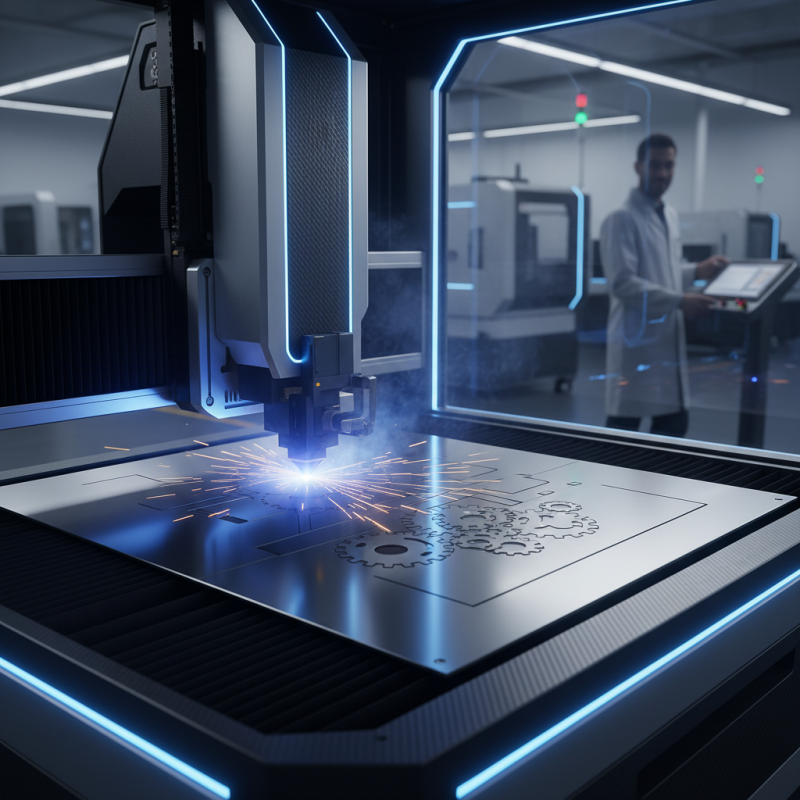
Laser routers have gained popularity in modern businesses for numerous reasons. One major advantage is precision. Laser routers cut materials with incredible accuracy. This reduces waste and ensures that products meet specific dimensions. Errors are minimal compared to traditional cutting methods. Businesses can deliver high-quality products consistently.
Another significant benefit is speed. Laser routers operate quickly, allowing for faster production times. This efficiency can be crucial for meeting tight deadlines. Many companies find that they can increase their output without compromising quality. This balance between speed and quality is often hard to achieve with other tools.
However, businesses must also consider the learning curve. While laser routers can be user-friendly, they still require training. Employees need to understand the technology to maximize its potential. Additionally, maintenance can be challenging. Regular servicing is necessary to keep the machines running smoothly. These aspects should be evaluated before making a decision.
Benefits of Using a Laser Router in Modern Businesses
Key Features to Consider When Choosing a Laser Router
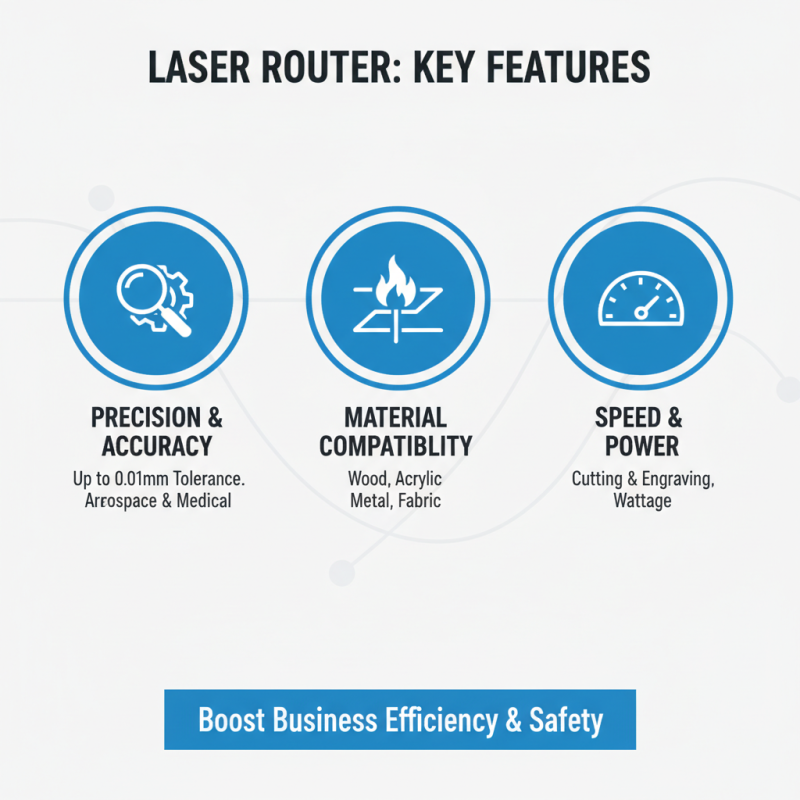
Choosing a laser router involves understanding crucial features that align with your business goals. Precision is one of the key aspects to consider. According to a report from the International Society of Automation, laser routers can achieve cutting tolerances of up to 0.01 mm. This level of accuracy is essential for industries like aerospace or medical, where precision can impact safety and performance.
Speed is another determining factor. Many laser routers can operate at speeds reaching 3,000 mm per second. This efficiency allows businesses to handle high-volume production without sacrificing quality. However, faster speeds can sometimes lead to complications, such as exceeding material thresholds. Understanding the material types and their limits becomes critical to avoiding production flaws.
Flexibility also plays a vital role. Some laser routers are designed to work with various materials, from wood to metals. A study by the Laser Institute of America highlighted that the versatility of laser systems can increase a company's adaptability in an ever-changing market. However, this flexibility comes with a learning curve. Training staff adequately is essential to harness the full potential of these advanced tools.
Applications of Laser Routers Across Different Industries
Laser routers have become integral tools in various industries. Their precision and versatility make them suitable for a range of applications. In the manufacturing sector, they excel in cutting and engraving materials like wood, metal, and plastic. This capability allows businesses to create intricate designs and prototypes efficiently. For example, custom signage and automotive components are often produced using laser routers, showcasing their ability to deliver both speed and accuracy.
In the textile industry, laser routers play a crucial role in fabric cutting. They ensure clean edges and minimize waste, which is a significant concern for manufacturers. In addition, they can be used to engrave logos or patterns directly onto fabrics, enhancing the product's appeal.
The food industry has also embraced laser technologies for cutting pastries or preparing intricate cake designs. Here, the precision of laser routing can elevate presentation and differentiate products in a competitive market.
Despite their benefits, integrating laser routers requires careful planning. Staff training is necessary to utilize these machines effectively. Additionally, businesses must consider the upfront costs and maintenance. Balancing these factors with potential returns can be challenging but essential for long-term success.
Cost Efficiency: Analyzing the Value of Laser Routers for Businesses
Opting for a laser router can significantly impact the cost efficiency of business operations. According to a report by the International Society of Automation, businesses can save up to 30% on materials when using laser routers compared to traditional machining methods. This is primarily due to their precise cutting capabilities. The reduced waste translates directly to decreased operational costs, making laser routers a critical investment for businesses aiming to enhance productivity.
Furthermore, maintenance costs are notably lower with laser routers. A study by the National Institute of Standards and Technology found that laser systems require less frequent servicing than mechanical routers. This reliability ensures minimal downtime and fosters smoother workflow processes. Companies often focus on initial costs but overlook long-term benefits. The overall lifespan of laser equipment can extend operational longevity, and a well-maintained laser router can last over a decade.
Despite these advantages, some businesses remain hesitant to transition. Concerns about upfront costs and training needs persist. It's essential to weigh these challenges against potential returns. Exploring financing options or phased upgrades may provide a viable pathway. Investing in laser technology can be daunting, yet understanding its value proposition is crucial for long-term growth.
Why Choose a Laser Router for Your Business Needs? - Cost Efficiency: Analyzing the Value of Laser Routers for Businesses
| Feature |
Advantages |
Cost Savings |
Long-Term Value |
| Precision Cutting |
High accuracy and detail |
Reduces material waste |
Increased product quality |
| Versatility |
Can process various materials |
Lower investment costs for multiple machines |
Flexible production capabilities |
| Speed |
Faster production times |
Increased output efficiency |
Improved profitability over time |
| Low Operating Costs |
Energy efficient |
Reduced energy bills |
Lower overall maintenance costs |
| Consistent Quality |
Uniform outcomes for all products |
Minimized rework and errors |
Enhanced brand reputation |
Comparison of Laser Routers with Traditional Routing Technologies
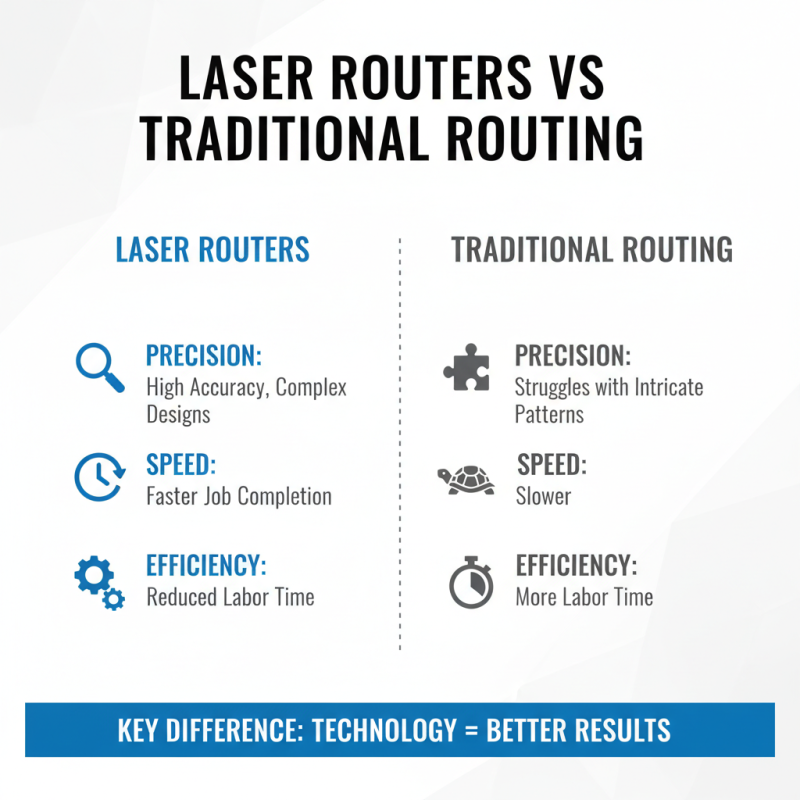
When evaluating laser routers versus traditional routing technologies, several key differences emerge. Laser routers excel in precision. They cut materials with high accuracy, which is vital for complex designs. Traditional routers, however, may struggle with intricate patterns. The difference in technology results in varied cutting speed and efficiency. Businesses often find that laser routers complete jobs faster, reducing labor time.
In terms of material versatility, laser routers can handle a broad range of materials. They work well with wood, acrylic, and metals. Traditional routers may be limited to specific materials, which can restrict design options. Moreover, laser routers minimize material wastage. This is a critical factor for businesses focused on sustainability.
Despite their advantages, laser routers can be expensive to maintain. This upfront investment might cause hesitation for some companies. Traditional routers may have a lower initial cost but could result in higher long-term expenses due to inefficiency. It's essential to weigh these factors carefully. A thorough analysis of operational needs can guide the right decision.