
Top Router Tables for Sale in 2026?
Choosing among the top router tables for sale in 2026 starts with the work you expect to do. A compact bench-mounted table may suit occasional edge shaping, while a larger cabinet model can support longer stock and steadier setups. The best choice depends on your router, available workspace, and tolerance for adjustment.
Look closely at the tabletop’s flatness, fence rigidity, and compatibility with your router’s mounting plate or lift. Check whether the miter slot fits your accessories, and whether the dust port connects to your extraction setup. Small details matter. A fence that shifts under pressure can spoil a cut, even when the router itself performs well. Table dimensions also deserve attention; measure your shop before buying, not after delivery.
This guide compares practical features, intended workloads, and common trade-offs across router tables available in 2026. It does not treat a high price as proof of better results. Instead, it helps you assess build quality, setup convenience, safety features, and long-term value using criteria you can verify in product specifications and manuals. Specs can change. Confirm current availability and compatibility with the manufacturer before ordering. One point is easy to miss: even a well-reviewed table may frustrate you if it consumes too much floor space or requires frequent adjustments. Your ideal table is the one that fits your projects and working habits—not simply the one with the longest feature list.
What a Router Table Is and How It Works
Top Router Tables for Sale in 2026?
What a Router Table Is and How It Works
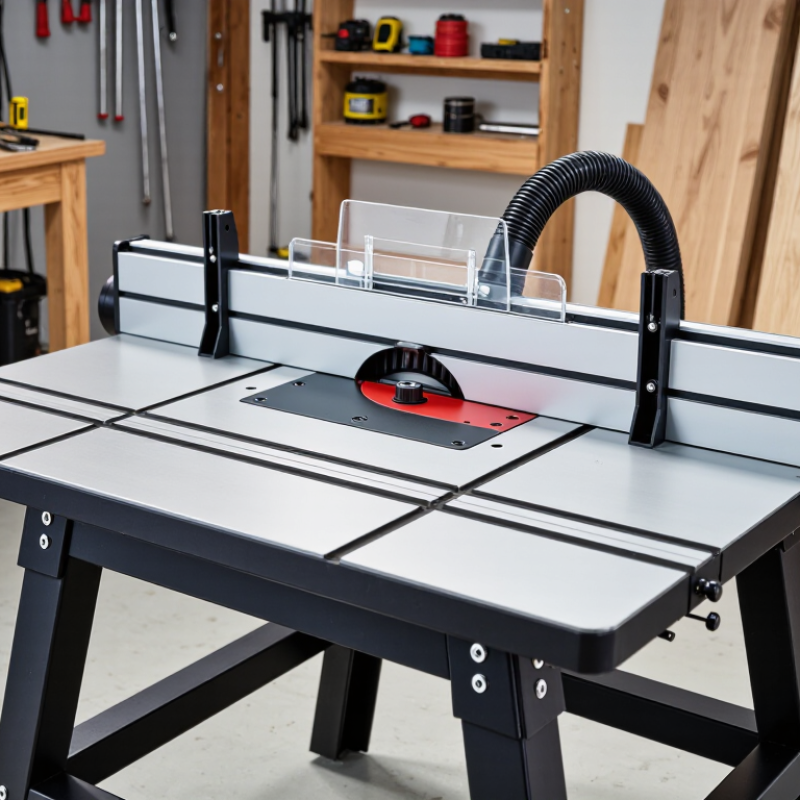
A router table holds a handheld router beneath a flat work surface. The router bit rises through an opening, leaving the workpiece supported above it. A fence guides the wood past the spinning cutter. This setup is useful for repeatable edges, grooves, and shaped profiles. The table does not make every cut safer by itself.
A practical setup starts with a firmly secured router and a bit suited to the job. Choose an insert ring that leaves only a small gap around the bit. Set the fence close, then test the cut on scrap wood. Small details matter. A loose fence can spoil an edge, while a poorly supported board may tip or catch. Feed the work in the direction specified by the router’s instructions, and keep steady pressure against the fence and table.
Guards and featherboards help control the workpiece, but they do not replace careful handling. Keep hands clear of the cutter, and disconnect power before changing bits or making adjustments. Dust collection can also improve visibility around the cut. It is easy to expect perfect results from a table alone; in practice, bit choice, setup, and a little patience shape the outcome. That takes practice.
Top Router Tables for Sale in 2026? — What a Router Table Is and How It Works
A router table holds a handheld router upside down beneath a flat work surface. The bit projects through an opening, allowing the operator to guide the workpiece along a fence or around a bearing-guided bit. The guide below compares common table formats and explains their typical features; dimensions vary by model.
| Table Type or Feature | Typical Dimensions or Specification | How It Works | Suitable Uses | Key Considerations |
|---|---|---|---|---|
| Benchtop router table | Commonly around 16 × 24 inches (41 × 61 cm); sizes vary. | A compact top sits on a workbench or stand. The router mounts beneath the top, with the bit passing through an insert opening. | Small workshops, occasional routing, and workpieces that are manageable on a compact surface. | Check how securely it clamps or mounts, the usable tabletop area, and whether the fence can be adjusted and locked parallel to the bit. |
| Floor-standing router table | Many tops are roughly 24 × 32 inches (61 × 81 cm), with overall height depending on the stand. | A dedicated cabinet or leg stand supports a larger work surface and often provides storage for accessories or dust collection. | Frequent use, longer workpieces, and workshops that have space for a permanent setup. | A stable stand helps reduce movement. Consider the footprint, leveling, dust collection, and available support for long stock. |
| Router table insert plate | A common plate size is about 9¼ × 11¾ inches (23.5 × 29.8 cm); plate openings and patterns are not universal. | The plate sits level in a recess in the tabletop and supports the router. Its center opening provides clearance for the bit. | Tables designed for plate-mounted routers and users who want easier router access or bit changes from above. | Confirm that the plate fits the table opening and router mounting pattern. A level plate prevents the workpiece from catching on an edge. |
| Fence and adjustable faces | Fence length and opening vary; split faces can be adjusted to suit the cutter and workpiece. | The fence guides the workpiece in a straight line. Its opening is set close to the bit while leaving enough clearance for safe operation. | Edge profiles, rabbets, grooves, and other cuts made with a straight, controlled feed. | Use a fence that locks securely. For appropriate cuts, featherboards can help keep the workpiece against the fence and tabletop. |
| Lift-assisted table | Lift travel and adjustment range depend on the lift mechanism and router compatibility. | A mechanical lift raises or lowers the router through the tabletop, allowing bit-height changes from above without reaching beneath the table. | Setups requiring frequent, repeatable height adjustments. | Check compatibility with the router body, collet access, lift capacity, and whether the mechanism holds its setting securely. |
| Router motor and speed control | Router power, collet size, and speed range vary by tool. Many variable-speed routers allow speed selection according to the bit and material. | The motor turns the cutter through the collet. The correct speed depends on the cutter diameter, material, and cutter manufacturer’s guidance. | Routing profiles, trimming edges, and cutting grooves with compatible bits. | Secure the bit in the collet and follow the router and bit instructions. Larger-diameter bits generally require lower speeds than smaller bits. |
| Dust collection | Port diameter varies; many systems connect to a shop vacuum or dust extractor using a matching hose or adapter. | A collection port at the fence, cabinet, or both draws chips and dust away from the cutting area. | Reducing airborne dust and improving visibility during repeated routing. | Match the hose to the port and keep the collection path clear. Dust collection does not replace suitable respiratory protection when needed. |
| Safety and work support | Use guards and supports sized for the cutter, workpiece, and table layout. | The operator feeds the workpiece against the fence or guide while keeping hands clear of the rotating bit. Guards and push blocks provide additional protection. | All router-table operations. | Follow the tool manual, use eye and hearing protection, secure the table, and disconnect power before changing bits or making adjustments. |
Dimensions shown are representative examples, not universal standards. Before purchasing, verify the tabletop size, insert-plate opening, router mounting compatibility, fence features, and available workspace against the product specifications.
Related Posts
-
Unlocking the Potential of CNC Routers for Innovative DIY Projects
-

2025 Top 10 CNC Machining Trends Transforming Manufacturing Industry
-
2026 Best CNC Router for Global Buyers Top Features to Consider?
-
Maximize Your Workspace: The Ultimate Guide to Choosing the Perfect Cutting Table
-
2026 Top CNC Router Models for Precision Woodworking and Metalworking?
-

Emerging Trends in Stainless Steel Laser Cutting Technologies at the 138th Canton Fair 2025 in China
