What is a Vertical Expander Machine and How Does It Work?
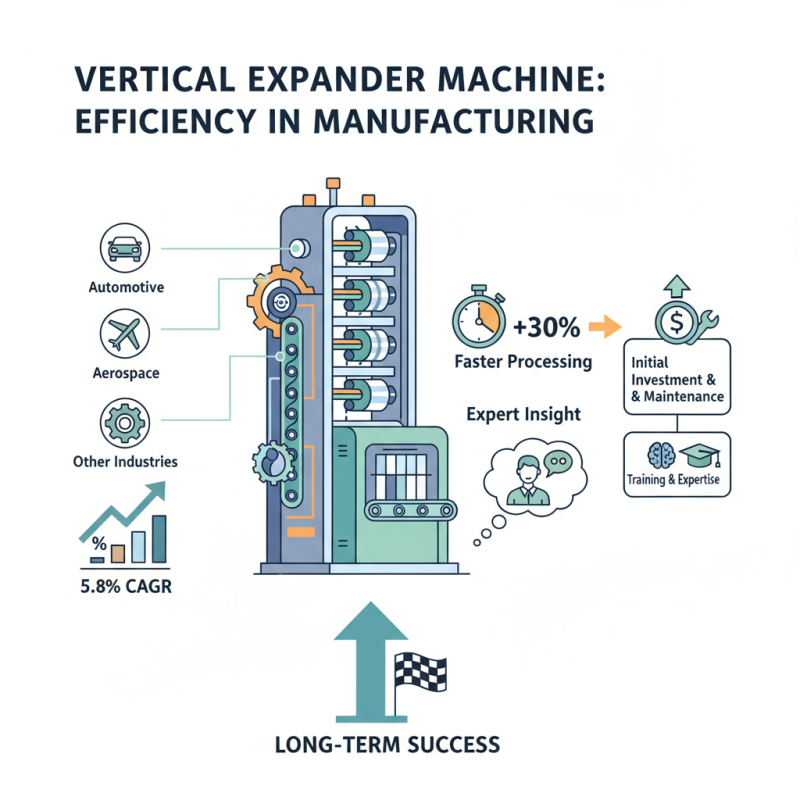
In the manufacturing sector, efficiency is paramount. The Vertical Expander Machine plays a crucial role in enhancing production processes. This machine is designed to expand various materials, making it essential in industries like automotive and aerospace. According to a recent report by Global Market Insights, the vertical expander machine market is projected to grow significantly, with a CAGR of 5.8% through 2028.
Dr. Emily Carter, a noted expert in industrial machinery, states, “Investing in a Vertical Expander Machine can dramatically increase throughput.” Her insight underscores the importance of this equipment in maintaining competitiveness. Recent industry analyses show that companies using these machines report up to 30% faster processing times.
Despite the advantages, businesses must consider potential challenges. The initial investment for a Vertical Expander Machine can be substantial. Additionally, proper training is essential to fully leverage its capabilities. As the demand for efficiency rises, it is crucial to address these concerns to ensure long-term success in production processes.
What is a Vertical Expander Machine?
A vertical expander machine is a vital tool in various manufacturing processes. It operates by stretching and reshaping materials, typically metal or plastic. This machine is primarily utilized in industries like aerospace, automotive, and manufacturing. Its design allows for precise control of material tension and shape.
The working mechanism involves clamping the material at both ends. As the machine operates, it pulls the material vertically. This creates a uniform expansion, allowing for better handling and processing of the material. The machine can adapt to different sizes and thicknesses, making it versatile. Users must regularly monitor the machine's performance. Inefficiencies might arise, affecting the final product quality.
Operators need to understand the machine's specifics for optimal performance. Regular maintenance is crucial. Misalignments or neglect can lead to production delays. It’s vital to train staff thoroughly. The learning curve can be steep, and improper handling may lead to defects. Continuous feedback and adjustment processes are essential for achieving the desired results.
What is a Vertical Expander Machine and How Does It Work?
| Dimension | Value | Description |
| Height | 200 cm | The total height of the machine |
| Width | 150 cm | Width measurement across the machine |
| Depth | 90 cm | Depth of the machine |
| Weight | 500 kg | The total weight of the expander machine |
| Power Usage | 10 kW | Power consumption during operation |
| Application | Metal Processing | Used for expanding metal sheets and components |
| Operating Method | Hydraulic | Utilizes hydraulic mechanisms for expansion |
| Safety Features | Emergency Stop Button | Includes safety measures to protect operators |
Key Components of a Vertical Expander Machine
A vertical expander machine is essential in various industries, particularly in metalworking and manufacturing. Its design includes several critical components. The frame forms the backbone and mounts all other parts securely. It ensures stability during the expansion processes.
Next, the hydraulic system operates the machine's movements. It converts hydraulic pressure into mechanical force. Precision and power come from hydraulic cylinders, which expand materials efficiently. Proper maintenance of this system is crucial. Neglect can lead to inconsistent operations.
Moreover, the control panel allows the operator to monitor and adjust settings. This panel must be user-friendly. Complex controls can lead to mistakes. Additionally, safety features are vital. They protect the operator from potential hazards. However, even with all these components, errors can still occur. Regular training and assessment are necessary to keep operations smooth.
How a Vertical Expander Machine Operates
A vertical expander machine is an essential tool in various industries, particularly in manufacturing and material processing. This machine operates by stretching or expanding materials, usually through a series of controlled movements. The key to its operation is the vertical positioning, which allows for efficient use of gravity and mechanical force.
In this machine, raw materials are placed into a chamber. As the machine activates, it pulls the material vertically, creating an elongation effect. This stretching process can enhance the material’s properties, making it more suitable for specific applications. Operators must carefully monitor the machine settings to avoid overstretching, which could lead to material failure.
Tips for using a vertical expander include regularly inspecting the machine for wear and tear. Calibration is crucial to maintain accuracy. Also, it's beneficial to keep training for operators to recognize the specific needs of different materials. Not all materials respond the same way, and understanding these differences can lead to better outcomes.
While vertical expanders enhance material qualities, erratic operation can lead to pitfalls. For instance, inconsistent tension can cause defects. Awareness and precision are vital. Using this machine effectively takes practice. Operators should not rush and should take note of feedback from the machine during operation.
Applications of Vertical Expander Machines in Various Industries
Vertical expander machines play a crucial role in various industries. They are primarily used for expanding and shaping materials like metal sheets and tubing. This process is essential in sectors such as automotive, aerospace, and construction. The precise control of the expansion process allows manufacturers to create components that fit together seamlessly.
In automotive manufacturing, vertical expanders are vital for producing parts such as exhaust systems. Here, the machines ensure that the tubing is perfectly expanded for a proper fit. In the aerospace industry, lightweight and robust structures are necessary. Vertical expanders help in shaping materials that meet stringent safety regulations while keeping weight to a minimum.
Despite their precision, the use of vertical expanders requires constant calibration and monitoring. Operators must be well-trained to handle these machines effectively. Even a minor error can lead to faulty components, which can be costly. Industries should foster a culture of continuous improvement, learning from mistakes. Regular maintenance and operator feedback are key to achieving the best results.
Benefits of Using Vertical Expander Machines in Production Processes
Vertical expander machines are increasingly being utilized in various production processes. These machines enhance efficiency by processing materials vertically.
This orientation allows for better gravity aid in the operations, resulting in more consistent outcomes. The vertical design also saves floor space, making it a practical choice for manufacturers facing spatial constraints.
One significant benefit of vertical expander machines is their ability to decrease production time. By streamlining the workflow, they minimize unnecessary steps in the production line. Moreover, these machines often require less maintenance. This means reduced downtime, which can improve overall productivity.
Despite the advantages, manufacturers must consider their specific needs. Not all production environments will benefit equally from a vertical setup. Sometimes, traditional horizontal machines may be more suitable for particular products. Evaluating the unique requirements of your production process is essential. Investing in a vertical expander machine should involve careful consideration.

