Top Transformer Substation Solutions for Global Buyers?
In the rapidly evolving energy sector, Transformer Substation technology is pivotal. Experts play an essential role in shaping best practices. Dr. Emily Zhang, a leading authority in electrical engineering, once stated, "The efficiency of Transformer Substations determines the stability of power networks." Her insights underline the importance of reliable solutions for global buyers.
As countries invest in infrastructure, the demand for advanced Transformer Substation designs grows. Various factors influence this market, such as compatibility with renewable energy sources. Buyers seek solutions that enhance performance and reduce operational costs. The complexity of this industry can overwhelm decision-makers.
Challenges persist in the quest for optimal designs. Buyers often struggle to navigate options effectively. Engaging with experts ensures informed choices. The right Transformer Substation solution can significantly impact energy distribution. However, technology continues to advance, and constant adaptation is necessary. Thus, evaluating these choices becomes increasingly critical for future success.
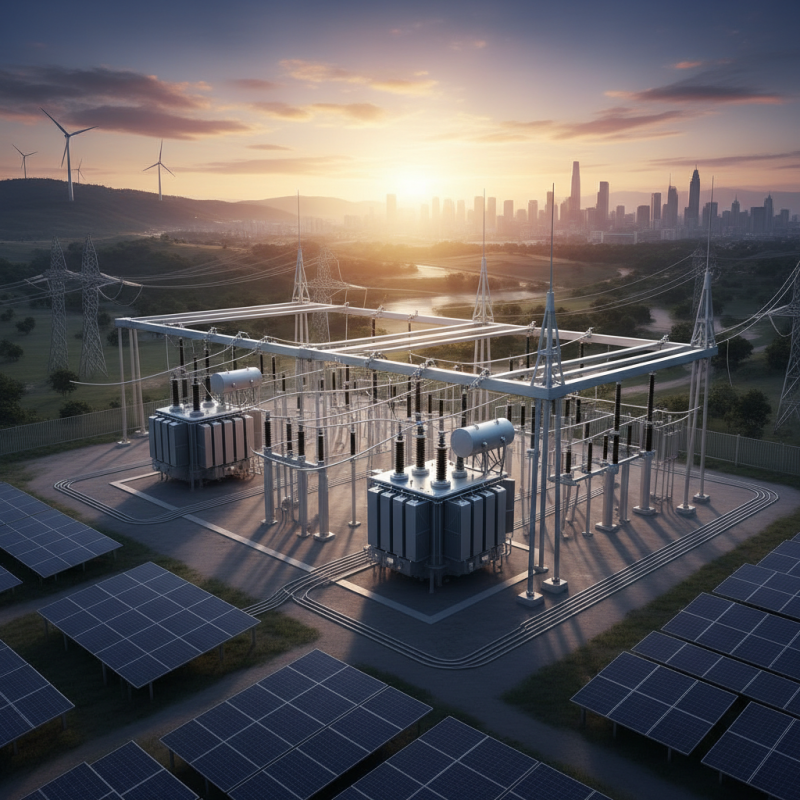
Overview of Transformer Substations in the Global Market
Transformer substations play a crucial role in modern energy distribution. They serve as key nodes, managing voltage levels and ensuring reliable electricity supply. According to data from industry reports, the global transformer substation market is projected to grow at a compound annual growth rate (CAGR) of 6.5% between 2023 and 2030. This increase is fueled by urbanization and rising energy demands. However, implementing these systems can be complicated.
When selecting substation solutions, buyers should consider various factors. The integration of renewable energy sources is becoming increasingly important. By 2025, renewable energy is expected to contribute to 50% of total electricity generation in many regions. Collaboration with experts in energy technology can provide valuable insights.
Tips: Always assess the reliability of your supplier. A well-established company may offer better service and support. Conduct thorough research on emerging technologies, such as digital substations. Recognizing potential weaknesses in infrastructure is essential for long-term planning. Prioritize flexibility in designs to adapt to future energy trends. Understanding your region’s regulatory environment can also guide purchasing decisions.
Key Features to Consider When Selecting Transformer Substation Solutions
When selecting transformer substation solutions, several key features come into play. Firstly, reliability is paramount. According to the International Energy Agency (IEA), approximately 80% of global power outages occur due to issues in substations. Therefore, it’s crucial to assess the design and maintenance protocols of potential solutions to ensure uptime.
Efficiency is another critical consideration. A report by the U.S. Department of Energy highlights that modern transformers can achieve efficiency rates above 98%. Choosing high-efficiency transformers not only reduces energy loss but also lowers operational costs over time. Coupling this with advanced monitoring technologies can enhance performance. Real-time data helps operators identify and resolve issues swiftly, further improving reliability.
Scalability is also important. As demand fluctuates, substations may need to adapt. Data from the Global Energy Monitor indicates that the flexibility to upgrade systems is vital for long-term sustainability. Buyers should inquire about the modularity of the solutions. Suppliers should demonstrate how their designs allow for expansions without significant disruptions.
Each of these features plays a role in the overall performance of transformer substations, but the balance between reliability, efficiency, and scalability is delicate. Improper integration can lead to excessive costs or downtime, highlighting the need for thorough assessments before making a decision.
Transformer Substation Solutions Comparison
Leading Manufacturers and Their Innovations in Transformer Substation Design
In the rapidly evolving energy sector, transformer substations play a critical role in efficient power distribution. Leading manufacturers are continuously innovating to enhance these systems. Recent industry reports illustrate that by 2025, the global transformer market is expected to reach nearly $35 billion. This growth reflects a rising demand for advanced technology solutions that are both reliable and efficient.
Innovative designs focus on modular systems, enabling quick deployment and adaptability to different environments. Additionally, digital solutions are becoming prevalent, enabling real-time monitoring and predictive maintenance. According to a 2023 report by an industry analysis firm, about 40% of energy companies are expected to adopt smart transformer technologies by 2025. These advancements can reduce downtime and maintenance costs significantly.
However, the transition to newer technologies is not without its challenges. Many operators face integration issues, especially when upgrading legacy systems. Uncertainty about return on investment also hampers decision-making. Market trends suggest that while the potential for increased reliability and efficiency is promising, careful consideration is needed to balance innovation with practical implementation.
Cost Analysis and ROI Considerations for Global Buyers
When considering transformer substations, buyers need to focus on cost analysis and return on investment. Understanding the initial costs is crucial. Installation and maintenance can significantly impact overall expenses. Some buyers may overlook ongoing costs. This can lead to unexpected budget strains down the line.
Beyond upfront costs, ROI is vital for decision-making. Evaluating energy savings and operational efficiency can provide insight into long-term profitability. Comparing different solutions is essential. Not all substations yield the same financial benefits. Including life cycle analysis in assessments can clarify potential returns.
Investors should weigh both quantitative and qualitative factors. Aesthetic aspects and site requirements might influence choice, too. These details are often neglected but can affect overall satisfaction. A thorough evaluation process will enable buyers to make informed choices.
Future Trends and Technological Advancements in Transformer Substations
The future of transformer substations is shaping up with remarkable advancements and evolving technologies. Smart grid integration is one of the most significant trends. By linking substations with advanced communication systems, operators can monitor and manage energy distribution in real-time. This capability reduces downtime and enhances reliability. However, the complexity of these systems raises questions about necessary training for personnel.
Another noteworthy development is the growing focus on sustainability. Many substations are beginning to integrate renewable energy sources more effectively. Energy storage systems are emerging as crucial components, allowing excess energy to be harnessed and utilized later. But the transition can be challenging, as existing infrastructure may not accommodate these new technologies without substantial upgrades.
Additionally, cybersecurity is a rising concern. As substations become more connected, they may become targets for cyber threats. Protection measures are essential, yet organizations must ensure that these measures do not compromise operational efficiency. This balance requires ongoing assessment and improvement. The journey toward modern transformer substations is filled with potential achievements and obstacles, reflecting the need for continual adaptation in this dynamic landscape.

