
Global sourcing of Moulding Components demands more than comparing prices on a spreadsheet. Each insert, ejector pin, guide pillar, cooling fitting, and cavity component affects production stability. A small tolerance error can create flash, uneven cooling, or repeated machine stoppages.
Dr. David Kazmer, a professor of plastics engineering and author of Injection Mold Design Engineering, has emphasized this practical principle: “The mold is the heart of the injection molding process.” His view remains highly relevant for international buyers. Components should be assessed through material certificates, heat-treatment records, dimensional reports, and supplier process controls. A polished catalogue is not enough.
This guide examines the Top 10 Moulding Components for Global Sourcing. It considers performance, compatibility, replacement availability, and total ownership cost. Steel grade matters. So do surface hardness, corrosion resistance, and machining accuracy. Even packaging deserves attention when components cross oceans. A damaged guide bush can delay a complete mould trial.
The lowest quotation may be misleading. Sometimes, it excludes inspection, coating, tooling adjustments, or spare parts. That mistake is common. I have seen sourcing plans focus on unit cost while ignoring lead-time risk and technical communication. Those gaps can become expensive after shipment.
Reliable sourcing also requires drawings with clear datums, revision control, and measurable acceptance criteria. Suppliers should explain deviations before production, not after delivery. Still, no checklist eliminates every problem. Materials vary, production conditions change, and assumptions sometimes fail. This article offers a practical framework, but buyers must validate each component against their mould design and manufacturing environment.
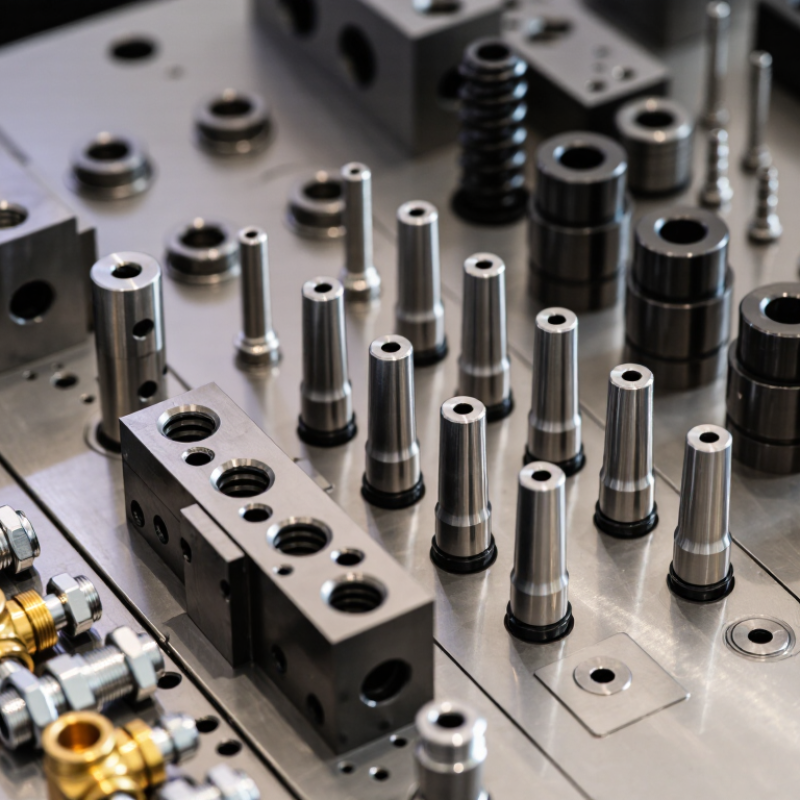
Moulding components are shaped parts produced through processes such as injection moulding, compression moulding, or extrusion. In global sourcing, the term usually covers functional and decorative parts used in larger assemblies.
Typical examples include housings, covers, bezels, trays, brackets, clips, seals, grommets, inserts, and protective caps.
The scope includes material selection, mould design, dimensional control, surface finish, packaging, and inspection requirements.
Common materials include engineering plastics, elastomers, and reinforced compounds. Each material affects strength, temperature resistance, shrinkage, and recycling options.
Buyers should define tolerances, colour references, wall thickness, and expected service conditions before requesting quotations. A small change in draft angle can affect tooling cost. It can also delay production. That detail is easy to overlook.
Tips: Request production samples before approving large orders. Compare measured dimensions with approved drawings. Check flash, sink marks, warpage, and surface scratches under consistent lighting. Confirm whether the quoted price includes tooling, maintenance, inspection, and export packaging.
A perfect sourcing plan is rare. Practical teams leave room for design revisions and unexpected material variation. They also document every approval clearly, even when the part appears simple.

Top 10 Moulding Components for Global Sourcing
Core materials determine how moulding components perform under pressure, heat, and repeated cycling. Tool steel remains the standard for cavity blocks, cores, guide pillars, and ejector parts because it combines hardness with dimensional stability. The World Steel Association reported global crude steel production of about 1.89 billion tonnes in 2023. This scale supports broad international sourcing, but steel quality still varies between mills and heat treatments. Traceability matters more than a low quotation.
Aluminum alloys suit prototype moulds and high-volume components requiring faster heat removal. The U.S. Geological Survey reported approximately 70 million metric tons of primary aluminum production worldwide in 2023. Aluminum is lighter and easier to machine. It also wears faster in abrasive applications. Copper-based alloys can improve cooling around deep ribs and sharp corners, where ordinary channels may struggle. The detail is easy to miss.
Material selection should follow the component’s actual duty. Hardened steel supports sliding inserts and wear plates. Precipitation-hardening steel offers a useful balance for corrosion-sensitive mould environments. Graphite and technical ceramics serve specialized electrical, thermal, or high-temperature functions, although their machining costs can be significant. USGS Mineral Commodity Summaries 2024 recorded global natural graphite mine production near 1.6 million metric tons in 2023, highlighting a more concentrated supply chain. I have seen specifications overstate hardness while ignoring thermal distortion. That is a costly mistake. Suppliers should provide mill certificates, hardness results, heat-treatment records, and dimensional inspection data before shipment.
Top 10 Moulding Components for Global Sourcing
Moulding components determine cycle time, part accuracy, and maintenance risk. Plastics Europe reported 413.8 million tonnes of global plastics production in 2023. This scale supports demand for reliable tooling across automotive, medical, packaging, and electronics industries. The ten essential components include mould bases, cavity inserts, core pins, ejector pins, guide pillars, guide bushings, sliders, lifters, hot-runner nozzles, and cooling fittings. Cavity inserts shape visible surfaces, while core pins form holes in connectors and medical housings. Ejector pins release molded parts without damaging thin walls. Sliders create side features in automotive clips and appliance enclosures.
Hot-runner nozzles reduce material waste in high-volume production. Sprue bushings remain important for conventional injection systems. Cooling fittings and channels control temperature around thick sections. The IEA’s Global EV Outlook 2025 reports that electric car sales exceeded 17 million units in 2024. Battery housings, charging connectors, and sensor covers therefore require stable moulding components. Material selection matters. Hardened tool steel suits abrasive resins, while corrosion-resistant steel supports medical applications. A cheaper insert can become expensive after repeated polishing. That lesson is easy to miss.
Tips: Ask suppliers for steel certificates, dimensional inspection records, and replacement lead times. Confirm surface treatment compatibility before ordering. Include spare ejector pins and guide bushings in the sourcing plan. Perfect standardization is unrealistic. Regional tolerances may still vary. Audit samples under actual production conditions, not only laboratory measurements.
Top 10 Moulding Components for Global Sourcing: Quality Standards and Supplier Evaluation Criteria
Quality starts with geometry. The ten critical components include cavities, cores, inserts, slides, lifters, ejector pins, ejector sleeves, guide pillars, guide bushings, and sprue bushings. Each part needs documented steel grades, heat-treatment records, surface-finish readings, and dimensional inspection results. For cavities and cores, buyers should review tolerance capability near shut-off areas. For pins, sleeves, and guides, straightness and hardness matter more than appearance.
Supplier approval should combine standards with physical evidence. The ISO Survey of Certifications 2023 reported more than 1.2 million ISO 9001 certificates worldwide, yet certification alone cannot prove mould accuracy. Request a recent calibration certificate, CMM report, material certificate, and corrective-action record. Apply ISO 2859-1 sampling rules where suitable, but define critical dimensions separately. A supplier’s measurement system should show repeatability and reproducibility, not merely a polished report.
Factory experience still matters. Ask for tool-life data, first-article records, maintenance intervals, and traceability from steel bar to packed component. The UNIDO Industrial Development Report 2024 highlights quality infrastructure as a foundation for industrial upgrading. That evidence supports suppliers with controlled laboratories and trained inspectors. However, remote audits can miss small process weaknesses. I have seen excellent samples hide unstable grinding results. Build a pilot order, inspect every critical feature, and compare actual cycle performance with the quotation. Cheap pricing can be expensive later.
Typical target hardness ranges used as a quality-screening reference for mould components
Hardness values are common engineering targets expressed in HRC and may vary by steel grade, heat treatment, mould design, and application. During supplier evaluation, verify material certificates, hardness test reports, dimensional inspection records, surface treatment, traceability, and compliance with applicable ISO or ASTM testing methods.
Sourcing, Cost, and Supply Chain Considerations Worldwide
Global moulding projects often depend on ten core components: mould bases, cavity inserts, core inserts, slides, lifters, ejector pins, guide pillars, guide bushes, sprue bushings, and cooling fittings. Each part affects tool accuracy, service life, and maintenance cost. In practical sourcing work, I compare steel grade, heat treatment, machining tolerance, and inspection records before comparing unit prices. A cheaper insert may create flash, uneven cooling, or early replacement costs.
Cost is more than the quotation. Freight weight, packaging volume, customs documentation, and local import requirements can change the final figure. Small components may still need careful protection. Ejector pins can arrive bent when packed without internal support. That delay can stop an entire mould trial.
Lead time matters. Suppliers should provide realistic schedules for material preparation, CNC machining, heat treatment, inspection, and dispatch. Split orders can reduce risk, but they may increase freight charges and coordination work.
A reliable supply chain needs clear drawings, revision control, material certificates, and measurable acceptance criteria. Dual sourcing is useful for guide components and standard fittings, while precision inserts may require tighter supplier control. I have seen teams overfocus on price and overlook communication speed. That was expensive. Time-zone gaps, unclear tolerances, and late design changes can erase an apparent saving. A regional supplier may cost more but shorten troubleshooting and replacement cycles. The best decision is not always the lowest quote. It is the option that remains predictable under pressure.
Please fill out this form and we will get an order or estimate ready for you. Please give us as much detail as you can for us to get started, and we will contact you to finsh the work order.