Top 10 Carbon Tester Types for Accurate Measurements?
In the field of materials science, the accuracy of measurements is paramount. Carbon Testers play a crucial role in assessing material properties. Dr. Emily Chen, a leading expert in carbon analysis, once stated, "The right carbon tester can make or break your research outcomes." This highlights the importance of selecting the right equipment.
Different carbon testers serve various purposes, ranging from simple handheld devices to sophisticated laboratory instruments. Each type offers unique features designed for specific applications. Understanding these differences can significantly impact research findings. For instance, portable testers are ideal for fieldwork, providing immediate results. However, they may lack the precision of more advanced lab equipment.
Choosing the right carbon tester requires careful consideration. Factors include measurement range, sensitivity, and ease of use. Without proper selection, researchers might face inconsistencies in their results. This underlines the significance of expertise in navigating the diverse options available in the market. Ultimately, accurate measurements lead to more reliable data and informed conclusions.
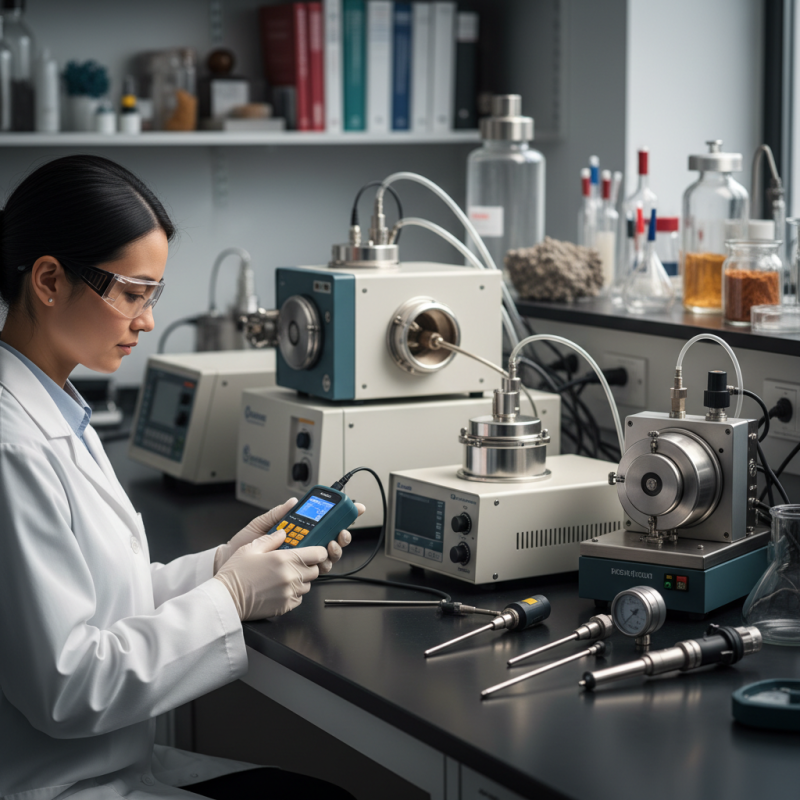
Overview of Carbon Testing in Various Industries
Carbon testing plays a crucial role across diverse industries, from manufacturing to environmental monitoring. In the manufacturing sector, precise carbon measurement ensures product quality and compliance with regulations. It helps to determine whether materials meet the required standards. An accurate carbon test can prevent costly production defects and enhance product performance.
In the context of environmental monitoring, carbon testing is essential for assessing air and water quality. It provides insights into pollution levels and greenhouse gas emissions. These measurements guide policy decisions and public health initiatives. Yet, the methods and technologies used in carbon testing can vary significantly. Some techniques may yield inconsistent results, leading to questions about reliability. This inconsistency highlights the need for ongoing research and innovation in testing technologies.
Sometimes, equipment calibration issues arise, affecting test accuracy. Regular maintenance and updates are vital to prevent these lapses. The challenge lies in balancing precision with practicality, ensuring that testing methods remain accessible and effective for all industries. The landscape of carbon testing continues to evolve, reflecting the increasing emphasis on sustainability and environmental stewardship.
Top 10 Carbon Tester Types for Accurate Measurements
| Tester Type | Measurement Range | Accuracy | Applications | Price Range (USD) |
| Infrared Carbon Analyzer | 0-100% | ±0.5% | Environmental Monitoring, Industrial Processes | $2000 - $5000 |
| Photoacoustic Spectroscopy | 0-1000 ppm | ±1 ppm | Research, Atmospheric Studies | $10000 - $25000 |
| Gas Chromatograph | 0.01-100% | ±0.1% | Food Safety, Chemical Analysis | $5000 - $20000 |
| MEMS Differential Pressure Sensor | -1 to +1 atm | ±0.5% FS | HVAC Systems, Carbon Capture | $100 - $500 |
| Thermal Conductivity Analyzer | 0-100% | ±0.2% | Soil Testing, Carbide Manufacturing | $1500 - $4000 |
| Non-dispersive Infrared Detector (NDIR) | 0-5000 ppm | ±2 ppm | Oil & Gas, Emission Testing | $300 - $1200 |
| Carbon Mass Spectrometer | <1 ppm | ±0.01 ppm | Geochemistry, Climate Research | $30000 - $60000 |
| Flame Ionization Detector (FID) | 0-50,000 ppm | ±1% FS | Petroleum, Environmental Assessment | $2000 - $8000 |
| Sonar Depth Sensor | 0-500 meters | ±0.1 meter | Oceanography, Environmental Monitoring | $5000 - $15000 |
| Portable Carbon Dioxide Monitor | 0-2000 ppm | ±10 ppm | Indoor Air Quality, Occupational Safety | $150 - $700 |
Importance of Accurate Carbon Measurements
Accurate carbon measurements are crucial in various industries. They help assess environmental impact and ensure compliance with regulations. If we don’t measure carbon levels properly, we risk making misguided decisions that can harm our planet.
Reliable data informs policies and strategies in carbon reduction efforts. Inaccurate readings lead to inadequate responses to climate challenges. This can create a false sense of security among companies and governments. For instance, if emissions are underestimated, organizations might not take necessary steps to mitigate their carbon footprint.
The process of measuring carbon is complex. Different testing methods yield varying results. Each type of carbon tester has its own advantages and limitations. Therefore, selecting the appropriate tool matters significantly. Understanding the nuances of each testing method is essential. This expertise helps ensure that measurements are not only accurate but also align with broader environmental goals. Engaging with seasoned professionals can greatly enhance understanding of these methods.
Top 10 Types of Carbon Testers and Their Features
When it comes to measuring carbon levels in various materials, choosing the right type of carbon tester is essential. There are several common types, each designed for specific applications. The first type is the handheld carbon tester, which provides quick, portable measurements. These testers are great for fieldwork, especially when space is limited. However, they may lack the precision of more advanced models.
Another popular option is the benchtop carbon analyzer. This device offers higher accuracy and is often used in laboratories. It thoroughly analyzes samples by using various methods, such as infrared detection or combustion analysis. Despite its reliability, it requires more space and investment. Issues may arise from the calibration process, as improper settings can lead to erroneous results.
Lastly, the online carbon monitoring system plays a vital role in real-time applications. This type normally integrates with industrial processes, supporting continuous data tracking. Yet, it can be complex to install and maintain. Regular checking is necessary to ensure the system is functioning correctly. Each type of carbon tester has its own set of pros and cons, making it crucial for users to understand their specific needs before making a decision.
Top 10 Carbon Tester Types and Their Features
Comparative Analysis of Carbon Tester Accuracy
When it comes to measuring carbon emissions accurately, the choice of carbon tester is crucial. Various studies indicate that accuracy can significantly vary among different tester types. According to a report from the International Journal of Environmental Science, the best testers achieve an accuracy rate exceeding 95%. However, many testers fall short, often only reaching about 80% in precision measurements. This illustrates how selecting the wrong tool may lead to misleading data.
Moreover, some testers cannot provide reliable results under certain environmental conditions. For instance, sensors influenced by humidity or temperature changes can yield erroneous readings. In a comparative analysis conducted by the Carbon Measurement Society, it was found that portable testers frequently showed higher variability compared to stationary laboratory ones, with discrepancies reaching up to 15%. This raises concerns about using portable devices in critical assessments.
The stakes are high, especially when erroneous results can lead to inadequate environmental policies. For scenarios requiring extreme precision, advanced infrared methods were noted to outperform basic electrochemical sensors. Those interested in carbon testing must weigh accuracy variables, environmental impacts, and the technology behind each device. This exploration is essential to ensure responsible measurements that inform sound ecological decisions.
Best Practices for Using Carbon Testers in Field Measurements
Using carbon testers effectively in field measurements requires careful attention to detail and best practices. Proper calibration is essential for accurate results. Ensure your carbon tester is calibrated according to the manufacturer's guidelines. Regularly check and replace sensors. Dirty sensors can skew measurements, leading to unreliable data.
When taking measurements, choose representative sampling locations. Avoid areas influenced by nearby vegetation or structures. Take multiple readings and average them for precision. It’s crucial to maintain consistency in testing conditions. Weather changes can impact results, so choose a stable environment.
Document all findings meticulously. Note conditions such as temperature and humidity. This context can clarify variations in your data. Reflect on your methodology and consider potential errors. How might your approach affect results? Conducting tests with a critical mindset improves accuracy over time.

