
Global buyers increasingly treat the Bms Wire Harness as a critical battery-system component, not a simple bundle of cables. It carries voltage signals, temperature data, and balancing connections between cells and the battery management system. A small crimping error can create unstable readings, service delays, or expensive field returns.
Dr. Venkat Srinivasan, a respected battery technology researcher, captures this principle: “Reliable battery performance begins with reliable connections.” His observation reflects what engineers see during production audits. Wire gauge, insulation quality, connector locking force, shielding, bend radius, and contact resistance all deserve careful review.
The strongest manufacturers combine design capability with repeatable production. They use controlled crimping equipment, automated continuity testing, pull-force checks, and documented inspection records. Buyers should also examine sample approval procedures, traceability, change-control policies, and experience with high-voltage battery packs. A supplier may offer an attractive quotation. That does not prove dependable performance.
Global sourcing adds more questions. Can the manufacturer support custom pinouts? Are drawings managed accurately? Can production remain stable across different order volumes? Do packaging methods protect terminals during long-distance transport? These details often matter after the contract is signed.
No manufacturer is perfect. Even experienced suppliers can miss a tolerance or delay a revision. That is why this guide compares leading Bms Wire Harness manufacturers through practical criteria, including engineering support, quality control, customization, delivery consistency, and communication. The ranking may not fit every project. Battery design, operating environment, and buyer expectations still change the result.
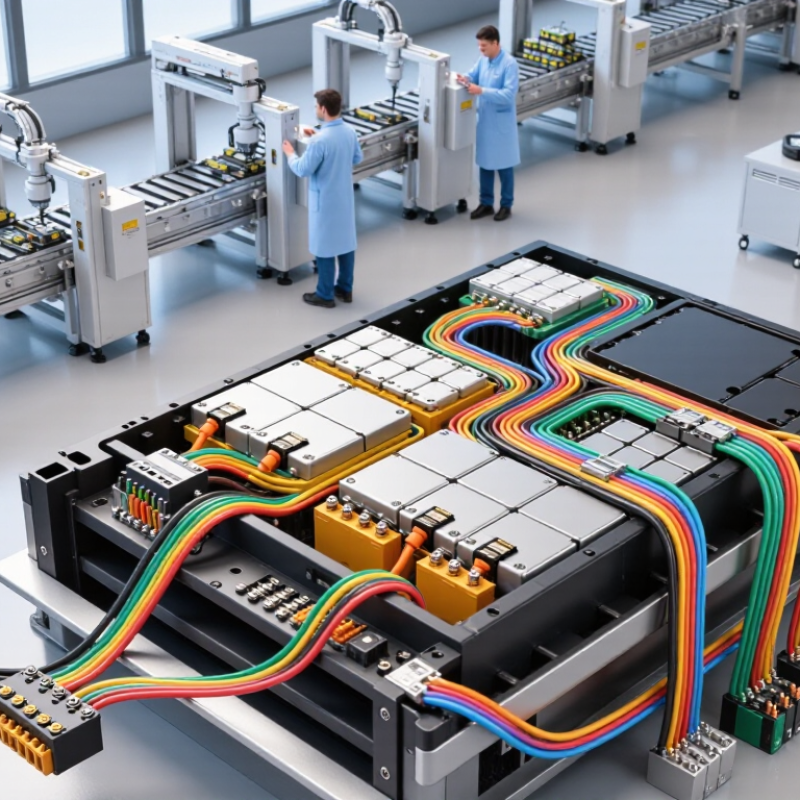
A BMS wire harness connects battery cells, sensors, control boards, and safety circuits. It carries voltage readings, temperature signals, balancing current, and communication data. Without stable connections, the battery management system may misread cell conditions. That can trigger false alarms or hide dangerous voltage differences. The IEA Global EV Outlook 2024 reported nearly 14 million electric cars sold in 2023. Electric models represented about 18% of global new-car sales. More vehicles mean tighter demands on harness accuracy, vibration resistance, and traceability.
A reliable harness uses correctly rated wires, secure terminals, insulation, and clear identification. The cable layout also matters. Tight bends near connectors can create fatigue after repeated vibration. The 2024 BloombergNEF battery survey reported an average lithium-ion pack price of 115 US dollars per kWh. Lower costs may encourage higher production volumes, but cheaper components are not automatically safer. A perfect drawing can still fail on a wet factory floor. That detail deserves more attention.
Tips: Ask manufacturers for continuity-test records, terminal crimp data, insulation ratings, and sample validation results. Check compatibility with the battery’s voltage, temperature range, and communication system. Request inspection photos. Small gaps matter. Use IPC/WHMA-A-620 practices as a reference for cable assembly quality, while verifying the final design through vibration, humidity, and thermal testing.

A BMS wire harness connects battery-cell tap points and temperature sensors to the battery management system. The chart shows the required cell-voltage sensing conductors for common battery pack configurations. For a series-connected pack, the standard reference is n + 1 sense conductors, where n is the number of series cells.
These values are engineering reference calculations for common nominal battery-pack classes: 4S, 13S, 96S, and 192S. Correct conductor count, connector compatibility, insulation, strain relief, shielding, and temperature-sensor routing are essential for reliable BMS measurements.
Leading BMS wire harness manufacturers do more than crimp wires and ship assemblies. They translate battery architecture into dependable electrical connections. Their engineers review voltage levels, current paths, insulation spacing, and installation access. Experience matters when a harness must bend near a cell module. A neat drawing is not enough. Terminals, seals, and strain reliefs must match the operating environment. Good teams ask practical questions early.
Material control is a key capability. Manufacturers should identify wire gauge, conductor material, insulation grade, and connector plating. They should also control cut length and crimp height. Small variations can create heat, resistance, or intermittent signals. Testing may include continuity, pull force, hipot checks, and resistance measurement. Automated testers improve repeatability, but skilled inspection still catches unusual defects. Every batch needs traceable records. Photos, inspection data, and revision history support reliable purchasing decisions.
Global buyers also need flexible engineering support. A capable manufacturer can work from drawings, samples, or incomplete specifications. It should clarify tolerances instead of quietly guessing. That honesty protects both sides. Packaging deserves attention too. Protective caps, labeled branches, and moisture-resistant packing prevent damage during shipment. Some suppliers promise perfect execution, yet real projects change. The best response is documented correction, not excuses. Buyers should review pilot samples before approving volume production. This step may feel slow, but it often exposes routing or labeling problems early.
Global buyers evaluating BMS wire harness suppliers need more than a low quotation. Experience appears in details: terminal fit, insulation consistency, bend radius, and labeling that survives installation. Ask for drawings, material specifications, and controlled revision records. A capable supplier should explain how each wire size matches current, temperature, and voltage requirements. Short answers are warning signs. Look closely.
Request representative samples built with the same terminals, seals, and assembly tools used in production. Inspect crimp height, conductor exposure, locking force, and continuity results. For battery applications, ask for pull-test data, insulation checks, and temperature-cycle evidence. Confirm how workers prevent reversed pins and mixed cable lengths. Photos help, but live video or an on-site audit provides stronger evidence. It is not perfect. Supplier certificates can be outdated, and test reports may cover only one batch. Require lot traceability, calibrated equipment, and clear corrective-action records.
Global projects also depend on practical supply behavior. Compare lead times, minimum order quantities, packaging, spare samples, and communication during engineering changes. Check whether the supplier can support regional documentation and shipment schedules. A pilot order can reveal more than a confident presentation. Measure defect rates and delivery accuracy over several shipments. Do not ignore small issues. A loose label today may become a costly service problem later. Even a strong supplier may need improvement in forecasting, documentation, or change-control discipline. Choose evidence over promises, then keep checking performance after approval.
East Asia remains a major production center for BMS wire harnesses. Manufacturers there often combine automated cutting, crimping, and connector assembly. High-volume factories can produce consistent harness lengths with short lead times. They also support customized pin layouts and battery pack designs. In practical audits, buyers should inspect crimp-force records and terminal pull tests. Low pricing alone can hide weak traceability.
Southeast Asia has expanded its role in labor-intensive harness assembly. Its strengths include flexible production lines, competitive operating costs, and growing technical training. These facilities can handle medium-volume orders and regional supply needs. However, process maturity differs between factories. A careful buyer should review sample approval methods, material storage, and operator training records. The difference is often visible in small details, such as uneven tape wrapping or loose strain relief.
European manufacturers usually emphasize engineering control, documentation, and specialized low-volume production. Their facilities may offer strong thermal testing, material certification, and design support for demanding battery systems. North American suppliers often focus on rapid communication, local engineering, and dependable aftermarket response. They may suit projects requiring frequent design changes or nearby technical support. No region wins every project. Buyers can still misjudge a factory after one successful sample. Repeated inspections, electrical testing, and production records provide a more reliable view. A harness that looks clean may still fail under vibration, heat, or repeated bending.
| Manufacturer Region | Primary Production Strengths | Typical BMS Harness Applications | Common Manufacturing Capabilities | Quality and Compliance Practices | Global Buyer Considerations |
|---|---|---|---|---|---|
| China | Large-scale production, broad component sourcing, competitive pricing, and fast customization for high-volume programs. | Electric vehicles, energy-storage systems, electric tools, two-wheelers, consumer batteries, and industrial equipment. | Automatic wire cutting and stripping, crimp-force monitoring, ultrasonic welding, overmolding, connector assembly, and end-of-line electrical testing. | Many suppliers operate under ISO 9001; automotive-oriented facilities commonly pursue IATF 16949 and use traceability, incoming inspection, and continuity or hipot testing. | Strong choice for cost-sensitive and high-volume orders. Buyers should verify connector authenticity, material traceability, tooling ownership, audit access, and export documentation. |
| Japan and South Korea | High-precision assembly, process discipline, miniaturized components, and reliable production for demanding electronics and automotive applications. | Passenger vehicles, hybrid and electric vehicles, advanced battery packs, robotics, industrial controls, and high-reliability electronics. | Fine-gauge wire processing, compact terminal crimping, shielded assemblies, high-density connector systems, automated inspection, and controlled workstations. | Automotive suppliers commonly apply IATF 16949, ISO 14001, statistical process control, crimp cross-section analysis, and rigorous change-control procedures. | Well suited to tight tolerances and long service life. Buyers should allow for higher pricing, longer qualification cycles, and detailed engineering documentation. |
| Germany and Central Europe | Automotive engineering, safety-focused production, industrial automation, and strong integration with European supply chains. | European vehicles, battery modules, factory automation, rail systems, medical equipment, and industrial machinery. | Complex multi-branch harnesses, high-voltage cable assemblies, shielding, protective sleeving, custom fixtures, and documented process validation. | Common practices include IATF 16949 or ISO 9001, PPAP-style documentation, FMEA, capability studies, RoHS and REACH management, and functional safety processes where applicable. | Suitable for safety-critical or highly engineered products. Buyers should consider labor costs, European material requirements, and formal approval procedures. |
| North America | Engineering support, low-to-medium volume production, rapid prototyping, and supply for automotive, aerospace, defense, and industrial customers. | Electric vehicles, battery energy storage, specialty vehicles, aerospace equipment, telecommunications, and industrial systems. | Prototype builds, custom cable design, high-voltage assemblies, overbraiding, potting, automated testing, and production-to-engineering feedback. | Suppliers may use ISO 9001, IATF 16949, IPC/WHMA-A-620 workmanship criteria, UL-related requirements, and sector-specific customer quality systems. | Advantages include local communication, shorter domestic lead times, and strong prototype support. Unit costs may be higher for labor-intensive assemblies. |
| Southeast Asia | Growing electronics and automotive manufacturing base, competitive labor costs, and expanding capacity for regional and multinational supply chains. | Motorcycles, electric two-wheelers, consumer electronics, vehicle subassemblies, solar storage, and industrial devices. | Wire cutting, crimping, terminal insertion, manual and semi-automatic assembly, labeling, continuity testing, and selected overmolding operations. | Quality systems vary by facility; established plants may provide ISO 9001, IATF 16949, ESD controls, operator training records, and lot traceability. | Useful for supply-chain diversification and cost control. Buyers should evaluate local component availability, production ramp-up capability, logistics reliability, and technical supervision. |
| India | Expanding automotive and electrical manufacturing, engineering talent, cost competitiveness, and increasing domestic demand for electric mobility. | Electric scooters, three-wheelers, passenger vehicles, industrial batteries, renewable-energy equipment, and control panels. | Custom harness assembly, terminal crimping, battery-pack wiring, protective conduit, manual and semi-automatic testing, and small-to-medium production runs. | Qualified facilities may operate under ISO 9001 or IATF 16949 and apply documented inspection, sample approval, electrical testing, and supplier-quality controls. | Attractive for regional sourcing and developing EV programs. Buyers should confirm automation levels, capacity scalability, imported-component exposure, and international shipping experience. |
Note: Capabilities and certifications vary by individual manufacturing facility. Buyers should request current certificates, process-control records, sample inspection reports, and product-specific validation before placing production orders.
Quality starts with repeatable evidence, not attractive samples. The IEA Global EV Outlook 2024 reported nearly 14 million electric car sales in 2023. Battery demand also approached 1 TWh. This growth increases pressure on harness suppliers to control defects at scale. Buyers should request continuity, insulation resistance, hipot, pull-force, and temperature-cycle records. IPC/WHMA-A-620 provides a useful workmanship reference. Still, compliance documents alone are insufficient. A supplier should connect each harness to wire lots, operators, tools, and inspection results.
Compliance requirements vary across markets and applications. Confirm material declarations for RoHS and REACH, plus documented change control. Ask whether the manufacturer supports customer audits and corrective-action reports.
Customization needs equal attention. Specify connector locking force, branch length, bend radius, shielding, labels, and voltage limits. Small errors matter. A two-millimeter length mismatch can strain a battery-module connection. I have seen teams approve drawings too quickly, then discover assembly interference during pilot production.
Delivery reliability depends on engineering discipline. Evaluate sample approval time, production capacity, safety stock, and alternate material sources. Request a realistic lead-time range, not one optimistic number. The IEA notes that battery supply chains remain geographically concentrated, making disruption planning important. Digital lot tracking and inspection checkpoints improve accountability. Dual sourcing may reduce risk, but it can weaken consistency without matched tooling and validation. That trade-off deserves a technical review, not a purchasing shortcut.
Please fill out this form and we will get an order or estimate ready for you. Please give us as much detail as you can for us to get started, and we will contact you to finsh the work order.