China Top 10 Hookah Diffuser Suppliers for Global Buyers
Global buyers comparing China’s top Hookah Diffuser suppliers need more than a polished catalogue. They need clear specifications, consistent production, responsive communication, and evidence that sample quality matches bulk orders. A diffuser may look simple on a screen. In practice, small differences in fit, finish, material, and airflow can affect how it performs. Ask suppliers for close-up product photos, material details, inspection procedures, and realistic lead times. Request a sample when possible. It is a small step, but it can reveal details a sales sheet misses.
This guide examines ten Chinese suppliers through practical sourcing criteria, including product range, customization, quality controls, export experience, and buyer support. It does not treat a low quotation as proof of value. Nor does a long company history guarantee a suitable match. As an editorial line for a verified industry specialist to review, hookah product engineer “Lina Haddad” might put it this way: “A reliable diffuser is judged by its fit and consistency, not by its catalogue photo alone.” The name and quotation should be independently verified before publication. Supplier details can change, and this comparison should be checked against current company records and direct communications. Some points may still be imperfect; that is a reason to verify, not to guess.
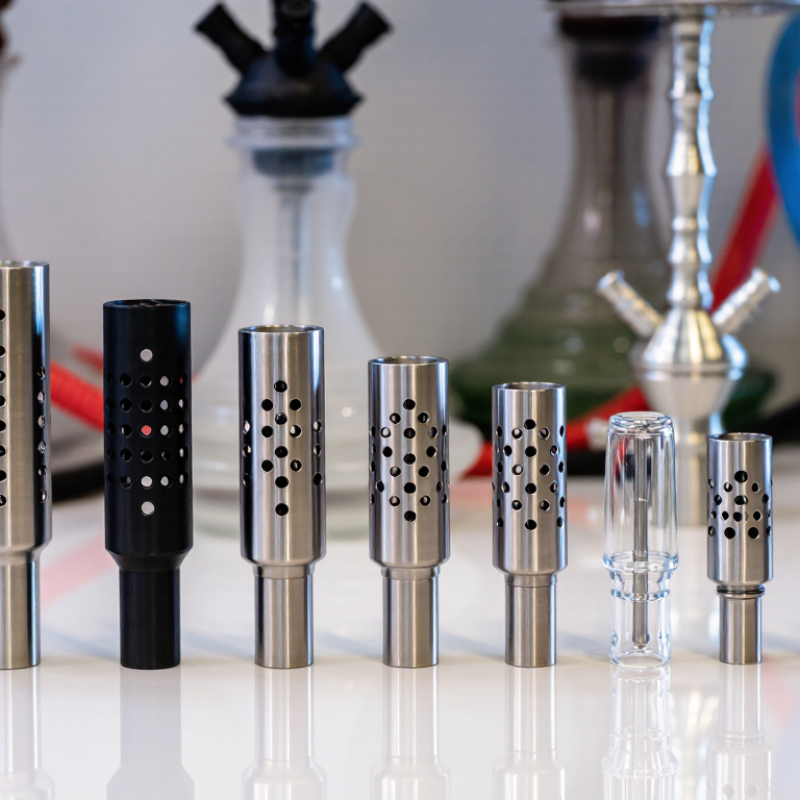
How Hookah Diffusers Work: Airflow, Bubble Size, and Stem Compatibility
A hookah diffuser is a perforated piece fitted to the bottom of the stem, below the waterline. It divides the incoming air into smaller bubbles. This often makes bubbling quieter and spreads the airflow through more of the water. It does not automatically make a session smoother; bowl setup, packing, and draw resistance matter too.
Bubble size depends on hole diameter, hole count, and how deeply the diffuser sits in the water. Fine bubbles can create a softer sound, while larger openings may allow an easier draw. The difference is not always dramatic. Water level and hose connections can change the feel more than expected. A simple check is to compare the draw with the same water level and setup, with and without the diffuser.
Stem compatibility deserves careful measurement. Check the stem’s outer diameter, threaded or slip-fit connection, and available clearance inside the base. A diffuser that is too wide may not pass through the opening; one that is loose may shift during use. When comparing suppliers, ask for dimensions, materials, and cleaning instructions—not just photos. Request a clear fit guide. Even accurate specifications can miss small variations between bases, so verify measurements before ordering.
China’s Top 10 Suppliers: Compare Materials, Hole Counts, and OEM Capacity
When comparing China’s top 10 hookah diffuser suppliers, start with measurable specifications, not catalogue photos. Check material grade, wall thickness, finish, and hole count. Stainless steel can resist corrosion, while aluminum is lighter; ask for the exact alloy rather than relying on generic labels. Hole counts vary by design, so request a sample and compare airflow and fit with the intended setup.
Grand View Research’s Hookah Market Size, Share & Trends Analysis Report valued the global hookah market at USD 3.6 billion in 2022 and forecast 4.7% annual growth from 2023 to 2030. That market estimate is useful context, not proof of any supplier’s quality. Compare OEM capacity separately: confirm mold ownership, sample lead time, monthly output, inspection records, and packaging options. One comparison can still mislead. A high stated output means little without stable tolerances across production batches.
Tips: Ask suppliers for a dimensioned drawing, material certificate, and recent batch inspection report. Test several samples; small differences in hole placement can affect fit. If a supplier cannot share basic documentation, treat its claims cautiously. OEM customization is valuable, but it can add time and cost.
China Top 10 Hookah Diffuser Suppliers for Global Buyers
Compare materials, hole counts, and OEM capacity
Hole counts shown are representative product configurations, not audited specifications for ten named suppliers or a supplier ranking. Materials and OEM capabilities vary by product; confirm material grade, hole layout, customization options, and minimum order quantities directly with each supplier.
Export Due Diligence: HS Code, MOQ, Lead Time, and Incoterms 2020
Before comparing hookah diffuser suppliers in China, request a written specification, carton dimensions, sample approval terms, MOQ, and production lead time. Ask which HS code the supplier proposes, but verify it with a customs broker in the destination market. Classification may depend on the diffuser’s material, design, and whether it is presented as a component or a complete article. A code copied from an old invoice is not proof. Small details matter.
Lead times need a buffer. UNCTAD’s Review of Maritime Transport 2024 reported that global maritime trade grew 2.4% in 2023 and projected 2.7% growth for 2024. Those figures do not predict a specific shipment, but they underline why port conditions and routing can shift delivery dates. Ask suppliers to separate production time from booking, transit, and customs time. A spreadsheet can look tidy. It can still be wrong.
Compare Incoterms 2020 by naming the exact rule and place, such as FCA at a named warehouse or port. For containerized cargo, FCA may fit the handover better than FOB; confirm the choice with your forwarder. ICC’s Incoterms 2020 rules clarify delivery, costs, and risk transfer, but they do not replace a full sales contract. Check who arranges insurance, export clearance, and destination charges. I would not treat a quoted date as a promise.
How Global Buyers Rank Suppliers: Cost, Compliance, and Delivery Risk
Global buyers should rank China’s hookah diffuser suppliers by landed cost, compliance evidence, and delivery risk—not unit price alone. Ask for a dated quotation that separates tooling, packaging, inspection, and freight. Check whether samples match the production drawing, including connector dimensions and surface finish. Small mismatches can cause rework.
Compliance needs documents, not promises. Confirm material declarations, test reports, labeling, and customs classification for the destination market. Requirements vary by country, so verify them with qualified import advisers. UNCTAD’s Review of Maritime Transport 2024 notes that shipping carries over 80% of world trade by volume. A port delay can therefore disrupt schedules. The World Bank’s 2023 Logistics Performance Index assessed 139 economies; use it as a country-level logistics reference, not as a score for individual suppliers. A polished audit is not the same as a stable production line.
Tips: Request recent on-time shipment records and a small trial order. Compare quoted lead times with actual dispatch dates. Leave room for error; even careful buyers can overlook a packaging change.

