
In the world of automotive repair, using a Piston Ring Sealer can be a game-changer. Renowned expert John Thompson, a veteran in engine restoration, once stated, "A good Piston Ring Sealer transforms performance and extends engine life.” His words underline the importance of understanding how to use sealants effectively.
Many mechanics overlook key techniques when applying Piston Ring Sealers. This can lead to subpar results. Achieving a reliable seal requires attention to detail and proper application methods. Every engine is different, so it’s crucial to adapt techniques based on specific needs. For instance, temperature and surface preparation significantly impact the effectiveness of the sealer.
Using a Piston Ring Sealer involves more than just applying a product. It requires a methodical approach and knowledge of best practices. Even experienced professionals may find themselves in situations that call for reflection on their techniques. Embracing continuous learning in this field can significantly enhance repair outcomes. By focusing on these essential tips, both novice and seasoned mechanics can improve their results and maintain optimal engine performance.
Piston ring sealer
plays a crucial role in engine performance. Its main purpose is to enhance the sealing of piston rings. This prevents oil leakage and helps maintain compression. A better seal results in improved efficiency and power output. Many mechanics recommend using sealer to support older or worn engines.Choosing the right piston ring sealer is crucial for engine performance. It can help improve compression and reduce oil consumption. The type of engine influences your choice. High-performance engines may require specialized sealers that withstand extreme conditions. Conversely, standard vehicles might need a simpler formulation that offers basic sealing abilities.
Consider factors like viscosity and temperature range. A thicker sealer might be better for older engines with wear issues. In contrast, newer models often benefit from a lighter sealer for optimal performance. Test the product on a small area first, to check compatibility. Some sealers can react negatively with certain engine materials; this is a common oversight.
Proper application techniques also matter. Clean surfaces thoroughly before sealing. Dust and oil can lead to poor adhesion. Measure the right amount of sealer for even distribution. Over-application can cause clogs and under-application may not seal properly. Some users rush this step, leading to leaks or failures. Taking your time can prevent these issues and ensure a more reliable seal.
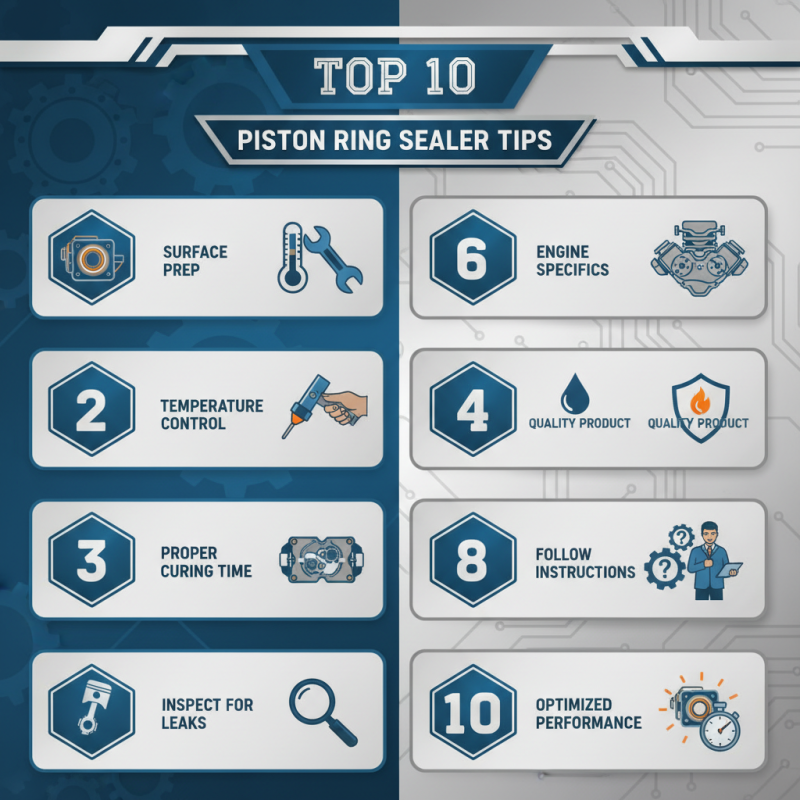
| Tip Number | Tip | Description | Benefit |
|---|---|---|---|
| 1 | Choose the Right Product | Select a sealer designed for your engine type. | Ensures optimal performance and longevity. |
| 2 | Clean the Surface | Thoroughly clean piston rings and cylinder walls before application. | Promotes better adhesion and seals. |
| 3 | Apply Evenly | Use a small brush to apply the sealer evenly around the rings. | Prevents leaks and enhances sealing. |
| 4 | Allow Proper Curing Time | Let the sealer cure for the recommended time before starting the engine. | Ensures full sealing strength is achieved. |
| 5 | Avoid Overapplication | Use the amount specified in the instructions to avoid excess. | Reduces risk of sealer oozing into unwanted areas. |
| 6 | Use at Optimal Temperatures | Apply the sealer at temperatures recommended by the manufacturer. | Ensures better flow and adhesion. |
| 7 | Check Compatibility | Ensure sealer is compatible with existing materials. | Prevents chemical reactions that could harm the engine. |
| 8 | Monitor Performance | Inspect the engine performance post-application. | Identifies any issues early on. |
| 9 | Store Properly | Keep the sealer in a cool, dry place when not in use. | Maintains product efficacy over time. |
| 10 | Follow Manufacturer Guidelines | Always refer to the product manual for specific instructions. | Ensures the best use and performance of the product. |
Proper surface preparation is crucial when using piston ring sealer. Over 70% of sealing failures can be attributed to inadequate surface treatment. Ensuring that the surfaces are clean and free from oil, dirt, and debris is the first step. Use a solvent or degreaser to achieve the best results. A clean surface maximizes adhesion and ensures a tight seal, which can enhance engine performance.
Before applying the sealer, inspect the surfaces for damage. Minor scratches or imperfections can compromise the sealing integrity. Address these imperfections by using a suitable filler. Smooth out any rough edges to provide an optimal bonding surface. This attention to detail can lead to longer-lasting seals and prevent premature engine wear.
Consider these tips: Always follow the manufacturer's instructions for the sealer and respect curing times. Avoid applying sealer in overly humid or cold conditions, as this can hinder the curing process. Regularly check for temperature variations and adjust your work environment as needed. By implementing these strategies, you can significantly improve the effectiveness of your piston ring sealer application.
When applying piston ring sealer, proper techniques can significantly enhance sealing performance. The ideal application surface should be clean and dry. A thorough cleaning using degreasers can eliminate contaminants. Studies indicate that a clean surface improves adhesion by nearly 40%. This is crucial for achieving an effective seal.
Another aspect is the even application of the sealer. Uneven layers can lead to leaks or improper seating of the piston rings. Research shows that a consistent thickness reduces the chance of seal failures by up to 30%. It's recommended to use a specialized applicator for uniform coverage. Allowing the sealer to cure fully before operation is equally vital. Premature exposure to engine conditions can compromise the sealing integrity.
Environmental considerations should also not be overlooked. Factors such as temperature and humidity can influence the performance of the sealer. In areas of high humidity, for instance, the sealer may take longer to cure. Monitoring these conditions can prevent future complications. Regular assessments of the sealing performance can also uncover potential areas for improvement, leading to a more reliable engine operation.
When using piston ring sealers, encountering issues can happen. Understanding common problems is essential for effective usage. One frequent issue is poor sealing due to improper application. If the sealer is not applied evenly, it may not adhere well. This can lead to leaks and decreased performance. Ensure a thin, uniform layer for optimal results.
Another problem is the curing time. Not allowing sufficient time for curing can cause the sealer to fail. Always refer to the manufacturer's guidelines for curing times. Rushing this process may lead to inadequate sealing, resulting in significant engine damage. Additionally, maintain a controlled environment for application, as humidity and temperature can affect the sealer’s performance.
For effective use, remember to clean the surfaces thoroughly before applying the sealer. Any residue can hinder adhesion. Use a solvent designed for automotive applications for best results. Always check compatibility with your engine materials to avoid chemical reactions. Taking these factors into account can help prevent common issues, ensuring reliable performance.
Please fill out this form and we will get an order or estimate ready for you. Please give us as much detail as you can for us to get started, and we will contact you to finsh the work order.
