
A Stainless Valve Stem is a small component with a demanding responsibility. It transfers handwheel or actuator movement to the valve’s closure element. That movement must remain controlled under pressure, heat, vibration, and repeated cycling. The stem may look simple. It is not.
The World Stainless Association reported approximately 58.4 million tonnes of crude stainless steel production in 2023. Grand View Research also valued the global industrial valves market at about USD 78 billion in 2023. These figures show why material selection deserves careful attention. In Valve Handbook, valve engineering author Philip L. Skousen states, “The stem transmits the operating force to the closure member.” That sentence captures the component’s central job. Austenitic stainless grades, including 304 and 316, can provide useful corrosion resistance and dependable strength. However, neither grade is immune to damage. Chlorides, poor surface finishing, galling, and incorrect lubrication can still cause failure.
This guide explains how a Stainless Valve Stem works inside rising-stem and rotary valve designs. It examines load transfer, sealing arrangements, thread behavior, and material differences. It also connects design choices with field conditions, such as salt spray near coastal equipment or abrasive particles inside process lines. Standards matter. So does maintenance experience. A report may show market growth, but it cannot reveal every worn thread or bent stem. That limitation deserves attention. Stainless steel is often treated as a complete solution. It is only one part of a reliable valve assembly.
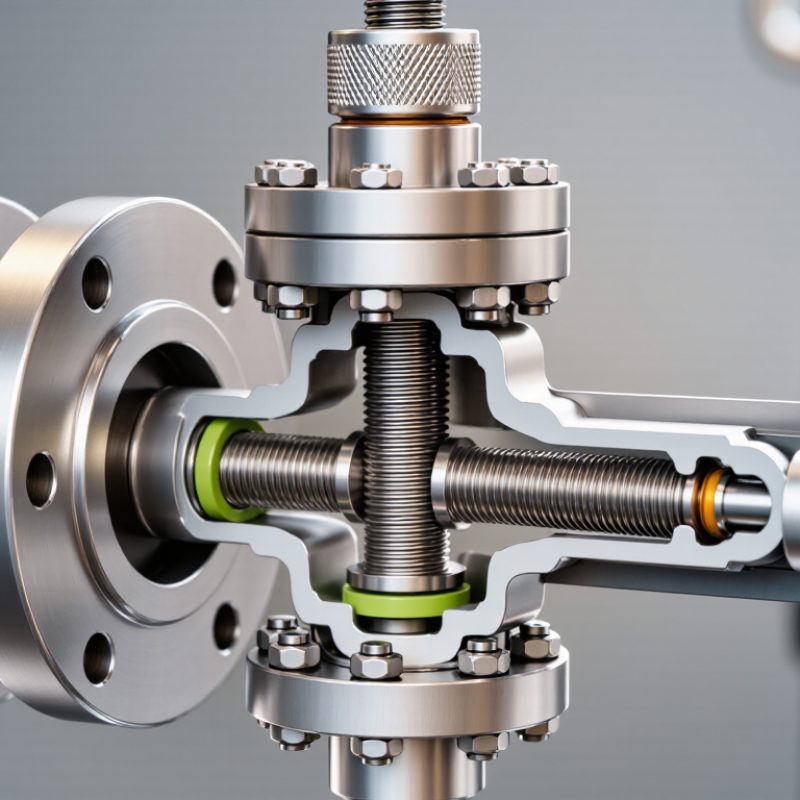
A stainless valve stem is the moving metal shaft that transfers actuator force to a valve closure element. Its basic structure is simple, but its sealing surfaces demand careful design. The stem usually includes a body, shoulder, threaded or keyed section, tip, and packing-contact area. In a rising-stem valve, the shaft moves upward and downward. In a quarter-turn valve, it rotates a plug or ball. The actuator supplies torque or thrust. The stem transmits that force through the packing and into the closure element. Stainless steel is selected for corrosion resistance, strength, and stable surface performance. Common grades differ significantly in chloride environments. Molybdenum-bearing alloys resist pitting better, but they are not corrosion-proof. AMPP’s 2016 IMPACT study estimated global corrosion costs at 2.5 trillion dollars annually, equal to 3.4% of global GDP. This figure shows why stem material and sealing details matter beyond appearance.
A typical stem passes through packing, a gland follower, and the valve bonnet. The packing must limit fluid escape while allowing controlled movement. Surface finish matters here. Very much. Scratches can cut packing and create a leakage path. ISO 15848-1 evaluates industrial valves through fugitive-emission testing and endurance cycles. It does not make every installation safe automatically. Temperature, pressure, media chemistry, alignment, and maintenance still influence performance. A stainless stem can gall against another hard metal, especially without suitable lubrication. That detail is often underestimated. During inspection, technicians look for pitting, bent shafts, damaged threads, and packing compression loss. The design sounds straightforward. Field conditions are not.

A stainless valve stem links the handwheel or actuator to the valve’s closing element. It transfers turning force or linear movement during operation. When the stem moves, the disc, ball, or gate changes position. Flow then starts, stops, or adjusts.
Stainless steel suits this job because chromium forms a thin protective oxide layer on the surface. That layer helps resist moisture, oxygen, and many mild chemicals. Austenitic grades also provide useful ductility and toughness. Some grades contain molybdenum, which improves resistance to pitting in chloride-rich environments. Nickel can support corrosion resistance and stable performance across changing temperatures.
The surface finish matters greatly. A rough stem can damage packing and increase operating torque. In practical inspections, technicians often find contamination near the packing area. Small particles can become serious wear points. Stainless steel is strong, but it is not immune to galling. Repeated sliding contact may cause two metal surfaces to seize, especially without suitable lubrication or correct clearance. This detail is sometimes overlooked.
Selection should consider pressure, temperature, fluid chemistry, and cleaning methods. A low-carbon grade may support welded assemblies, while a harder alloy may suit demanding mechanical service. The best material is not always the most corrosion-resistant option. It must also match the valve design and maintenance plan. Mistakes happen when material choices rely only on appearance.
What Is a Stainless Valve Stem and How Does It Work?
How a Stainless Valve Stem Controls Fluid Flow
A stainless valve stem transfers movement from an actuator or handwheel to the valve’s internal closure part. That part may be a ball, disc, gate, or plug. When the stem turns or moves upward, the closure changes position. This adjustment controls how much fluid passes through the valve.
The stem also supports accurate flow control under pressure. In a quarter-turn valve, a 90-degree rotation can open or stop the passage. In a rising-stem design, vertical movement lifts or lowers the closure. Stainless steel helps the stem resist corrosion from water, chemicals, humidity, and temperature changes. However, material selection still depends on the fluid and operating conditions.
During maintenance, technicians inspect the stem surface, packing area, and connection points. Scratches near the packing can create a small leakage path. Excessive force may bend the stem or damage the actuator. Smooth movement matters. Lubrication can help, but it must suit the service medium and sealing materials. A valve that looks clean may still have internal wear. This is easy to miss. Flow changes, unusual resistance, or slight seepage deserve attention before the problem grows. Proper sizing and installation remain important, because stainless steel alone cannot correct poor alignment, excessive pressure, or an unsuitable valve design.
| Data Dimension | Typical Specification or Value | How It Affects Fluid Flow |
|---|---|---|
| Definition | A corrosion-resistant mechanical shaft that transfers motion from the actuator or handwheel to the valve closure element. | The stem does not normally throttle fluid directly; it positions the ball, disc, plug, or gate that changes the flow passage. |
| Primary stainless steel grades | 304 stainless steel for general corrosion resistance; 316 stainless steel for improved resistance to chlorides and many process chemicals; precipitation-hardened grades such as 17-4 PH for higher strength. | The selected grade influences service life, resistance to corrosion-related sticking, and the stem’s ability to transmit operating torque or thrust. |
| Common valve movements | Quarter-turn rotation, typically about 90°; linear travel for gate, globe, and diaphragm valve designs. | Rotational movement turns a ball, disc, or plug, while linear movement raises, lowers, or repositions the closure element. |
| Flow-control positions | Fully open, partially open, or fully closed. Quarter-turn valves generally reach full travel in approximately 90°; linear-valve travel depends on valve size and design. | A larger effective opening usually permits greater flow, while a smaller opening increases resistance and reduces flow. The exact relationship is determined by valve geometry and pressure conditions. |
| Stem arrangement | Rising stem: the stem moves axially as the valve opens. Non-rising stem: the stem rotates or moves internally without a significant external rise. | The arrangement determines how valve position is indicated, how much installation clearance is needed, and how motion reaches the closure element. |
| Actuation methods | Manual handwheel or lever, electric actuator, pneumatic actuator, or hydraulic actuator. | The actuator supplies rotational torque or linear thrust, allowing the stem to position the closure element accurately and repeatedly. |
| Stem sealing methods | Compressed packing, O-rings, or a metal bellows seal. Packing materials may include PTFE, graphite, or other process-compatible compounds. | The seal prevents fluid from escaping along the stem. Seal selection must match temperature, pressure, fluid chemistry, and emissions requirements. |
| Stem surface condition | Machined, polished, passivated, or hardened surfaces are commonly used, depending on the valve design and service conditions. | A smooth, clean surface reduces seal wear, friction, leakage risk, and the possibility of deposit buildup on moving parts. |
| Torque and thrust transmission | Torque is primarily required for rotary valves; thrust is primarily required for linear valves. Required values vary with valve size, pressure, temperature, seal friction, and differential pressure. | Adequate mechanical strength prevents twisting, bending, or failure that could leave the valve partially open, closed, or difficult to operate. |
| Typical service temperatures | The stainless stem may tolerate a wide temperature range, but the usable operating range is normally limited by the valve seats, packing, seals, and actuator. | Temperature changes can alter seal elasticity, lubrication, material strength, and the torque needed to move the valve. |
| Corrosion resistance | Good resistance in many water, air, steam, food-processing, and chemical environments; chloride-rich or highly aggressive media require careful grade and design selection. | Reduced corrosion helps maintain stem dimensions and surface quality, supporting reliable movement and long-term sealing performance. |
| Flow capacity indicator | Valve flow capacity is commonly expressed using a flow coefficient such as Cv or Kv, which is specified for the complete valve rather than the stem alone. | Stem position changes the valve opening, while the valve’s internal passage, pressure differential, and fluid properties determine the resulting flow rate. |
| Main maintenance checks | Inspect for leakage, corrosion, excessive operating force, damaged threads, packing wear, misalignment, and incomplete travel. | Correct maintenance keeps the stem moving smoothly, preserves shutoff capability, and helps the valve reach its intended flow position. |
Note: Actual pressure, temperature, torque, travel, material, and flow-capacity limits must be confirmed from the valve design, applicable standards, and manufacturer specifications.
A stainless valve stem is the moving shaft that transfers handwheel, lever, or actuator force to the valve’s closing element. Stainless steel resists moisture, chemicals, and surface corrosion, making it useful in water, food processing, and demanding industrial service. The stem must still match the fluid, temperature, pressure, and sealing material. Stainless steel is not automatically suitable for every application.
Valve design determines the stem configuration. A gate valve commonly uses a rising stem, which visibly moves as the gate opens. This gives operators a quick position reference. A non-rising stem stays inside the body and suits spaces with limited overhead clearance. Globe valves usually use rising stems, producing controlled linear movement against the seat. Ball and butterfly valves generally use quarter-turn stems. A ball stem rotates a drilled sphere, while a butterfly stem turns a disc through the pipe. Check valves often have no external stem; pressure moves the internal disc or piston automatically.
Tips: Inspect the stem surface for scratches, rust staining, or uneven movement. A stiff quarter-turn stem may indicate seat damage, misalignment, or unsuitable lubrication. Confirm that the stem connection fits the actuator before installation. Small differences matter. In field work, I have seen a valve selected correctly by size but poorly matched by stem travel. That mistake is easy to repeat. The best practice is to verify rotation, travel, sealing direction, and access conditions from the actual installation drawings.
A stainless valve stem transfers actuator force to the closure element and provides strong corrosion resistance in demanding environments. The chart shows representative stem movement for common valve types: quarter-turn valves rotate approximately 90°, while gate and globe valves typically use a multi-turn linear stem arrangement. Check valves generally operate automatically without an externally driven stem.
Note: The 1,080° value represents a typical illustrative three-turn multi-turn arrangement; actual travel varies with valve size, trim design, and actuator selection.
A stainless valve stem transfers handwheel or actuator movement to the valve closure element. It may rotate a ball or plug, or move a gate and disc vertically. Stainless steel resists moisture, mild chemicals, and repeated handling better than many carbon steels. In practice, surface finish matters as much as alloy selection. A scratched stem can damage packing during every cycle.
Inspect the stem, packing gland, and nearby flange during scheduled rounds. Look for rust staining, wet packing, uneven movement, or a handle that requires sudden force. Small drips matter. A leaking stem can also admit air into a process line. The U.S. Department of Energy reports that compressed-air leaks may waste 20–30% of compressor output, so a small valve leak deserves attention. That figure is not a universal valve-loss rate, but it shows why minor leakage becomes expensive.
Clean exposed threads with a suitable method, then check packing compression without overtightening. Excess pressure can make operation stiff and accelerate wear. ISO 5208 provides standardized leakage-rate testing, while API 598 defines common valve inspection and test practices.
Stainless stems commonly serve water treatment, food processing, chemical utilities, marine systems, and clean industrial services. Chloride-rich environments still require caution. Even stainless steel can suffer pitting or stress corrosion under unsuitable conditions. I would not treat “stainless” as maintenance-free. Temperature, fluid chemistry, cycling frequency, and installation quality remain decisive.
Please fill out this form and we will get an order or estimate ready for you. Please give us as much detail as you can for us to get started, and we will contact you to finsh the work order.