
A Phase Shifter is a crucial device used in various industries. It adjusts the phase of signals. This adjustment impacts numerous applications, from telecommunications to radar systems. Understanding how these devices work enhances their effective use.
In telecommunications, Phase Shifters optimize signal integrity and quality. They help manage interference, ensuring clearer communication. In radar technology, they enable accurate target tracking. Their ability to shift phase improves detection capabilities significantly.
Despite their benefits, the effectiveness of Phase Shifters can vary based on design and material. Some may not perform as expected in real-world scenarios. Evaluating their performance in diverse situations is vital. The technology is promising, but ongoing improvements are necessary to maximize its potential.
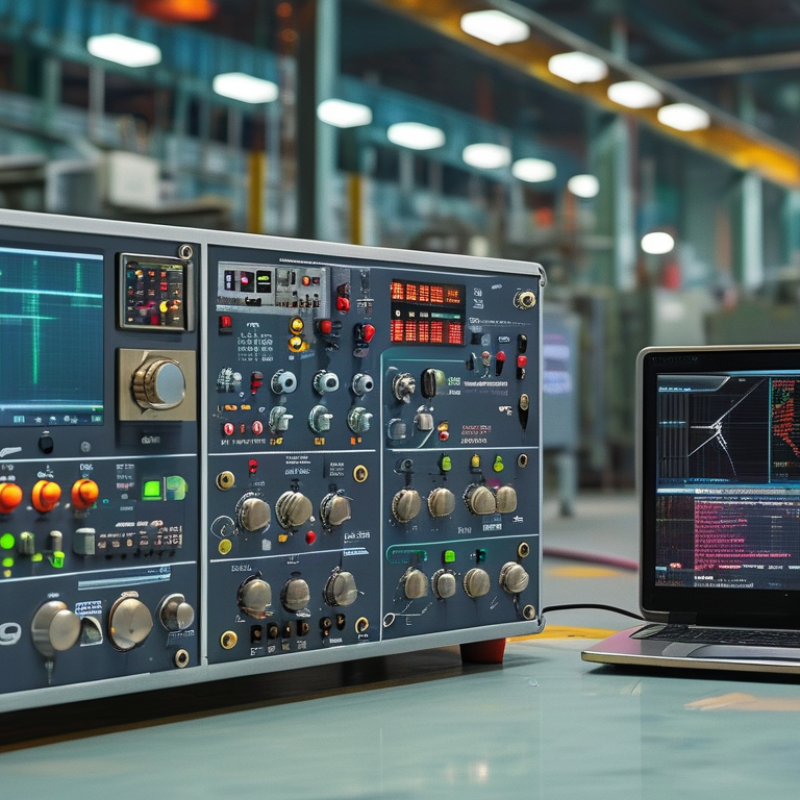
A phase shifter is a device that alters the phase of an electromagnetic wave. Its primary function is to adjust the phase for signal processing in various applications. The device can manipulate the phase relationship between input and output signals for precise control. This functionality is critical in industries such as telecommunications and electronics.
In telecommunications, phase shifters enhance signal integrity. They play a key role in high-frequency communications. A report from the Microwave Journal indicates a projected growth rate of 12% annually in the phase shifter market. This is driven by increasing demand for 5G technology. In radar systems, phase shifters improve target detection and tracking accuracy. They provide superior control over signal direction, making them invaluable in military applications.
Despite their importance, challenges exist. Not all phase shifters can operate efficiently across all frequency ranges. Some designs may introduce unwanted distortion. The trade-off between size, weight, and performance must also be considered. Designers must balance these factors to achieve optimal performance. Each application presents unique requirements that need expert evaluation. Engaging in continuous innovation is essential for addressing these industry challenges.

Phase shifters are critical components in various industries. They manipulate the phase of signals without altering their amplitude. This principle is vital in applications like telecommunications, radar systems, and signal processing.
The operation of phase shifters typically involves controlling signal paths. They can use electronic, mechanical, or acoustic methods. For example, electronic phase shifters use transistors to change phases instantly. Mechanical phase shifters often involve physical repositioning, which can be slower. Each method has its trade-offs in speed, precision, and complexity.
Tips: When considering a phase shifter, think about the specific application requirements. How fast does the phase shift need to occur? Precision is key in many uses.
In many scenarios, design choices can lead to unexpected challenges. A phase shifter might perform well in theory but may struggle under real-world conditions. Planning for these discrepancies is crucial. Testing and iteration will refine the application of phase shifters.
Testing can reveal issues with signal integrity. Engineers must address these aspects to ensure reliable performance. As industries continue to advance, phase shifters will play a larger role.
Phase shifters are essential in various industries, facilitating critical functions in signal manipulation and processing. There are several types of phase shifters used across sectors, each providing unique advantages tailored to specific applications.
One common type is the analog phase shifter. It uses variable capacitors or inductors to adjust the phase of a signal continuously. These devices are often found in telecommunications. Engineers may face challenges in maintaining stability, particularly with temperature fluctuations. It's crucial to ensure reliable performance in changing environments.
Digital phase shifters represent another category. They rely on discrete components to achieve phase changes, offering precise control. Often employed in radar and satellite systems, they excel in applications requiring rapid adjustments. However, their complexity can sometimes lead to increased power consumption, which may need careful management. Understanding the trade-offs of each type is vital for effective implementation.
| Type of Phase Shifter | Operating Principle | Typical Applications | Advantages | Disadvantages |
|---|---|---|---|---|
| Digital Phase Shifter | Uses digital control to adjust the phase. | Telecommunications, Radar Systems | High precision, fast switching. | Complex design, higher cost. |
| Analog Phase Shifter | Uses analog components to modify the phase. | Signal Processing, Amplitude Modulation | Simple design, lower cost. | Limited precision, slower response. |
| Mechanical Phase Shifter | Physically adjusts components to shift phase. | Antenna Systems, RF applications | High reliability, robustness. | Bulkier size, slower adjustments. |
| Phase-Locked Loop (PLL) | Uses feedback to maintain the phase relationship. | Synchronization, Clock Generation | Excellent stability, can lock to varying frequencies. | Complex circuitry, can introduce phase noise. |
Phase shifters are crucial components in telecommunications. They adjust the phase of signals, allowing for improved signal reception and transmission. These devices can manipulate the quality of communication in various applications, from satellite communications to wireless networks.
In telecommunications, phase shifters enable better signal integrity. They help align signals to reduce interference. This is especially important for systems that rely on precise timing, such as GPS and mobile networks. By shifting the phase, they can improve signal clarity and reliability. This can lead to higher data rates and more stable connections.
Despite their advantages, phase shifters may introduce some challenges. Their performance can vary based on temperature and frequency. Engineers must carefully consider these factors when designing systems. There are times when the alignment may not be perfect, leading to signal degradation. Addressing these issues requires constant innovation and adaptation in design methodologies. Overall, phase shifters play an essential role in enhancing communication systems, but they also present areas for ongoing improvement.
The future of phase shifter technology looks promising and dynamic. As industries continue to evolve, the demand for precise control over phase shifts escalates. This is critical for applications in communications, radar, and electronic warfare. Innovations in materials and design may enhance the efficiency of phase shifters, allowing them to operate in even more challenging environments.
One area of development is in the use of advanced materials. Researchers are exploring metamaterials that can achieve unprecedented levels of tunability. These materials may lead to smaller, lighter phase shifters, while also improving performance. However, not all experiments succeed. Some approaches may not yield the expected efficiency gains. This inconsistency can lead to setbacks in product development.
Integration with artificial intelligence is another trend. AI can optimize phase shifter parameters in real-time, improving adaptability. But, AI's reliance on data can create challenges. Inaccurate data may result in flawed optimizations. Industry experts must ensure that algorithms are robust and reliable to avoid these pitfalls. This area of research requires careful consideration and ongoing evaluation to achieve desired outcomes.
Please fill out this form and we will get an order or estimate ready for you. Please give us as much detail as you can for us to get started, and we will contact you to finsh the work order.