How to Choose the Right Trailer Generator?
Choosing the right Trailer Generator begins with the load, not the trailer’s appearance. A construction site may need 80 kW today, but motor starting currents can demand twice that momentarily. Lighting, pumps, compressors, and battery chargers also create different electrical patterns.
Industry data shows why careful selection matters. MarketsandMarkets estimates the global generator market will grow from approximately USD 20 billion in 2024 to more than USD 30 billion by 2029. Grand View Research also identifies rental fleets, construction, and temporary power as major demand drivers. These reports indicate a practical reality: mobile power requirements are becoming more varied, not simpler.
As Cummins power-systems specialist Mark P. Snyder advises, “A generator should be selected around the application’s real load profile, not its advertised maximum.” That principle deserves attention. A unit rated at 100 kW may not deliver 100 kW continuously under high temperatures or altitude. Fuel quality, operating hours, noise limits, emissions requirements, and service access can change the decision completely.
Think beyond capacity. Check phase configuration, voltage flexibility, automatic transfer compatibility, runtime, towability, and enclosure protection. A muddy jobsite can expose weak doors, poor cable storage, and undersized tires quickly. Small details become expensive problems.
The choice is rarely perfect. Load estimates may be incomplete. Rental flexibility may matter more than ownership. This guide compares these trade-offs, helping readers choose a Trailer Generator that is safe, efficient, and suited to actual field conditions.
What a Trailer Generator Is and How It Supports Mobile Power Needs
How to Choose the Right Trailer Generator?
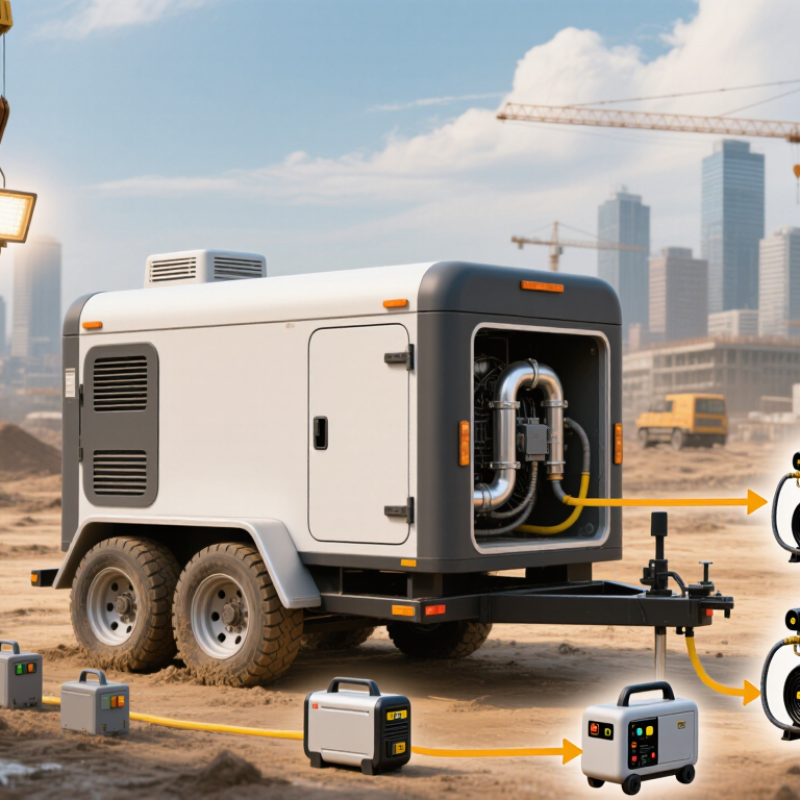
A trailer generator is a mobile power system mounted on a towable frame. It combines an engine, alternator, fuel system, control panel, and protective enclosure. Workers can move it between construction sites, outdoor events, emergency repairs, or remote facilities. Unlike a portable household unit, it usually supports higher loads and longer operating periods. Some models provide single-phase power, while others handle demanding three-phase equipment.
Choosing the right unit begins with an honest load calculation. List every tool, light, pump, and heater that may run together. Record both running watts and starting watts, because motors can briefly demand much more power. A 20-kilowatt generator may look sufficient, but simultaneous startups can overload it. Leave practical reserve capacity. I once underestimated temporary lighting, and the extra demand became an avoidable problem.
Trailer size, towing limits, fuel capacity, noise, and weather protection also matter. Check the tow vehicle’s rated capacity, braking requirements, and connection type before moving the generator. On site, place it on stable ground with clear ventilation and safe cable routes. A fuel tank offering twelve hours of runtime can reduce interruptions, but refueling still needs careful planning. Remote monitoring is useful, though sensors can fail and should not replace physical inspections. Review voltage compatibility, outlet protection, grounding arrangements, and local electrical requirements with a qualified professional. Reliability comes from matching real working conditions, not choosing the largest machine.
How to Match Generator Capacity With Your Equipment and Load Requirements
How to Choose the Right Trailer Generator?
Matching generator capacity to equipment requires more than adding nameplate wattages. List each load, its running watts, and its starting demand. Motors, pumps, compressors, and refrigeration units can briefly draw two to seven times their normal power. A pump may use 1,800 running watts but demand 4,500 watts during startup. Lights and controls may add another 800 watts. That creates about 2,600 running watts and a much higher peak requirement.
Choose a generator with a continuous rating above the calculated running load. Keep a practical reserve of 20 to 25 percent for temperature changes, cable losses, and future equipment. Check the surge rating separately. A 7 kW unit may handle the example, but only if its starting performance matches the pump. Never assume the advertised maximum equals usable continuous power. It does not.
Field conditions can change the calculation. Cold starts, long extension cables, high altitude, and dusty air may reduce performance. Confirm voltage, phase, frequency, and connection type before selecting a trailer generator. A clamp meter can reveal real operating demand when equipment labels seem optimistic.
I once underestimated a compressor because its average load looked harmless; its startup repeatedly tripped the system. That mistake was avoidable. Review each machine’s manual, stagger motor starts when possible, and ask a qualified electrician to verify the final load plan. Simpler calculations are easier to trust, but they are not always accurate.
How to Evaluate Towability, Portability, and Operating Conditions
How to Choose the Right Trailer Generator?
How to Evaluate Towability, Portability, and Operating Conditions
Choosing a trailer generator starts with the journey, not the outlet. Check the generator’s gross weight, trailer rating, hitch capacity, and tongue weight. These figures must work together. A heavy unit can stress a small vehicle, especially on steep roads or uneven ground. Confirm the tow vehicle’s rated capacity, then leave a safety margin for fuel, tools, and cables. Proper brakes, tires, lighting, and secure tie-down points also matter. A generator that tows well on a flat highway may feel unstable on a narrow construction road.
Portability affects daily work. Look for balanced weight, strong lifting points, and wheels suited to gravel or wet soil. Measure the storage area before purchasing. Small details matter. Doors, ramps, and turning space can decide whether the unit is practical. Operating conditions require equal attention. High altitude can reduce engine output, while heat may affect cooling. Dust can clog filters, and moisture can damage electrical connections. Select an output rating above your normal load, but avoid excessive oversizing. It increases transport weight and may waste fuel.
Tips: Test the towing setup before a long trip. Inspect tire pressure, hitch locks, cable routing, and fuel security. Read the operating manual carefully. My checklist is not perfect; real sites often expose assumptions. A short trial on your usual terrain can reveal vibration, poor visibility, or awkward handling before the generator becomes part of a demanding workday.
What Safety, Maintenance, and Compliance Features to Check
Choosing a trailer generator requires more than checking wattage and fuel capacity. Inspect the frame, wheel hubs, safety chains, reflective markings, lighting, brakes, and tire condition. A loose ground connection can turn a routine job into a serious electrical hazard. NIOSH lists carbon monoxide at 35 ppm as an eight-hour recommended exposure limit and 1,200 ppm as immediately dangerous. Therefore, select a unit with automatic shutdown, CO monitoring, and clear exhaust routing. NFPA 110 also emphasizes reliable emergency power performance, transfer equipment, testing, and documented maintenance.
Tips: Ask for the latest load-bank test, insulation-resistance readings, oil-service records, and battery inspection results. Check that emergency stops are reachable from ground level. Test alarms before delivery. They often get ignored.
Compliance depends on location and use. Confirm applicable emissions rules, noise limits, grounding requirements, and trailer regulations with the relevant authority. ISO 8528-1 provides a useful framework for generator performance, ratings, and testing. Do not accept “compliant” without supporting certificates and serial-number records. In practical inspections, I have seen clean cabinets hide cracked coolant hoses and weak trailer connectors. That is a useful reminder: paperwork is evidence, not proof. Review fuel lines for abrasion, guards for missing fasteners, and control panels for faded warning labels. Keep inspection dates visible inside the access door, where technicians can find them quickly.

