
Choosing High Quality Cabinet Hardware is not a minor finishing decision. It affects daily comfort, cabinet durability, and the visual balance of a room. A drawer may open twenty times each day. Weak slides, loose screws, or thin coatings become obvious quickly. They also create repair costs that product photos never show.
Industry research supports closer evaluation. The National Kitchen & Bath Association’s 2024 Kitchen Trends Report highlights continued investment in functional, durable kitchen components. Houzz’s 2024 U.S. Kitchen Trends Study also tracks strong homeowner interest in upgraded storage and personalized kitchen details. These findings suggest a practical point: hardware should support both appearance and repeated use. Yet, market reports often focus on sales growth, not long-term failure rates. That gap deserves attention.
A reliable selection process examines alloy composition, load ratings, finish testing, screw quality, and replacement support. Stainless steel, zinc alloy, and solid brass can perform differently under moisture, weight, and frequent handling. Certification helps, but it does not replace hands-on inspection. Open the same drawer repeatedly. Check whether the movement stays smooth. Examine the finish under bright light. Small flaws matter.
This guide compares material quality, manufacturing precision, corrosion resistance, installation performance, and supplier reliability. It also questions common assumptions. A higher price may indicate better engineering, but not always. The best choice is measurable, serviceable, and suitable for the cabinet’s actual environment.
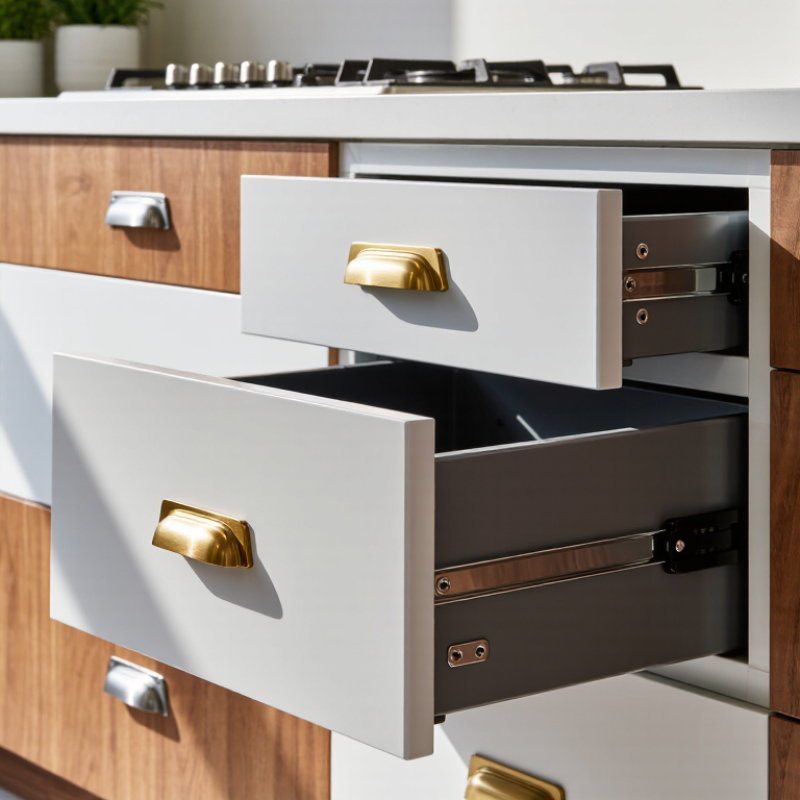
How to Choose High Quality Cabinet Hardware?
Quality begins with performance, not appearance. A smooth finish may attract attention, but reliable hardware must withstand daily pulling, twisting, and cleaning. The 2024 U.S. Kitchen Trends Study surveyed 1,337 homeowners and reported a median major-kitchen renovation cost of about $60,000. At that investment level, small failures become expensive annoyances. A loose pull can damage a cabinet door over time. A weak hinge can also create uneven gaps.
Look for materials suited to the installation environment. Solid brass, stainless steel, and carefully specified zinc alloys can offer different balances of strength, weight, and corrosion resistance. The right choice depends on moisture, cleaning habits, and usage frequency. ANSI/BHMA cabinet-hardware standards provide useful testing frameworks for durability and corrosion resistance. Ask for the applicable standard, test method, and finish-care instructions. “Heavy duty” alone proves very little.
Test before ordering large quantities. Open a sample drawer repeatedly. Check whether the screw threads engage cleanly and whether the handle flexes under pressure. I have seen attractive hardware fail because its mounting screws were too short. That detail is easy to miss. Finish consistency matters, but it is not the whole definition of quality. A minor shade variation may be acceptable across handmade pieces, while sharp edges or uneven plating deserve concern. Product specifications, traceable testing, and clear replacement support make quality easier to verify.

Choosing durable materials and reliable finishes matters more than selecting a fashionable shape. Solid brass offers weight, repairability, and strong corrosion resistance. Stainless steel, especially 304 grade, suits humid kitchens and frequently touched surfaces. Zinc alloy can reduce cost, but its quality varies widely. Check the internal structure, not only the polished exterior.
Houzz’s 2024 U.S. Kitchen Trends Study reported a median major kitchen renovation spend of $75,000 in 2023. That investment makes premature hardware failure frustrating and expensive. The NKBA 2024 Kitchen Trends Report also highlights durable, low-maintenance materials as continuing priorities. Ask suppliers for coating information and testing records. ASTM B117 salt-spray results can indicate corrosion resistance, while ASTM D3359 adhesion testing helps assess finish bonding. These tests are useful, but they do not predict every household condition. I have seen attractive finishes dull near sinks after repeated exposure to water and cleaner. A beautiful sample can still disappoint.
Tips: Compare two samples in daylight and under warm indoor lighting. Rub each finish with a soft, damp cloth. Avoid harsh cleaners unless the care sheet permits them. Look for smooth edges, tight joints, and screws that match your cabinet thickness. PVD finishes often resist wear well, but application quality still matters. Ask about replacement screws and warranty terms. I would not choose hardware by weight alone; heavy does not always mean durable. Test the grip with wet hands, too.
Choosing high-quality cabinet hardware starts with proportion, not decoration. Measure door and drawer fronts before selecting pulls or knobs. A pull near one-third of a drawer width often feels balanced, but cabinet scale can change that impression. Large drawers may need two pulls for steadier operation. Small doors usually suit compact knobs or short pulls. I learned this after fitting oversized handles to narrow doors; they looked striking, yet the edges felt crowded.
Match the hardware style to the cabinet design. Flat-panel cabinets accept clean, simple forms, while framed or traditional doors can support more detailed profiles. Finishes should relate to nearby elements, but they do not need to match perfectly. A warm metal can soften painted cabinets, whereas a dark finish may sharpen pale wood. Check the hardware in daylight and evening lighting. Samples reveal more than online images. Finish descriptions can also be misunderstood.
Quality depends on construction and daily comfort. Choose solid-feeling pieces with smooth edges, secure mounting points, and screws suited to the door thickness. Test one handle before ordering a full set. Open the cabinet repeatedly with wet or dry hands. Does the pull turn in your grip? Does a knob catch clothing? These small tests reflect real use better than appearance alone. I still leave room for doubt: a beautiful finish may age differently in a humid kitchen. Recheck care instructions and inspect the mounting after several weeks. Good hardware should fit the design, the hand, and household habits.
High-quality cabinet hardware should work quietly under daily stress. A polished finish is not enough. Open each drawer several times. Check whether the handle stays firm, the drawer closes evenly, and the motion feels controlled. The 2024 Houzz U.S. Kitchen Trends Study found that 76% of renovating homeowners upgraded their cabinets. That figure shows how often hardware decisions accompany major kitchen improvements.
Measure before buying. Confirm the handle’s center-to-center spacing, screw length, and mounting-hole diameter. A small mismatch can leave a drawer crooked or force a rushed workaround. Follow the installation guide, then tighten screws gradually from both sides. Avoid overtightening. It can damage thin cabinet panels or restrict movement. ANSI/BHMA A156.9 provides performance requirements for cabinet hardware, so compliance information deserves attention during selection.
Comfort is easier to judge with your hands than with photographs. Pull a loaded drawer using three fingers. Test a door while standing, bending, and carrying a plate. Rounded edges usually feel kinder during repeated use. Large pulls may suit wide drawers, while compact knobs can challenge users with limited grip strength. In practice, showroom testing can mislead. Empty drawers feel perfect. Add weight, and weak mounting becomes obvious. I would also test the hardware after installation for several days, because a comfortable first impression is not always a reliable one.
A practical evaluation model prioritizing functionality, installation, and user comfort.
The chart uses a 100-point selection model: functionality receives the highest weight because hardware must operate reliably, while installation and user comfort are equally important for long-term satisfaction. Compare products by checking smooth movement, secure fastening, alignment tolerance, grip comfort, and edge safety.
How to Choose High Quality Cabinet Hardware?
Comparing Quality, Warranty, and Overall Value
When choosing cabinet hardware, judge the part you can feel, not only the shine. A solid pull should feel balanced, with clean edges and threads that accept screws smoothly. For hinges and slides, check movement, alignment, and the stated load rating. Open a drawer repeatedly. Listen for scraping. In my experience, uneven gaps often reveal weak adjustment systems before visible damage appears.
Material matters, but construction matters more. Thick metal, consistent plating, and corrosion-resistant finishes usually withstand busy kitchens better. Ask how the hardware was tested, including cycle counts, salt-spray exposure, and load limits. Clear test methods build confidence because vague claims are difficult to verify. I once favored a cheaper set because it looked identical; the screws loosened after several months. That mistake changed my comparison process.
Warranty terms show how seriously a supplier supports its product. Read the coverage period, replacement procedure, labor exclusions, and proof-of-purchase requirements. A long warranty has limited value if replacement parts are unavailable or shipping is unclear. Calculate overall value by combining purchase price, installation time, maintenance, and expected service life. A slightly higher price may be sensible when adjustment is easier and failures are less likely. Still, no specification replaces careful inspection. Touch the finish. Test the fit.
| Evaluation Area | Entry-Level Hardware | Mid-Range Hardware | Premium Hardware | What to Check Before Buying |
|---|---|---|---|---|
| Primary Material | Zinc alloy or thin stamped steel; suitable for light or occasional use. | Solid zinc alloy, stainless steel, or reinforced steel with more consistent construction. | Solid brass, 304 stainless steel, or heavily reinforced steel designed for frequent use. | Confirm the base material rather than judging quality by the surface finish alone. |
| Corrosion Resistance | Acceptable in dry indoor rooms when the finish is intact; more vulnerable to moisture and salt exposure. | Generally suitable for kitchens, utility rooms, and bathrooms with normal ventilation. | Better suited to humid environments when supported by a corrosion-resistant base and tested finish. | Ask whether corrosion testing was performed and whether the test applies to the complete finished product. |
| Finish Quality | Basic painted, electroplated, or clear-coated finish; color consistency may vary between batches. | More even plating or coating with improved resistance to everyday handling and cleaning. | Consistent coating or PVD finish with stronger resistance to wear, discoloration, and surface abrasion. | Inspect edges, corners, screw holes, and contact points for thin or uneven coverage. |
| Structural Strength | Functional for standard cabinet doors and drawers, but may flex under heavier or frequent use. | More rigid construction with reliable performance for most residential applications. | Rigid, precisely formed components with tighter tolerances and better resistance to loosening. | Check the thickness, mounting method, screw quality, and any published load or cycle information. |
| Moving Components | Basic hinges or slides with limited adjustment and standard operating smoothness. | Improved adjustment, smoother movement, and better alignment retention. | Precision adjustment, soft-close or controlled motion, and smoother operation over repeated cycles. | Operate the component several times and check for noise, side-to-side movement, and uneven resistance. |
| Fasteners and Mounting | Standard screws and simple mounting hardware; installation accuracy is especially important. | Better-matched fasteners and more dependable mounting plates or threaded inserts. | Precisely fitted fasteners, reinforced mounting points, and installation systems designed for repeated adjustment. | Verify screw length, thread type, head style, and compatibility with the cabinet material. |
| Typical Market Warranty | About 1 year, often limited to manufacturing defects. | Commonly 3–5 years, subject to installation and maintenance conditions. | Commonly 5–10 years, with some parts or finishes covered under separate terms. | Read exclusions for normal wear, finish changes, improper installation, moisture, and commercial use. |
| Maintenance Needs | Use a soft cloth and mild soap; avoid abrasive cleaners and prolonged moisture. | Routine wiping is usually sufficient; promptly dry water, grease, and cleaning residue. | Usually low maintenance, but the specified cleaning method must still be followed to protect the finish. | Never assume that bleach, ammonia, scouring pads, or acidic cleaners are safe for the finish. |
| Replacement and Repair | Low initial replacement cost, but matching an aged finish may be difficult. | Good balance of availability, serviceability, and replacement cost. | Higher replacement cost, but better documentation and access to compatible components may reduce long-term disruption. | Check spare-part availability, product dimensions, finish codes, and whether individual components can be replaced. |
| Overall Value | ★★★☆☆ Best for budget projects, low-use areas, or temporary installations. | ★★★★☆ Often the best balance of purchase price, durability, appearance, and warranty coverage. | ★★★★☆ Best for high-use kitchens, demanding environments, and projects where long-term performance is the priority. | Compare total ownership cost, not only the purchase price: installation, maintenance, replacement, and warranty support all matter. |
| Recommended Selection | Choose when use is light and the environment is dry. | Choose for most residential kitchens and bathrooms where dependable daily performance is needed. | Choose when frequent use, humidity, design consistency, or long service expectations justify the higher investment. | Prioritize the material, construction, finish testing, warranty conditions, and verified compatibility with the cabinet. |
Please fill out this form and we will get an order or estimate ready for you. Please give us as much detail as you can for us to get started, and we will contact you to finsh the work order.