10 Essential Tips for Choosing the Best Router Tables for Your Workshop?
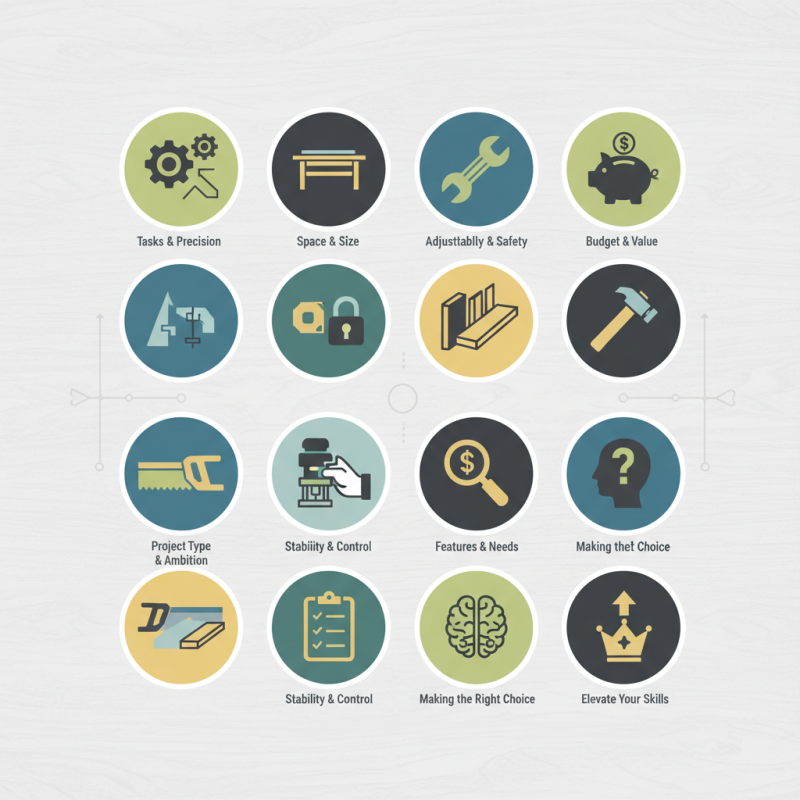
Choosing the right router tables for your workshop can be a daunting task. With so many options available, it's easy to feel overwhelmed. Router tables are essential for anyone serious about woodworking. They provide stability and precision for your projects. Think about the tasks you plan to undertake. Will you be creating intricate joints or simply shaping edges?
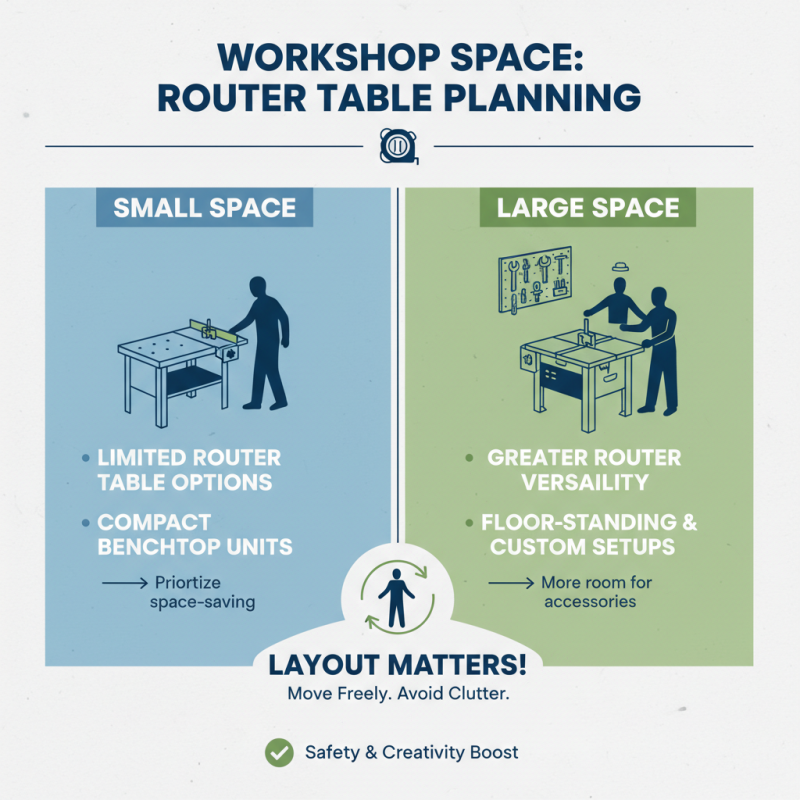
Consider the space you have in your workshop. A compact router table may be ideal for smaller areas, but can it handle larger projects? Look at the features that matter most, such as adjustability and safety mechanisms. Not all router tables are created equal, and some may not meet your needs.
Pay attention to the materials used in construction. A sturdy table can make a significant difference in your woodworking experience. Evaluate your budget as well. Sometimes, the cheapest option may lead to frustration. Reflect on the types of projects you aspire to create. Your router table should enhance your skills, not hinder them. Making the right choice will elevate your woodworking journey.
Understanding Router Tables and Their Importance in Workshops
Router tables are crucial tools in any workshop. They allow woodworkers to shape and finish edges with precision. Understanding their features can greatly impact the quality of your work. If you want to achieve professional results, investing in a quality router table is essential.
When considering a router table, size matters. A larger table provides more surface area for stability. However, a compact size might fit better in small shops. Evaluate your workspace before making a decision.
Pay attention to the fence system. An adjustable fence allows for more accurate cuts. Check for easy-to-use clamps as well. These details might seem minor, but they can affect your workflow.
Look at the material and build quality. A sturdy table can withstand heavy use. Plastic models might be lighter, but wood or metal offers better durability. Reflect on your work habits. You may find that a more robust table suits your needs.
Consider additional features. Built-in storage can help keep tools organized. Dust collection systems help maintain a clean environment. Such conveniences enhance your woodworking experience. A good router table should fit your specific needs. Don't rush the decision; take your time and choose wisely.
Router Tables: Key Features and Their Importance in Workshops
Key Features to Consider When Choosing a Router Table
Choosing the right router table is essential for any workshop. One key feature to consider is the size of the table. A larger surface provides stability and ample workspace for large projects. A study highlighted that 65% of woodworkers prioritize table size when selecting a router table.
Another crucial aspect is adjustability. Router tables with easy-to-use height and angle adjustments can significantly improve accuracy. A report indicated that 70% of users prefer tables that allow for quick adjustments. Look for models with precision control options to ensure clean and precise cuts.
Portability is another feature to think about, especially for smaller workshops. A lightweight design allows for easy transport without sacrificing stability. Be mindful, as portability can sometimes lead to compromise on sturdiness. Balancing these features effectively is key to finding the right match for your needs.
10 Essential Tips for Choosing the Best Router Tables for Your Workshop
| Feature |
Description |
Importance |
| Table Size |
Consider the workspace and material sizes you work with. A larger table provides more stability. |
High |
| Material |
Tables can be made from MDF, aluminum, or phenolic. Choose one that offers durability and flatness. |
High |
| Dust Collection |
Good dust collection minimizes cleanup and improves visibility while working. |
Medium |
| Router Compatibility |
Ensure the table is compatible with the router you own or plan to purchase. |
High |
| Adjustment Features |
Look for easy and precise adjustment capabilities for height and angle. |
High |
| Safety Features |
Consider tables with safety features such as guards and emergency stops. |
High |
| Miter Slots |
Miter slots allow for auxiliary equipment to aid in precision work. |
Medium |
| Portability |
If you need to move your router table frequently, look for a lightweight option. |
Low |
| Price |
Find a balance between your budget and the features offered. |
High |
| Warranty |
A good warranty can provide peace of mind and ensure product quality. |
Medium |
Types of Router Tables: Which One Suits Your Needs?
Choosing the right router table is pivotal for any woodworker. The three main types are benchtop, cabinet, and portable router tables. Each type caters to different needs and workshop spaces. Benchtop models are compact and affordable. They fit well in small shops. These tables, however, may lack stability for larger projects.
Cabinet router tables offer more durability. They are larger and provide better precision. This type can house powerful routers. However, they require more space and can be more expensive. Meanwhile, portable tables are great for on-the-go projects. They are lightweight and easy to set up. Yet, they might not have the same level of accuracy as other types.
Reflecting on your needs is crucial before making a choice. Consider aspects like space, portability, and budget. Sometimes, the perfect table might not exist. You may need to compromise on some features. It’s essential to understand what you value the most. After all, every woodworker has unique requirements.
Budgeting for a Quality Router Table: What to Expect
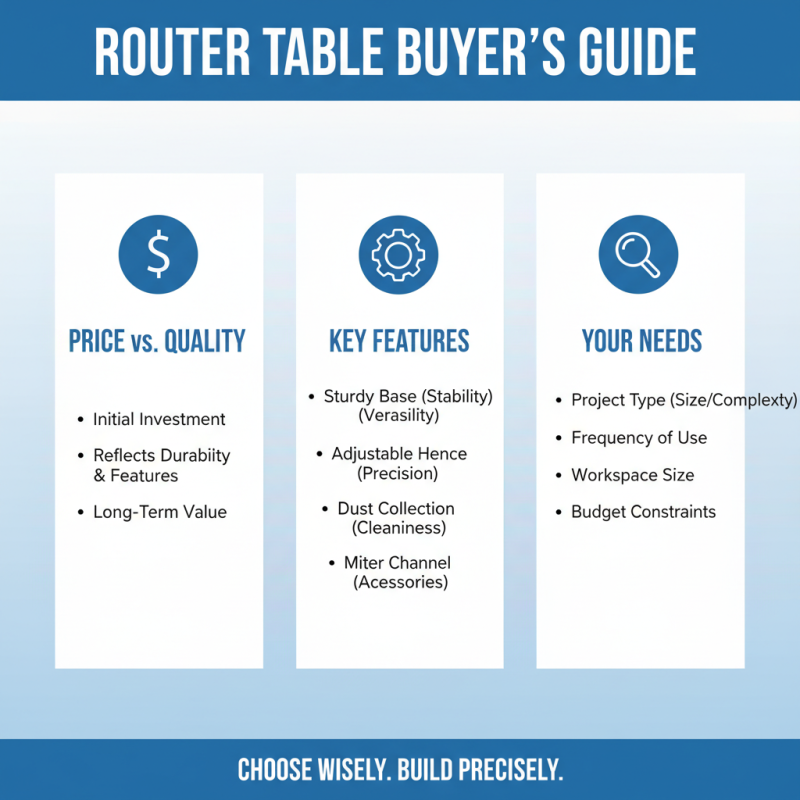
Choosing a router table can be challenging. The price often reflects quality, and it’s essential to understand what you’re investing in. A quality router table isn’t just about the initial cost. Think about the features you'll use the most. Adjustable heights, sturdy bases, and reliable fences are vital for precise work.
Budgeting is crucial during your search. Set aside funds not just for the table but also for accessories. A good fence or a dust collection system may add to your costs but will improve your experience. It's easy to under-budget when overwhelmed by options. Taking time to research can prevent regrets later.
While high-end options may seem attractive, consider your actual needs. Will you be using it regularly, or just for occasional projects? Sometimes, a mid-range table will serve you well. It’s wise to balance quality and functionality against your budget constraints. Reflect on your workshop space, too. The best choice should fit your specific environment and usage frequency.