Why Choose a Cylindrical Gearbox for Your Industrial Needs?
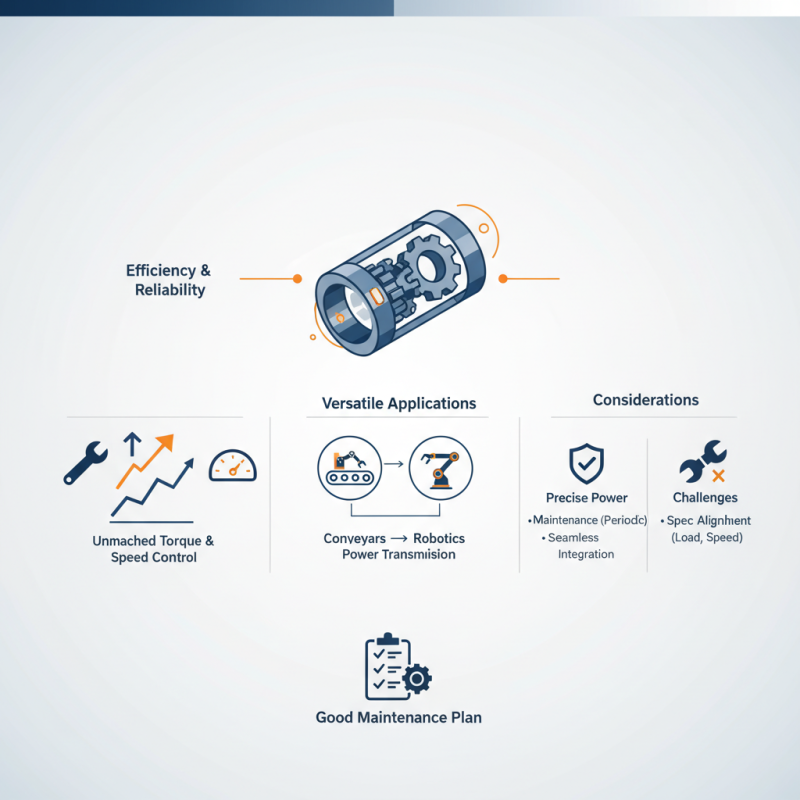
In the world of industrial machinery, a Cylindrical Gearbox stands out for its efficiency and reliability. Dr. Jane Anderson, a leading expert in gearbox design, emphasizes, "Cylindrical gearboxes provide unmatched torque and speed control." These factors make them a preferred choice for various applications.
Cylindrical gearboxes excel in tasks requiring precise power transmission. Their design allows for seamless integration in systems ranging from conveyors to advanced robotics. However, selecting the appropriate gearbox can be challenging. Many users overlook key specifications. For example, load capacity and output speed must align with operational needs.
Despite their advantages, cylindrical gearboxes are not flawless. Some users report maintenance difficulties over time. It’s critical to implement a good maintenance plan. Understanding these limitations can enhance performance and lifespan. Embracing both the strengths and weaknesses of cylindrical gearboxes leads to better industrial solutions.
Understanding the Basics of Cylindrical Gearboxes in Industry
Cylindrical gearboxes play a significant role in various industrial applications. Their ability to transmit power efficiently makes them ideal for heavy machinery. According to the latest industry report, cylindrical gearboxes can achieve up to 98% efficiency in power transmission. This efficiency reduces energy costs in large-scale operations, making them reliable choices for industries requiring consistent performance.
Understanding their basic construction reveals key advantages. Typically, these gearboxes consist of two or more cylinders with teeth that mesh smoothly. This design minimizes backlash and enhances precision in applications like conveyor systems and mixing equipment. A study published by the American Gear Manufacturers Association states that well-manufactured cylindrical gearboxes have lifespans exceeding 10,000 hours. This durability ensures less frequent replacements and lower maintenance costs.
Tips: Regular maintenance checks can prevent unexpected failures. Monitor for noise or vibrations that may indicate wear. Additionally, be aware of load limits to avoid overworking the gearbox beyond its capabilities. These simple practices contribute to extended operational efficiency.
Key Advantages of Cylindrical Gearboxes Over Other Types
Cylindrical gearboxes are a preferred choice in various industrial applications due to their unique advantages. One key benefit is their mechanical efficiency. According to a report by the American Gear Manufacturers Association, cylindrical gearboxes can achieve efficiency ratings of up to 98%. This high efficiency reduces energy consumption, leading to cost savings in the long run.
Another significant advantage is their compact design. These gearboxes provide a high torque-to-weight ratio, allowing for space optimization in machinery. This is especially relevant in industries like automotive and manufacturing, where space is at a premium. A comparative analysis of gear types reveals that cylindrical designs occupy 20-30% less space than their bevel counterparts while still delivering comparable performance.
However, it’s important to acknowledge some challenges. Proper alignment during installation is critical; misalignment can lead to premature wear. Regular maintenance is also essential to ensure longevity and performance. Despite these challenges, the reliability and robustness of cylindrical gearboxes make them an ideal choice for many industrial applications. Their advantages often outweigh the minor drawbacks, proving them to be a sound investment for efficient operation.
Advantages of Using Cylindrical Gearboxes
Applications of Cylindrical Gearboxes in Various Industries
Cylindrical gearboxes are widely used across various industries due to their unique design and functionality. These gearboxes excel in applications where torque and speed consistency matter. They are often found in manufacturing, mining, and transportation. In the manufacturing sector, cylindrical gearboxes help power conveyor belts. Their robust construction can handle heavy loads, making them essential in assembly lines and processing equipment.
In the mining industry, reliability is crucial. Cylindrical gearboxes provide the durability needed to operate in harsh conditions. They are used in drilling equipment and material handling systems. This adaptability ensures that operations run smoothly, even in challenging environments.
Furthermore, in the transportation sector, these gearboxes play a vital role in vehicles' transmission systems. They enable efficient energy transfer, vital for heavy-duty trucks and bulk carriers.
Despite their advantages, cylindrical gearboxes are not without challenges. Maintenance can be complex, and improper alignment leads to premature wear. It is essential to regularly inspect and adjust these systems to maintain efficiency.
As industries continue to evolve, the role of cylindrical gearboxes will likely expand, necessitating ongoing evaluation of their performance and applications.
Factors to Consider When Choosing a Cylindrical Gearbox
When selecting a cylindrical gearbox, several factors come into play. One critical aspect is load capacity. The gearbox must handle the required torque without strain. Insufficient load capacity can lead to failure. Examine the materials used in construction. High-quality steel can offer better durability. A premium gearbox will provide a longer lifespan.
Another essential factor is efficiency. A well-designed gearbox minimizes energy loss. Look for gearboxes with high gear ratios. They can improve the output speed while reducing input power. Also, consider the operating environment. Will the gearbox face extreme temperatures? Dust and moisture can also impact performance. Proper sealing becomes crucial.
Ease of maintenance is another point to ponder. Regular inspections can prevent larger issues. Some designs facilitate easier disassembly. A gearbox that is tough to maintain can cause downtime. Finally, think about the noise levels. Excessive noise may indicate problems. Understanding these factors will guide you in choosing the right gearbox. Adjustments and improvements may be necessary as you assess your operating conditions.
Maintenance Tips for Ensuring Longevity of Cylindrical Gearboxes
Cylindrical gearboxes are essential in many industrial applications. To ensure their longevity, regular maintenance is key. Start by inspecting the lubrication levels. Proper lubrication reduces friction and wear. Check for any signs of leaks, as inadequate lubrication can lead to severe damage over time.
Vibration monitoring is another effective maintenance tip. Excessive vibration can indicate misalignment or wear. Conduct routine checks with vibration analysis tools. It’s important to pay attention to unusual noises during operation. These can signal underlying issues that need immediate attention. Ignoring them could result in costly repairs.
Do not overlook cleaning. Dust and debris can accumulate, affecting performance. Schedule regular cleaning of the gearbox exterior and surrounding area. This simple task can enhance operational efficiency. Ensure you also review the gearbox alignment periodically. Misalignment can accelerate wear and lead to failures. A proactive approach to these maintenance tasks can save time and money. You’ll appreciate the benefits of a well-maintained cylindrical gearbox in the long run.

