How to Choose the Right Inline Duct Fan Motor?
Choosing an Inline Duct Fan Motor is not just a matter of matching the fan’s diameter. The motor must suit the airflow target, duct resistance, operating hours, and available power. A fan that looks adequate on a product label may struggle once elbows, filters, and long duct runs are added. Small details matter.
Frank P. Bleier, author of the engineering reference Fan Handbook, is a recognized authority on fan selection. The following is an editorial principle, not a verified quotation from Bleier: “Choose for the system’s airflow and resistance, not the motor label alone.” It captures a useful starting point, but real installations still need careful checking.
This guide explains how to compare motor types, speed control, efficiency, noise, and duty ratings. It also shows why static pressure and the fan curve deserve attention before purchase. Check the equipment label and manufacturer’s performance data. Measure where possible. A quiet fan in a short, straight duct may behave very differently from one pushing air through a filter and several bends. No single motor fits every setup. The best choice balances reliable airflow, practical energy use, and the conditions the fan will actually face. Even then, selection can involve trade-offs; expected airflow is not always the airflow a finished system delivers.
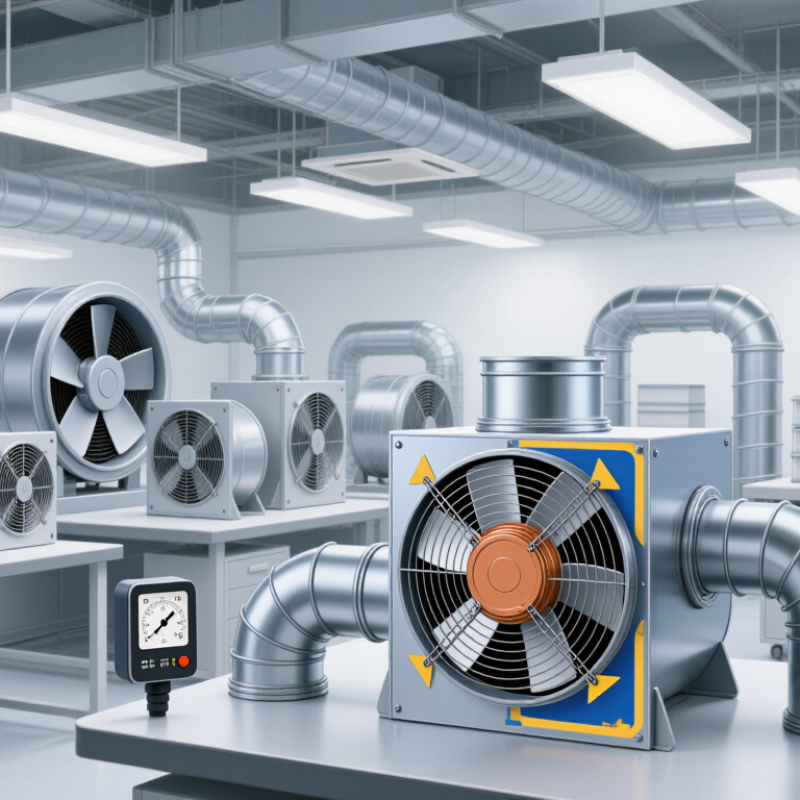
Identify the Airflow and Static Pressure Your Duct System Requires
Choosing an inline duct fan motor starts with the airflow the room actually needs. Estimate room volume by multiplying its length, width, and height, then use the applicable ventilation guidance for the space. A bathroom, workshop, and grow room do not share the same airflow target. Avoid choosing a fan by duct diameter alone; a wide duct cannot compensate for an unsuitable operating point.
Then account for static pressure, the resistance air encounters as it moves through the system. Long duct runs, tight bends, grilles, dampers, and filters all add resistance. A fan rated for high airflow in open air may deliver much less once connected. Check the fan curve and find the airflow it can provide at your estimated pressure, often listed in inches of water gauge. Real ducts vary. This estimate is not perfect; real installations rarely match a clean diagram.
For a practical check, measure airflow at the grille with an appropriate instrument, and use a manometer if pressure readings are needed. Compare results with your target, not just the fan’s advertised free-air rating. If airflow falls short, inspect for crushed flex duct, blocked filters, or sharp bends before selecting a stronger motor. Small layout fixes can matter. Recheck after changes, since a quieter fan is not necessarily moving enough air.
Compare Motor Types, Power Ratings, and Speed Controls
Inline duct fan motors usually fall into AC and electronically commutated (EC) types. AC motors are often economical and suit steady ventilation. EC motors use integrated electronics and can use less energy when running below full speed. They also offer more precise adjustment. Check the fan curve, not watts alone. A higher power rating does not automatically mean better airflow through a long duct with several bends.
Not always.
Compare the rated wattage, voltage, and operating duty with your actual setup. A fan moving air through a short, open duct faces a different load from one pushing air through a dense filter. That detail is easy to overlook. For speed control, many AC models need a compatible voltage controller, while EC models may use a specified 0–10 V input, PWM signal, or another control method. Check the motor documentation before buying a controller; similar-looking controls are not necessarily interchangeable. Listen for hum at low speed, too. A setup that works on paper can still be irritating in a quiet room. Allow some margin for duct resistance, but avoid choosing a motor by wattage alone.
Check Compatibility with the Fan, Ductwork, and Power Supply
How to Choose the Right Inline Duct Fan Motor?
Check Compatibility with the Fan, Ductwork, and Power Supply
Match the motor’s frame, shaft diameter, mounting pattern, rotation, and rated speed to the fan assembly. A motor can fit the housing yet still run at the wrong speed or turn the wrong way. Check the fan’s performance curve against the duct system’s airflow and static-pressure needs. Long duct runs, sharp bends, and restrictive grilles can increase resistance and reduce airflow. The U.S. Department of Energy’s Improving Fan System Performance: A Sourcebook for Industry reports that suitable fan-system improvements can save 20–50% of energy. That figure describes system-level potential, not a guaranteed saving from replacing a motor.
Tips: Compare the motor nameplate with the available supply: voltage, phase, frequency, and current. Confirm that any speed controller is compatible with the motor type. Check clearances and mounting dimensions before ordering. A small mismatch can mean extra work. I would also recheck the duct layout; it is easy to blame the motor when a crushed flex section or clogged filter is restricting airflow. If the wiring or protection requirements are unclear, ask a qualified electrician to verify them.
Assess Efficiency, Noise, Durability, and Maintenance Needs
Choose an inline duct fan motor by matching airflow to duct resistance, not by chasing the highest cubic-feet-per-minute rating. The U.S. Department of Energy’s Improving Fan System Performance sourcebook reports that fans account for about 15% of electricity used by motors in U.S. manufacturing. That industrial figure is not a household-use estimate, but it shows why efficiency deserves attention. Compare airflow and power draw at the same static pressure. An efficient motor that cannot move air through your actual duct is no bargain.
Noise matters in bedrooms and offices. Check sound ratings measured under standardized conditions, and consider speed control; a fan running below full speed may be quieter, if the motor and controller are compatible. Listen for rattling at startup. Small vibrations can become tiring.
For durability, review the motor’s temperature rating, bearing type, and suitability for continuous operation. In a dusty attic, accessible parts and a removable grille make cleaning less of a chore.
Still, maintenance needs are easy to underestimate: lint and dust can collect faster than expected. I would not trust a single catalog figure; installation, duct bends, and neglected cleaning can all change real-world performance.
Match Motor Specifications to Safety and Operating Requirements
How to Choose the Right Inline Duct Fan Motor?
Match the motor to the fan’s real operating conditions, not just its duct diameter. Check the nameplate for voltage, phase, frequency, and full-load current. These must match the available supply and the fan assembly. A mismatch can cause poor starting, overheating, or nuisance trips. Check the wiring diagram, too. Guessing is risky.
Then consider the air the fan must move. Long ducts, bends, filters, and dampers add resistance, so compare the motor and fan performance with the system’s airflow and static-pressure needs. Review the required speed range and confirm that any speed controller is compatible with the motor type. Also check duty rating, ambient temperature, and enclosure protection. Dust or moisture near the installation may call for a more suitable enclosure. Small details matter.
Leave room for safe installation and maintenance. Confirm mounting dimensions, cable entry, grounding provisions, and access to protective devices. Follow the manufacturer’s instructions, and have a qualified electrician assess supply and wiring concerns. A motor that fits can still be the wrong choice. I would recheck the operating point after installation, because real duct layouts rarely behave exactly like a drawing.
How to Choose the Right Inline Duct Fan Motor?
Match motor specifications to the fan’s operating load and the installation’s safety requirements.
Illustrative example: The application uses 120 W of a 150 W motor output rating, draws 1.2 A against a 1.5 A nameplate rating, and operates at 35°C with a 40°C maximum ambient rating. These figures are examples, not universal selection limits. Check the motor nameplate and manufacturer documentation for voltage, frequency, current, temperature rating, speed-control compatibility, and required protection before choosing a motor.

