How to Choose the Right CNC Engraver for Your Project Needs?
Choosing the right CNC engraver for your project can be challenging. As John Smith, a leading expert in the CNC industry, once stated, "The right machine can transform your ideas into reality." This captures the essence of why careful selection is critical.
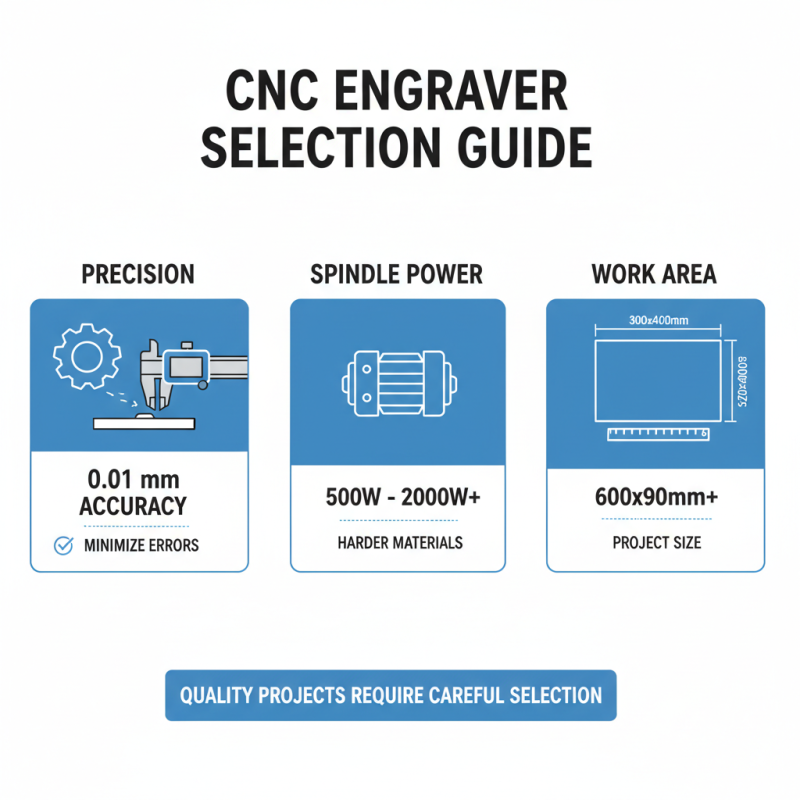
When evaluating a CNC engraver, consider the materials you'll work with. Different machines excel with wood, metal, or plastics. Features like precision, speed, and software compatibility play significant roles. Each detail matters, and overlooking them can lead to frustration.
Many users find it tempting to rush this decision. Yet, taking the time to understand your specific needs will yield better results. A poorly chosen CNC engraver can hinder creativity. Reflecting on your project's scope could lead to better outcomes.
Understanding Your Project Requirements for a CNC Engraver
When choosing a CNC engraver, understanding your project requirements is crucial. Consider what materials you will be working with. For instance, wood, metal, acrylic, and glass all require different types of engravers. According to a recent industry report, about 45% of projects involve engraving on wood. This indicates a strong need for engravers that can handle softer materials.
Evaluate the intricacy of your designs. Simple logos and text may require less precision than detailed artwork. Research shows that 60% of users struggle with achieving fine details. It's essential to select a machine with the appropriate resolution. A laser engraver may be necessary for intricate designs, while a rotary engraver suffices for basic jobs.
Budget constraints often lead to overlooked features. Many users end up purchasing basic models that cannot handle future demands. Industry stats reveal that 30% of buyers regret not investing in more versatile machines. Consider the long-term applications of your engraver, not just immediate needs. Engravers are tools for creativity, and their true potential shines when you fully understand your project requirements.
Types of CNC Engravers: Which One is Right for You?
When selecting a CNC engraver, it's crucial to understand the different types available. Each type is designed for specific tasks. For instance, laser engravers excel in precision work, making them perfect for intricate designs. They can cut through various materials, including wood and acrylic. However, they may not work well for thicker materials.
On the other hand, rotary engravers use a spinning bit to carve surfaces. They are great for depth engraving on materials like metal. Still, they might lack the finesse of laser engravers for detailed artwork. If your project requires showcasing detailed graphics, a laser engraver could be ideal. But if it’s more about creating textures and patterns, you might find a rotary option better suited.
Consider also how often you plan to use it. A hobbyist might not need the high capability of an industrial engraver. There’s also the aspect of costs. Higher-end models are more expensive but can be a worthwhile investment for serious projects. The choice depends largely on your unique needs and constraints. Making a wrong choice may lead to frustration and wasted resources. Reflect on your requirements carefully before deciding.
How to Choose the Right CNC Engraver for Your Project Needs?
| Type of CNC Engraver |
Best Material for Engraving |
Typical Applications |
Price Range |
| Laser CNC Engraver |
Wood, Acrylic, Leather |
Signage, Jewelry, Custom Art |
$200 - $5,000 |
| Rotary CNC Engraver |
Metal, Wood, Plastic |
3D Modeling, Cylindrical Objects |
$300 - $3,000 |
| Plasma CNC Engraver |
Steel, Aluminum, Copper |
Metal Fabrication, Art Pieces |
$1,000 - $10,000 |
| CNC Milling Engraver |
Wood, Metal |
Prototype Manufacturing, Parts Creation |
$500 - $25,000 |
Budget Considerations for Your CNC Engraving Needs
When considering a CNC engraver, budget often leads the way. A high-quality machine can cost thousands. However, spending wisely can yield great results without breaking the bank. Evaluate what features are essential for your projects. Do you need precision? Look for machines that offer fine detail. Larger engravings might require a bigger investment, but the output can justify the cost.
Consider the long-term expenses, too. Maintenance costs can add up over time. Some machines require more parts and upkeep than others. Will you be able to source replacement parts? This question matters, especially for lower-priced models. It’s also important to think about software. A low upfront cost may come with limited options, increasing future expenses for upgrades.
Used engravers can also be a double-edged sword. They may come at a lower price but often lack support. Understand the history of the machine. Did the previous owner take care of it? If not, you might encounter hidden costs. It's wise to invest time in research and reviews. Even then, be prepared for hurdles along the way. Remember, the right choice balances cost and capability.
Maintenance and Support: Ensuring Longevity of Your CNC Engraver
CNC engravers are valuable tools. They require regular maintenance for optimal performance. Neglecting care can lead to reduced accuracy and increased downtime. Check the machine’s manual for specific maintenance instructions. Clean the components regularly, especially the rails and the spindle. Dust and debris can accumulate, affecting precision.
Support is essential for longevity. Choose a supplier that offers good customer service. Quick responses can save time during unexpected breakdowns. Know how to troubleshoot basic problems. Sometimes, issues are minor and can be fixed quickly. Keep a log of any problems that arise and how you solved them. This record can be helpful for future reference.
It’s also wise to invest in spare parts. Having them on hand can reduce wait times. However, consider the space needed to store these parts. Too many can lead to clutter. Being organized helps in quickly locating what’s needed. Regular maintenance and proper support can ensure that your CNC engraver remains reliable for years.