How to Choose the Best Business Travel Suitcase?
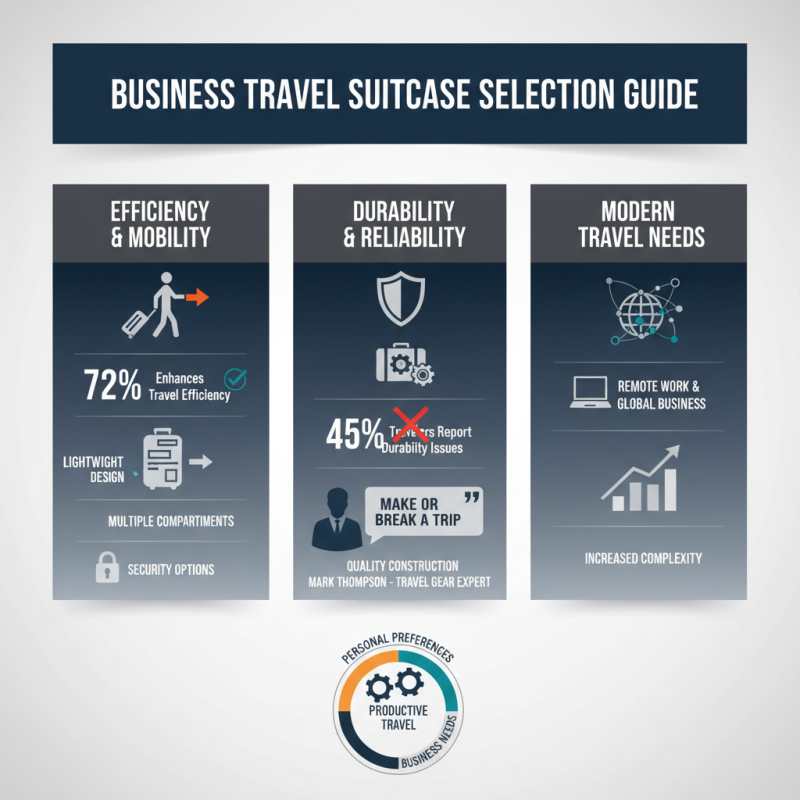
Choosing the right business travel suitcase is crucial for frequent travelers. According to industry reports, 72% of business professionals believe that a good suitcase enhances travel efficiency. With the rise of remote work and global business, traveling has become more complex.
Expert in travel gear, Mark Thompson, emphasizes, "A suitcase can make or break a business trip." His insight highlights the importance of durability and functionality in choosing a suitcase. Features like lightweight design, multiple compartments, and security options are increasingly sought after.
Statistics show that 45% of travelers report issues with suitcase durability. This raises questions about the quality of many brands in the market. As we explore choices, it's vital to consider what meets both personal preferences and business needs. Understanding these factors can lead to a more productive travel experience and reflect on what aspects might have been overlooked in the past.
Understanding Your Travel Needs and Preferences
When choosing a business travel suitcase, it’s crucial to understand your specific travel needs. A survey by the Global Business Travel Association reveals that professionals take an average of 10 trips per year. Each journey presents unique demands. Consider the length of your trips. A compact suitcase suffices for short overnight stays. For longer trips, a more spacious option may be necessary.
Weight is another factor to think about. Many airlines impose strict weight limits. An excessively heavy suitcase can lead to extra fees. Balancing weight and capacity is vital. Look for lightweight materials that provide durability. Also, think about how you pack. Organized interior compartments allow easy access to essential items during travel.
Your travel style matters too. Do you prefer rolling luggage or a backpack? The right choice depends on your movement habits. Some travelers might find wheeled suitcases cumbersome in tight spaces. An awkward suitcase can lead to frustration. Assess your routine and select accordingly. A suitcase that fits awkwardly can disrupt your travel flow. Reflect on these aspects to make a more informed choice.
Key Features to Look for in a Business Travel Suitcase
When choosing a business travel suitcase, key features can greatly enhance your travel experience. Look for durability and build quality. A sturdy exterior can withstand the bumps of frequent travel. Lightweight materials are also essential. They make maneuvering through airports much easier.
Organizational compartments are a must. A suitcase with divided sections keeps your documents and tech gadgets neat. You’ll avoid rummaging through clothes to find your laptop charger. Wheels are another important consideration. Smooth, 360-degree rotating wheels can save you from lifting heavy luggage.
Security features should not be overlooked. A reliable lock mechanism is essential to protect your belongings. Water-resistant materials can protect your items from unexpected rain. Lastly, consider size. Is it carry-on compatible? This can save you time at check-in. Reflect on your needs and travel style to find the best fit.
Key Features to Consider When Choosing a Business Travel Suitcase
Comparing Different Types of Suitcases for Business Travel
When selecting a suitcase for business travel, consider the various types available. Hard-shell suitcases often provide better protection for delicate items. They are detailed and can handle rough handling. However, they can be heavier and lack exterior pockets, which may be inconvenient.
Soft-sided bags, on the other hand, are often lighter and more flexible. They usually come with multiple compartments, making organization easier. You can squeeze them into tight spaces. Yet, they may not offer the same level of protection against damage. Think about how you pack. If you carry technology, that’s a crucial factor.
Size also matters. Overpacking can lead to extra fees and awkward handling at airports. A suitcase that fits in overhead compartments can simplify travel. However, a smaller bag might limit what you can take. These choices require careful thought. Consider your travel style and requirements. Each option has its pros and cons. Determine what’s most important before making a decision.
Evaluating Suitcase Quality and Durability for Frequent Use
When selecting a suitcase for frequent business travel, durability is paramount. Reports show that frequent travelers often face wear and tear on their luggage. For example, a survey by a travel industry group revealed that 40% of business travelers experienced issues with their luggage's durability after just a few trips. This indicates a need for high-quality material and construction.
Look for suitcases made from robust materials like polycarbonate or ballistic nylon. These materials resist scratches and dents better than cheaper alternatives. A recent study highlighted that bags made from these materials last, on average, 30% longer than those made from traditional fabrics. Additionally, check for reinforced seams and sturdy zippers. Weak points often break during hectic travels.
Nevertheless, even durable suitcases can show signs of damage. Scuff marks and worn handles are common complaints among travelers. It’s crucial to reflect on your travel habits. Do you often overpack? This can strain the suitcase, leading to early wear. Assessing your packing style can help extend the life of your luggage. Remember, making smart choices in suitcase selection can enhance your travel experience significantly.
Budgeting for Your Ideal Business Travel Suitcase
When budgeting for a business travel suitcase, consider your travel frequency. Frequent travelers should invest more in quality. A reliable suitcase can last years. However, if you travel occasionally, you might not need to spend a lot. Think about how much you can realistically allocate.
Materials and features play a key role in pricing. Hard-shell suitcases tend to cost more but offer better protection for your items. Soft-shell options are often cheaper but may lack durability. Reflect on what matters most: protection or flexibility. Accessories like wheels and handles also affect costs. You might want a suitcase that’s easy to maneuver.
Finally, setting a budget helps prevent impulse buys. Maybe set a limit before you shop. Visualize the suitcase’s role in your trips. It should enhance your travel experience, not detract from it. Remember, on-the-go functionality is crucial. Investing wisely can save you money in the long run.

