How to Choose the Right Global OEM Organizational Niche Manufacturer?
In today's fast-evolving global market, selecting the right Global OEM Organizational Niche Manufacturer is crucial. A report by Grand View Research reveals that the global OEM market is projected to reach USD 54.8 billion by 2025. This rise signifies the growing importance of specialized manufacturers in various sectors. These organizations provide tailored solutions that help businesses maintain competitiveness.
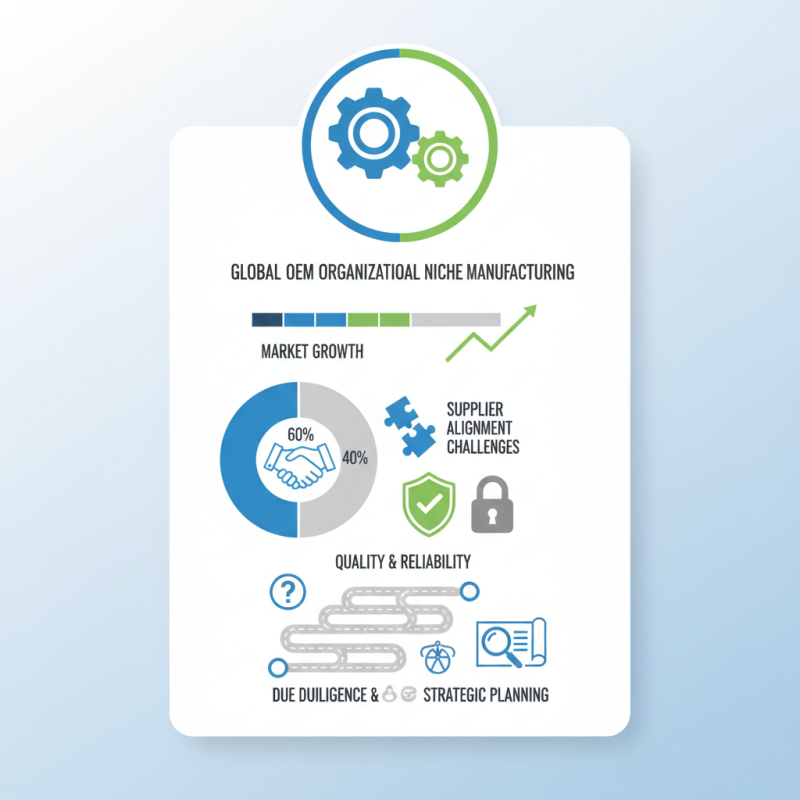
However, choosing the right niche manufacturer is more complex than it seems. Many companies face challenges in aligning their specific needs with the capabilities of potential manufacturers. According to a survey by Deloitte, 60% of businesses experience issues with supplier alignment. This highlights the need for careful consideration and strategic planning.
Additionally, the emphasis on quality and reliability should not be overlooked. In an industry where trust is paramount, selecting a manufacturer with proven expertise is essential. As reported by McKinsey, a lack of due diligence often leads to costly mistakes. Therefore, businesses must reflect on their unique requirements and the potential risks associated with their choice of a Global OEM Organizational Niche Manufacturer.
Understanding Global OEM Organizational Niche Manufacturing
Understanding Global OEM Organizational Niche Manufacturing involves recognizing specific market needs. OEM manufacturers focus on producing parts or products tailored for original equipment manufacturers. This specialization can lead to enhanced efficiency and innovation. Companies in this niche often serve industries like automotive, electronics, and healthcare.
The right global OEM niche manufacturer must possess deep industry knowledge. They should understand local regulations and international standards. This expertise helps them navigate challenges effectively. A manufacturer’s ability to offer customized solutions can set them apart.
Choosing a niche partner requires evaluating their experience. Look at past projects and client feedback. Reliable manufacturers have a track record of meeting deadlines and maintaining quality. It’s essential to consider their supply chain capabilities. A well-connected manufacturer can mitigate risks and enhance production timelines. Engaging with potential partners through open communication fosters a transparent relationship.
Identifying Key Industry Requirements for Niche Manufacturers
Choosing the right global OEM organizational niche manufacturer requires a deep understanding of industry-specific requirements. The manufacturing landscape is rapidly evolving. Reports indicate that niche markets are projected to grow at a CAGR of 5.7% over the next five years. This growth highlights the need for manufacturers to adapt to changing consumer preferences.
Key industry requirements often include flexibility, quality assurance, and innovative capabilities. Flexibility allows manufacturers to pivot quickly in response to market demands. Quality assurance ensures that products meet the high standards expected by consumers and regulatory bodies. Innovative capabilities enable manufacturers to stay ahead of technological advancements.
Tips:
- Identify emerging trends in your niche market.
- Engaging in regular market research is essential.
- Assess your potential manufacturer’s track record and capabilities.
- Seek out case studies or testimonials that demonstrate their expertise and reliability.
- Many manufacturers might not meet all requirements initially.
- Continuous improvement is crucial in this process.
- Building strong relationships with manufacturers can lead to better collaboration and outcomes.
Evaluating Potential OEM Partners: Qualifications and Capabilities
Choosing the right OEM partner requires thorough evaluation of potential manufacturers. It's essential to assess their qualifications and capabilities carefully. According to recent industry reports, 70% of businesses express that selecting a global OEM can significantly impact their production efficiency. Evaluating a partner's technological expertise might be the most critical factor. Manufacturers with advanced production techniques tend to deliver higher quality products.
Quality certifications are another indicator of reliability. A study indicated that 85% of successful partnerships involved OEMs with recognized quality management systems like ISO 9001. Those certifications can assure you of a manufacturer’s commitment to consistent quality control. However, keep in mind that certification does not eliminate quality issues. Some manufacturers might still struggle due to outdated machinery or a lack of skilled labor.
In addition to qualifications, assessing the manufacturer's capacity to scale is vital. Recent statistics show that 60% of OEM failures are due to inadequate production capabilities. Factors such as labor force size, facility capacity, and supply chain stability can affect scalability. While some manufacturers may boast impressive credentials, their actual ability to meet your needs can fall short. Always benchmark their output against your projected demands to avoid potential pitfalls.
Assessing Quality Standards and Compliance in Niche Manufacturing
Choosing the right niche manufacturer involves examining quality standards. Manufacturers should meet international quality benchmarks. This ensures products are reliable and safe. Compliance checks are essential. Verify if the manufacturer adheres to industry regulations. A solid reputation can indicate reliability.
Quality audits provide insights into a manufacturer's practices. Ask for documentation on their quality assurance processes. Look for certifications that validate their compliance. Manufacturers may claim to meet standards, but verification is key. Engaging with existing clients can offer real-world feedback. Their experience can highlight potential pitfalls.
Consider the manufacturer’s experience in your specific niche. A long history in manufacturing often reflects expertise. However, newer firms may bring innovative approaches. Evaluate the balance between tradition and innovation. Reflection on potential risks in both choices can lead you to the right decision. Engage in thorough research. It’s essential for ensuring a fruitful partnership.
Building Strong Relationships with Chosen OEM Manufacturers
Building strong relationships with chosen OEM manufacturers is essential for success in today's competitive landscape. According to a report by the International Organization for Standardization (ISO), effective communication and trust are foundational to collaboration. In OEM partnerships, establishing these elements can lead to a 30% increase in production efficiency. Trust must be cultivated over time through transparency and consistent interactions.
Understanding the manufacturer's capabilities is crucial. Delve into their past projects and product ranges. This insight allows for better alignment with your needs. Utilizing tools like audits and performance reviews can help gauge reliability. Many companies struggle in this area. They often overlook the importance of consistent follow-up meetings. Skipping these check-ins can lead to misalignments and misunderstandings.
Investing time in relationship building pays off in the long run. Research by Deloitte suggests that companies with strong supplier relationships experience a 50% improvement in innovation output. These collaborations often yield creative solutions that a single entity might miss. While it may be tempting to cut costs by shifting suppliers frequently, consider the long-term benefits of stability. Emphasizing a partnership approach fosters loyalty and shared goals.

