
China’s tissue paper industry serves households, hotels, offices, and distributors with a wide range of products. This guide introduces ten manufacturers associated with Eco Friendly Tissue Paper, from facial tissues and toilet rolls to kitchen towels. The list is a starting point, not a definitive ranking. Company capabilities, product lines, and export experience can change, so buyers should confirm current details directly with each supplier.
Environmental performance depends on more than a green label. Check whether a manufacturer explains its fiber sources, recycled content, production processes, and packaging choices. Ask for relevant certificates and supporting documents, then verify that they apply to the specific product you plan to purchase. Practical testing matters too. A tissue may feel soft in the hand but shed lint, tear easily, or arrive compressed after shipping. Samples can reveal these details before a large order is placed.
Claims need checking. Sustainability involves trade-offs, including material use, energy, transport, and product durability. A recycled-fiber option may suit one buyer, while another may need a different balance of softness, strength, and price. This overview offers useful questions for comparing manufacturers, rather than treating environmental claims as guarantees. Use it to assess product quality, communication, production capacity, and evidence side by side. Then request updated specifications and samples before making a sourcing decision.
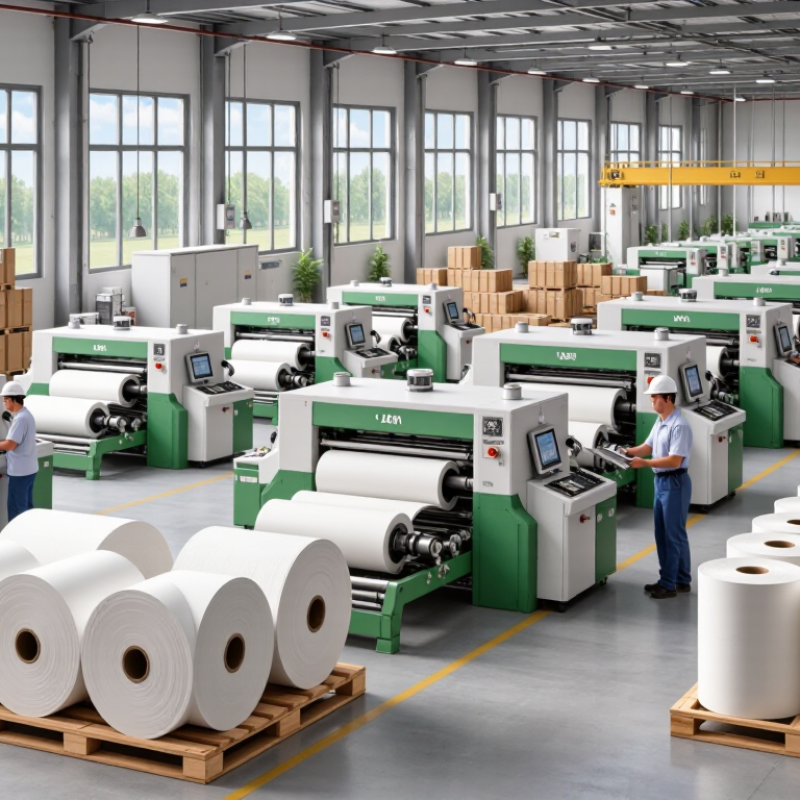
China’s tissue market produced 12.03 million tonnes in 2023, according to the China Paper Association’s annual industry report. That figure gives useful context for comparing China’s tissue manufacturers. It reflects a large, active market, not automatic proof of environmental performance. Factory output alone cannot show how much recycled fibre a mill uses or how efficiently it manages water and energy.
For buyers researching eco-friendly tissue producers, check product specifications alongside independently verified environmental disclosures. Look for details on fibre sourcing, recycled content, wastewater treatment, and energy use. These measures help make comparisons more concrete than broad “green” claims. Still, public data can be uneven, and some manufacturers disclose more than others. That gap deserves attention.
Tips: Ask for recent, product-specific evidence, not only company-wide statements. Compare softness and sheet strength, too; a thin roll that runs out quickly may not be the better choice. Small details matter.

Eco-friendly tissue is assessed by more than a recycled-content label. Start with the fibre: check whether it comes from recycled material or responsibly managed forests, and whether the share is clearly stated. Recycled fibre can reduce demand for fresh pulp, but quality and availability vary. Virgin fibre is not automatically a poor choice; sourcing and forest management matter too. Labels rarely tell the whole story.
Water and energy use should be considered across manufacturing, not just at the factory gate. Mill-level figures are useful only when their scope and reporting period are clear. Ask whether energy comes from renewable sources and whether water is reused in production. Comparisons can be tricky. Different mills may measure them differently, so a neat number is not always an apples-to-apples result.
Packaging deserves the same scrutiny as the tissue itself. Look for minimal wrapping, recyclable materials, and clear disposal guidance. A paper wrapper may seem preferable, but its actual impact depends on material sourcing and local recycling access. Transport and product strength also affect the picture: a durable roll may require fewer replacements, though that depends on use. Missing data is a limitation, not proof of poor practice. No single metric settles it.
China’s Top 10 Eco-Friendly Tissue Paper Manufacturers: Company Profiles
A useful comparison looks beyond “eco-friendly” claims. Profile one is an integrated mill, making pulp and tissue on the same site. This can simplify sourcing, but energy use still matters. Profile two focuses on recycled-fiber products. Ask how it manages softness and strength across different batches. Profile three specializes in bamboo-based tissue. Feedstock origin and processing details deserve careful review. Profile four supplies private-label products, with flexible packaging and order sizes. Small runs can still create extra packaging waste.
Profile five serves hospitality buyers with large rolls and dispensers. Its products may reduce changeovers, though transport distance affects the footprint. Profile six emphasizes unbleached tissue. Check whether the paper suits the intended use. Profile seven offers embossed facial tissue, where added texture must not obscure fiber information. Profile eight manufactures napkins and kitchen towels. Absorbency tests tell more than slogans.
Profile nine supplies export markets and should provide clear documentation for fiber sourcing and product testing. Profile ten serves regional retailers, where shorter delivery routes may be practical. Not always. A nearby factory is not automatically the cleaner choice. Compare recycled content, water and energy data, packaging, and independent certifications. Public information can be incomplete, so buyers should verify claims directly.
A broader materials-recovery indicator relevant to paper products—not a company ranking or a tissue-only recycling rate.
The U.S. recycling rate for paper and paperboard reached 68.2% in 2018. Tissue products are not reported separately in this series. Source: U.S. Environmental Protection Agency, Advancing Sustainable Materials Management: Facts and Figures 2018.
Compare Manufacturers by Certifications, Recycled Fibre and Product Range
A useful comparison starts with evidence, not green claims. Check whether a manufacturer holds FSC or PEFC chain-of-custody certification, and whether its recycled-content claims are independently verified. These credentials answer different questions: responsible fibre sourcing is not the same as recycled fibre use. ISO 14001 can indicate an environmental management system, but it does not certify a tissue product as sustainable.
Recycled fibre deserves a closer look. The U.S. Environmental Protection Agency’s 2018 materials report recorded a 68.2% recycling rate for paper and paperboard. That figure covers many paper grades, not tissue alone. Tissue fibres shorten during recycling, so the percentage cannot be treated as a direct measure of suitable feedstock. Ask suppliers for recycled-content ranges, fibre origins, test methods, and documentation by product grade. Small details matter.
Then compare what each factory can actually supply: facial tissues, toilet rolls, kitchen towels, napkins, and jumbo rolls for commercial dispensers. Request samples and check softness, absorbency, lint, ply, and roll dimensions under real-use conditions. A broad catalogue may help, but it does not guarantee consistent quality across every item. One limitation remains: certification scopes and recycled-content calculations can vary, so compare the underlying documents—not just certificate logos.
When comparing China’s eco-friendly tissue paper manufacturers, treat certification as a claim to verify, not a logo to admire. Check the supplier’s FSC certificate number in the official certificate database, then confirm that its status is current and its scope covers the relevant paper products. Ask for invoices or product documents showing the exact FSC claim. FSC certification and recycled-content claims are not interchangeable. One does not automatically prove the other.
For a “100% recycled content” label, request a written fiber breakdown for the specific tissue grade, including the share of post-consumer and pre-consumer material. Confirm whether the percentage refers to fiber content, rather than the whole product by weight. Compare the specification sheet, packaging, and purchase documents for consistent wording. Keep batch records. They matter when production changes or shipments come from different mills. A neat certificate is not enough. Ask how recycled input is tracked and whether supporting records can be tied to your order. Supplier data can lag behind production; that deserves a follow-up, not an assumption of bad faith. A small sample may show softness and strength, but it cannot verify recycled content. Check both.
Use this 10-point checklist when assessing suppliers. It is a verification guide, not a ranked list of manufacturers. Confirm current certificates and product-specific claims directly with the supplier and relevant certification databases.
| No. | Verification item | What to request | How to assess | Potential red flag |
|---|---|---|---|---|
| 1 | FSC Chain of Custody certificate | Current certificate code, certificate holder’s legal name, and certificate scope. | Check the certificate in FSC’s public certificate database. Confirm that it is valid and covers the relevant tissue products and activities. | An expired certificate, a mismatched legal entity, or a scope that does not cover the product. |
| 2 | FSC claim on the product | Product specification, invoice or delivery-document claim, and a sample of the proposed packaging label. | Confirm the claim is stated consistently across product documents and is supported by the supplier’s valid Chain of Custody arrangements. | A general FSC logo or claim with no traceable product documentation. |
| 3 | Meaning of the FSC label | Written identification of the proposed label claim: FSC 100%, FSC Recycled, or FSC Mix. | Do not treat FSC Mix as proof of 100% recycled fiber. Review the specific claim and its applicable FSC labeling requirements. | Marketing materials describe FSC Mix as “100% recycled” without separate supporting evidence. |
| 4 | “100% recycled content” basis | A signed product declaration that defines the percentage, material scope, and calculation basis. | Check whether the claim refers to the tissue fiber itself or includes other product components or packaging. Ask the supplier to define the denominator. | The claim does not state what material is included in the 100% figure. |
| 5 | Recycled-fiber input records | Purchasing records, supplier declarations, production records, or other traceability documents for recycled fiber. | Compare input records with the product specification and production period. Request an explanation for any material balance or allocation method used. | A recycled-content claim supported only by a brochure or an undocumented verbal assurance. |
| 6 | Post-consumer and pre-consumer content | A breakdown of recycled fiber by post-consumer and pre-consumer source, where available. | Check that the supplier uses the terms consistently and provides the breakdown requested in the purchase specification. | “Recycled” is stated without clarifying the type of recovered material when that distinction matters to the buyer. |
| 7 | Independent recycled-content verification | Any applicable third-party audit report, certification, or independently verified product declaration. | Confirm the document’s issuer, validity, product coverage, and whether it verifies the specific recycled-content claim. | A certificate is presented as proof of recycled content even though its scope does not cover that claim. |
| 8 | Product specification and quality | Technical data for basis weight, sheet size, ply, brightness or color, and agreed quality limits. | Compare the specification with samples and purchase requirements. Keep the approved specification linked to the exact product code. | Environmental claims are clear, but the product being supplied cannot be matched to the approved specification. |
| 9 | Packaging and label approval | Final artwork, label claims, and any required authorization for certification marks. | Review the final packaging before production. Check that logos and wording follow the relevant trademark and labeling rules. | Unapproved certification marks, altered logos, or environmental wording broader than the evidence supports. |
| 10 | Ongoing documentation and change control | A process for notifying buyers of certificate expiry, changes in fiber sourcing, or changes to product composition. | Include document updates and advance notice of material changes in supplier review and purchasing procedures. | The supplier cannot confirm how certificate or composition changes will be communicated. |
Please fill out this form and we will get an order or estimate ready for you. Please give us as much detail as you can for us to get started, and we will contact you to finsh the work order.