China Best Greenhouse Covering Film Suppliers?

Choosing among China’s greenhouse film suppliers takes more than comparing prices or reading product brochures. Greenhouse Covering Film affects light transmission, heat retention, crop conditions, and the time between replacements. A roll may look clear in a warehouse, yet perform differently after months of sun, dust, wind, and repeated cleaning. Details matter.

Greenhouse horticulture researcher Dr. Chieri Kubota is a relevant expert voice on controlled-environment crop production. The line below is an editorial summary of a practical principle, not a verified verbatim quotation: “Match the covering material to the crop, climate, and structure—not just the lowest quote.” That distinction matters when evaluating suppliers. Ask for product specifications, film thickness, light-transmission data, expected service life, warranty terms, and evidence that the offered grade suits your growing conditions. Request samples when possible. Hold them against daylight and inspect the surface, clarity, and consistency.

A dependable supplier should explain trade-offs plainly, including limitations. Some films prioritize light diffusion; others focus on heat retention or durability. No single option fits every greenhouse. Buyers should also check how orders are packed, labeled, and supported after delivery. Small details can prevent costly confusion. Still, specifications do not tell the whole story. I would want to know how the film performs through a full growing season, not just how it reads on paper. This guide examines China’s leading suppliers through product range, technical support, quality assurance, and practical value, while recognizing that supplier claims deserve careful verification.

China Best Greenhouse Covering Film Suppliers?

What Greenhouse Covering Films Are and How They Work

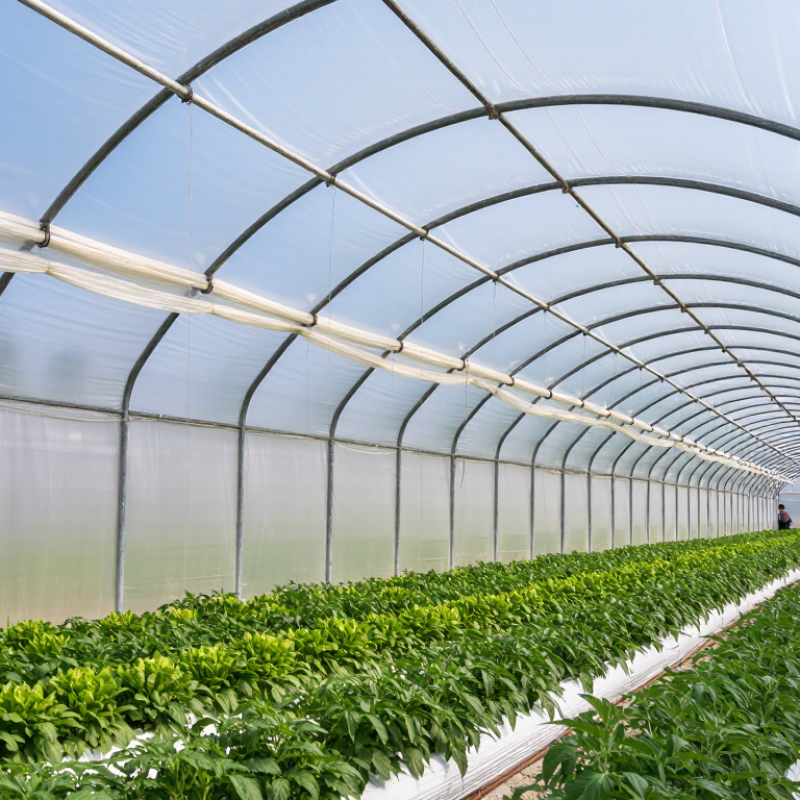
Greenhouse covering film is a flexible layer stretched over a frame to manage light, heat, and moisture. Common options include polyethylene and films blended with additives for particular growing conditions. Sunlight passes through the film and warms the soil, plants, and air beneath it. At night, the cover can slow heat loss, though it cannot replace ventilation or heating when conditions demand them. Some films diffuse light, spreading it across leaves and reducing harsh bright spots. Others filter parts of the light spectrum. Performance varies with thickness, clarity, coatings, and exposure to wind and sunlight.

The details matter. A clear film may provide strong light transmission, while a diffusing film can soften shadows in a tall house. Anti-drip treatments help water form a sheet instead of hanging in large droplets, but they may wear over time. Film that is too tight can strain the frame; film that is too loose may flap and abrade. I have to admit, choosing a cover from a product description alone is imperfect. Local sunlight, crop type, and ventilation design all affect the result.

Tips: Check film thickness, light transmission, and expected service life with the supplier. Ask how the film performs in your climate. Inspect seams and attachment points after installation, especially following strong winds. Small tears grow quickly. Don’t ignore them.

Common Types of Greenhouse Films Made in China

Greenhouse films made in China commonly include polyethylene (PE), EVA, and PO options. PE film is widely used because it is light, flexible, and relatively economical. EVA blends can offer greater flexibility and light transmission, though performance varies by formulation. PO films are often selected for strength and optical clarity. No single material suits every greenhouse.

Film features matter, too. Anti-drip coatings help reduce water droplets on leaves, while diffusing additives scatter sunlight across the crop canopy. UV-stabilized films can resist sunlight-related aging, but their service life depends on exposure, installation, and local weather. A film’s thickness is only one specification. Check the technical sheet for light transmission, warranty conditions, and recommended use.

In practice, match the film to the crop, climate, and frame design. A humid site may benefit from anti-drip performance; a windy location calls for careful attention to tear strength and secure installation. Ask suppliers for test data and clear descriptions of additive performance. Details matter. Product names can sound similar, and specifications are not always presented consistently. That makes comparison less straightforward than it should be. A small trial section can reveal how light and condensation behave before covering an entire greenhouse.

China Best Greenhouse Covering Film Suppliers? - Common Types of Greenhouse Films Made in China
Film Type Common Material or Structure Typical Thickness Main Characteristics Common Applications Selection Considerations
Standard Greenhouse Film Polyethylene (PE), commonly supplied as a single-layer or co-extruded film About 80–200 μm Lightweight, flexible, and widely used for seasonal or general-purpose covering. Performance depends on the resin blend, additives, and film thickness. Tunnels, walk-in greenhouses, and basic crop protection structures Compare expected service life, local wind and weather exposure, installation method, and the film’s stated light-transmission properties.
UV-Stabilized Film PE or another greenhouse-film polymer with ultraviolet stabilizers About 100–200 μm UV stabilizers are designed to slow sunlight-related degradation. Actual durability varies with formulation, climate, chemical exposure, and installation. Greenhouses exposed to strong sunlight or intended for extended use Ask for the intended service-life conditions and confirm compatibility with crop-protection chemicals and greenhouse treatments.
Anti-Drip / Anti-Fog Film PE-based film with an anti-condensation additive or treated inner surface About 100–200 μm Encourages condensation to spread into a thinner layer rather than forming large droplets. Additive performance can change over time. Covered growing areas where dripping onto plants is a concern Confirm which side faces inward and follow handling instructions; surface treatments may be affected by dust, cleaning, and aging.
Thermal / IR-Blocking Film PE or multi-layer co-extruded film formulated with infrared-retention additives About 120–200 μm Designed to reduce the loss of certain long-wave infrared radiation at night. The effect depends on the film formulation and greenhouse conditions. Greenhouses where nighttime heat retention is a priority Request test data for thermal properties and consider the local climate, ventilation, and heating system.
Diffused-Light Film PE-based film with light-diffusing additives or a textured surface About 120–200 μm Scatters incoming light to distribute it more evenly inside the growing space. Total light transmission and diffusion level are separate properties. Crops or structures where more uniform light distribution is desired Compare measured light transmission and haze or diffusion data; excessive diffusion or reduced transmission may not suit every crop.
EVA Greenhouse Film Ethylene-vinyl acetate (EVA), sometimes blended or co-extruded with other polymers About 100–200 μm Can offer flexibility and optical properties suited to greenhouse applications. Performance varies with EVA content, additives, and construction. Greenhouses and tunnels requiring flexible covering film Check product-specific data for light transmission, anti-drip behavior, UV stabilization, and compatibility with the intended structure.
PO / Multi-Layer Co-Extruded Film Polyolefin-based film produced in multiple layers, with layer functions varying by formulation About 100–200 μm Different layers can be formulated for properties such as durability, light management, or condensation control. “PO” composition and performance are not identical across products. Commercial greenhouses and tunnels with specified performance requirements Request the layer structure, polymer description, and test results rather than relying on the product category name alone.
Thickness ranges are indicative examples, not universal specifications. Confirm dimensions, optical performance, additives, warranty terms, and test methods for each film before purchase.

Key Performance Features to Compare When Choosing a Film

China Best Greenhouse Covering Film Suppliers?

A film’s price matters less than the light and heat it preserves across a full season. The ASHRAE Handbook—HVAC Applications reports representative solar transmittance near 0.85 for single-layer polyethylene and 0.88 for glass. These are reference values, not promises: resin, thickness, dust, and aging change field performance. Ask suppliers for test methods and batch-specific results.

Small differences matter.

Compare light transmission with light diffusion. Diffused light can reach lower leaves more evenly, but excessive haze may reduce total usable light. Check thermal retention, too. A film that limits nighttime heat loss can help stabilize temperatures, though local climate and ventilation affect the benefit.

Request tensile and tear-strength data, UV-stabilization details, and expected service life. ASTM D882 provides a tensile-test method; it does not prove a film will last a stated number of seasons. Ask how warranty terms handle installation and weather damage. Not on paper. Inspect a sample against daylight, and ask for independent test reports. I would not choose on thickness alone; I have seen a thicker sheet still feel brittle after storage. Reliable suppliers should explain that uncertainty, not hide it.

How to Evaluate Chinese Greenhouse Film Suppliers

Choosing a Chinese greenhouse film supplier requires more than comparing quoted prices. Start with the film’s intended use, local climate, and expected service life. Ask for written specifications covering thickness, width, light transmission, UV stabilization, and tear strength. Numbers matter. Check whether test reports identify the tested product and method, rather than presenting general results.

Tips: Request a sample roll and inspect it under daylight. Look for uneven thickness, cloudy patches, and weak edges. Ask how production batches are tracked and how defects are handled. Check the details.

A reliable supplier should explain performance limits clearly, including how dust, wind, temperature swings, and installation affect durability. Compare warranty wording carefully: confirm what is covered, how claims are assessed, and whether replacement costs are included. Ask for recent production photos or a video call to see quality checks in practice. References from growers using similar structures can add useful context, but conditions may differ. A polished catalog can still leave practical questions unanswered, so keep a written record of answers and specifications. Supplier evaluation is not perfectly predictable; a small trial may reveal issues that paperwork misses.

How to Evaluate Chinese Greenhouse Film Suppliers

Suggested evaluation weighting for comparing suppliers

The percentages are a suggested buyer-scoring framework, not measured industry statistics. Verify film performance using product specifications and independent test reports, and assess delivery, warranty, and compliance against your project requirements.

Sourcing, Quality Checks, and Delivery Considerations

Choosing greenhouse covering film suppliers starts with a clear specification.

State the required width, thickness, expected service life, and growing conditions. High ultraviolet exposure, strong winds, and large temperature swings can change which film performs well.

Ask suppliers for technical data on light transmission, UV stabilization, and thickness tolerance. Request a sample and check it against the quoted specification. A clean sample is not proof of every production lot.

Ask how batches are recorded and whether test reports match the film being offered. Small details matter.

Quality checks should be practical.

Measure thickness at several points with a micrometer, rather than relying on one reading. Inspect the roll for uneven edges, cloudy patches, and trapped particles. Check that labels show roll length and product specifications.

Before ordering at scale, confirm how defects are handled and what evidence is needed for a claim. Delivery deserves the same attention. Confirm production lead time, roll dimensions, packaging, and loading method.

Film exposed to moisture or crushed during transit may arrive damaged. Ask for tracking details and inspect the shipment promptly.

One awkward point: supplier promises can sound precise, while delivery schedules still shift. Build a little buffer into installation plans.