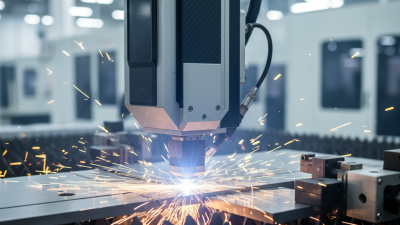
China Best Laser Table Solutions for Global Buyers?
The demand for high-quality laser tables is rapidly increasing in various industries. Companies worldwide seek reliable solutions that enhance precision and efficiency in their operations. China has emerged as a key player in providing advanced laser table solutions, attracting global buyers.
Chinese manufacturers focus on innovation and quality in laser table production. They incorporate cutting-edge technology, ensuring that each product meets international standards. However, potential buyers must scrutinize their options carefully. Not all providers guarantee the same level of expertise or reliability. It’s essential to understand the intricacies of what makes a top-notch laser table.
Choosing the right laser table involves evaluating multiple factors. Buyers should consider material compatibility, power output, and size. Even minor discrepancies can impact performance. Buyers are encouraged to engage directly with manufacturers. This additional effort can lead to better understanding and selection of the best laser table for specific needs.

Overview of Laser Table Technology in China
China has emerged as a leader in laser table technology, catering to global buyers with innovative solutions. In 2022, the country's laser machinery market reached a valuation of approximately $5 billion, driven by increased demand for precision cutting and engraving applications. The sector is expected to grow by over 10% annually, reflecting its critical role in manufacturing and fabrication.
Laser tables in China incorporate advanced features such as high-speed motion systems and adaptive software. These enhancements improve efficiency in various industries, including textiles, metalworking, and woodworking. However, some manufacturers struggle with quality control. Reports indicate that up to 15% of units may fall short of international standards, leading to potential issues for buyers. Addressing these challenges is essential for sustained growth.
Furthermore, the adoption rate of automation solutions remains inconsistent among manufacturers. While some companies rapidly integrate smart technology, others lag behind. This discrepancy impacts overall productivity and reliability. Buyers must carefully evaluate suppliers to ensure alignment with evolving industry standards. Such due diligence can help mitigate risks associated with varying quality and technological advancement.
Key Manufacturers of Laser Tables in China
China has emerged as a significant player in the global laser table manufacturing market. The country boasts a variety of manufacturers that specialize in advanced laser technology. Recent industry reports indicate the Chinese laser equipment market is projected to grow by 15% annually. This growth signals increasing demand from sectors like manufacturing and automotive.
Key manufacturers in China are known for their innovation and quality. Many of them invest heavily in R&D to improve laser efficiency. However, not all players maintain the same level of quality. Some smaller manufacturers may offer competitive prices but compromise on precision or durability. Buyers should conduct thorough evaluations to avoid potential pitfalls.
In addition, understanding the features of laser tables is crucial. Adaptability and speed are critical aspects for many applications. Many manufacturers emphasize these features. However, details about maintenance and support services often receive less attention. Ensure you consider long-term partnership potential with suppliers. This can significantly impact machine longevity and productivity.
China Best Laser Table Solutions for Global Buyers
| Manufacturer |
Year Established |
Main Product Features |
Export Markets |
Annual Production Capacity |
| Manufacturer A |
2005 |
High-speed precision cutting, user-friendly interface |
North America, Europe, Asia |
500 units per month |
| Manufacturer B |
2010 |
Robust design, high energy efficiency |
Australia, Southeast Asia, Middle East |
300 units per month |
| Manufacturer C |
2015 |
Versatile applications, compact design |
Europe, Africa, South America |
400 units per month |
| Manufacturer D |
2000 |
Cutting-edge technology, multi-material compatibility |
Asia, North America, Europe |
600 units per month |
Comparison of Laser Table Features and Specifications
When comparing laser table features and specifications, buyers should focus on key attributes like precision, speed, and material compatibility. A recent industry report indicates that precision in cutting operations can vary significantly among different models. For instance, the most advanced laser tables offer an accuracy of ±0.01 mm, allowing for intricate designs in materials like fabric and metal.
Speed is another vital factor. The latest laser technology can achieve engraving speeds exceeding 1000 mm/s. However, some entry-level models struggle to reach even half of this performance. Buyers must carefully assess their production needs when choosing a machine. Compatibility with various materials, including acrylic, wood, and metal, can also affect a buyer’s decision. A versatile laser table could accommodate multiple applications, ultimately justifying a higher investment.
Yet, not all features lead to an optimal user experience. Ease of operation is sometimes overlooked. Complex interfaces can deter new users. Additionally, support and maintenance services play a crucial role in long-term satisfaction. A machine that requires constant adjustments or repairs can lead to inefficiencies. Therefore, evaluating user feedback and expert reviews is essential for making informed choices.
Market Trends for Laser Tables in Global Markets
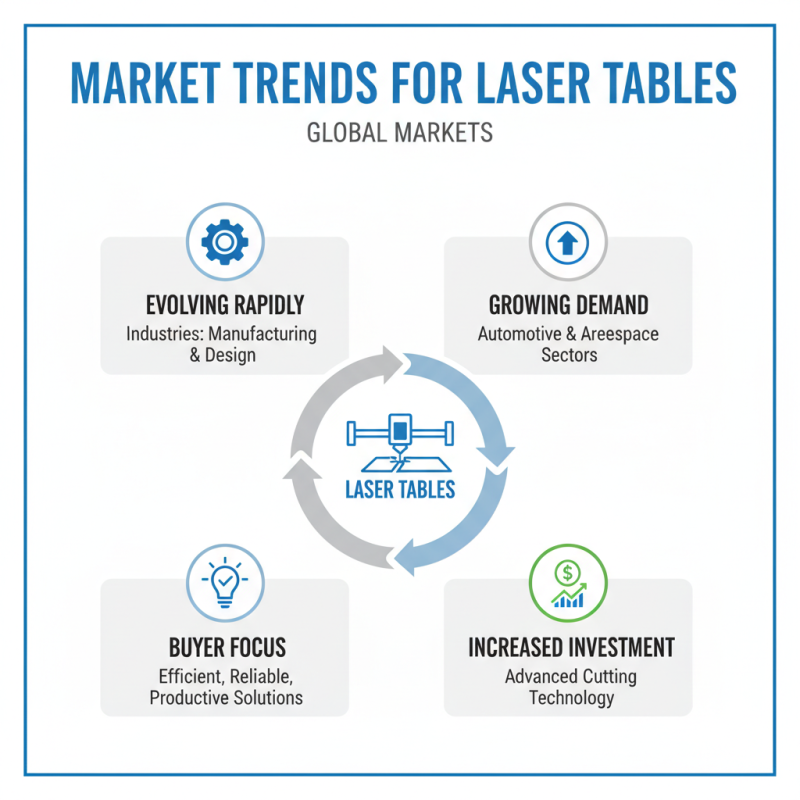
The global market for laser tables is evolving rapidly. This technology plays a crucial role in industries like manufacturing and design. Buyers are seeking efficient, reliable solutions that enhance productivity. Recent studies indicate a growing demand in sectors such as automotive and aerospace. Companies are increasingly investing in advanced laser cutting technology to streamline operations.
Laser tables now blend innovation with user-friendly designs. A focus on safety features is becoming common. However, some users still struggle with complex setups. This highlights the need for better training and support from manufacturers. As demand rises, suppliers must adapt quickly to meet diverse needs. Global buyers are looking for customizable options to fit specific applications.
Sustainability also influences purchasing decisions. Manufacturers are shifting towards eco-friendly practices. Yet, the balance of cost and quality remains a challenge. Not every product guarantees longevity, which can lead to doubts. Buyers must carefully evaluate options before making investments. The future of laser tables is bright, but it requires ongoing reflection on industry needs and advancements.
Guidelines for Selecting the Right Laser Table for Buyers
When choosing a laser table, buyers should consider multiple factors to ensure optimal performance. The first aspect is the table size. It must suit the material dimensions and types you intend to work with. Many buyers overlook this detail and find themselves limited by their equipment later.
Next, examine the power capabilities. Different laser tables offer varying wattage levels, affecting cutting speed and material options. A higher wattage may not always be necessary, but it provides flexibility for diverse applications. Watch the settings and specifications closely.
Don't forget about the software compatibility. Effective laser tables must integrate smoothly with design programs. Sometimes users face challenges in syncing their design software with the table. Test software interactions during your research phase. Finally, reviews from experienced users can provide valuable insights. Relying solely on marketing materials can lead to disappointment. Engaging directly with the user community can shed light on practical applications and potential pitfalls.
China Best Laser Table Solutions for Global Buyers
This bar chart illustrates key performance metrics for laser table solutions available in China, relevant for global buyers. The dimensions include precision cutting capability, speed of operation, power options, material compatibility, and pricing.