
Choosing the best Rail Freight companies in China requires more than comparing prices. Shippers must weigh route coverage, terminal access, container handling, tracking quality, and delivery consistency. A factory near Chengdu may value reliable westbound connections; an exporter in Shanghai may need dependable port-rail coordination. No single winner.
China’s national railway system handled about 4.04 billion tonnes of freight in 2024, according to China State Railway Group’s annual operating figures. That scale creates opportunity, but it does not guarantee equal service on every corridor. The International Energy Agency’s 2019 report, The Future of Rail, notes that rail carries 7% of global freight transport activity while producing around 2% of transport-related emissions. The comparison is global, not a promise about each Chinese shipment. Still, it explains why rail can matter for cost and emissions planning.
UIC Director General François Davenne has described rail as “a key part of the solution for more sustainable transport.” For business buyers, that promise needs a practical test: Can a provider protect schedules, manage transfers, and resolve exceptions quickly? This guide compares major Chinese operators and logistics providers by their strengths, service models, and fit for different cargo needs. Some public performance data remain difficult to compare directly. That gap deserves attention, not guesswork.
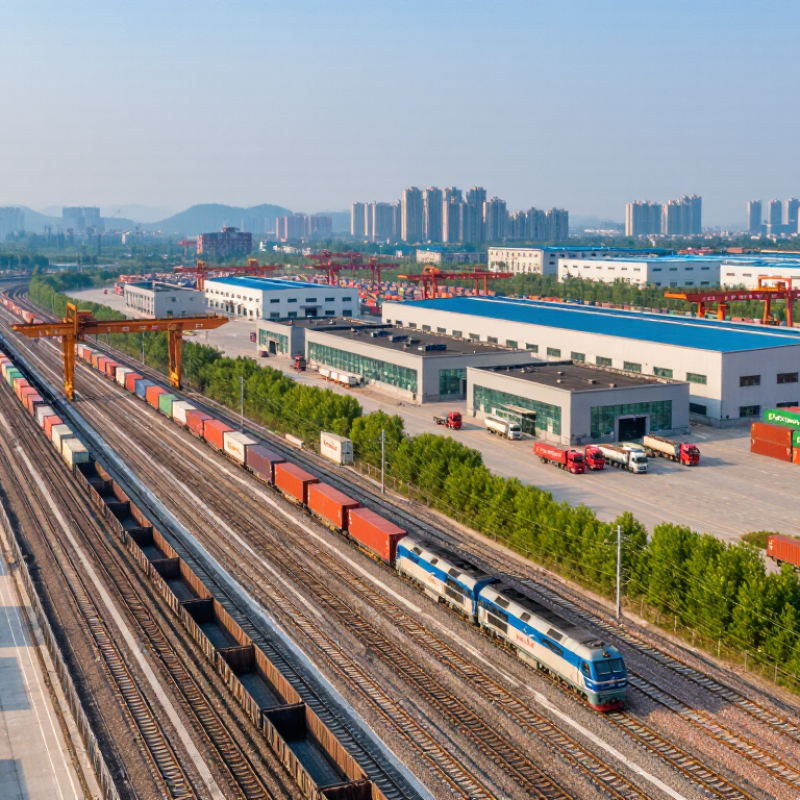
China’s rail freight network carried 3.91 billion tonnes in 2023, underlining its central role in moving goods across the country. The total includes heavy flows of coal, ores, building materials, agricultural products, and containerized cargo. Picture loaded wagons leaving industrial sidings, then joining scheduled trains bound for ports or inland terminals. A big number. But not a complete picture.
For businesses choosing a rail freight provider, service quality matters beyond tonnage. Check whether routes fit your origin and destination, how often departures run, and whether transfer points are clearly managed. Reliable wagon availability and accurate arrival updates can protect production plans. Ask how the provider handles loading inspections, delays, and handoffs to trucks for final delivery. Small gaps matter.
The 3.91-billion-tonne figure also shows why capacity planning and terminal coordination are essential. Busy corridors can face pressure during peak seasons, and a train’s scheduled arrival does not guarantee a smooth warehouse delivery. Strong providers combine network reach with transparent communication and practical contingency planning. No operator is perfect; compare actual route performance, not just broad promises. Rail works best when cargo, schedule, and handling needs align.

Comparing rail freight companies in China starts with the network behind the sales map. Check which origin and destination terminals are served, how often trains depart, and whether cargo needs a road transfer. A route shown as “available” may still involve extra handling. Ask for the full journey, including terminal locations and estimated transfer times.
Capacity is more than a headline figure. Confirm the space available for your cargo on the required departure, the equipment offered, and any weight or dimension limits. For example, a shipment ready on Tuesday may miss a train if the booking cutoff was Monday afternoon. Ask how space is confirmed and what happens when demand exceeds capacity. Small details matter.
Service quality shows up when plans change. Look for shipment updates at key points, a named contact, and clear procedures for delays or damaged cargo. Request sample tracking updates and a written explanation of service targets. Be careful with promises that lack route-specific evidence. Published schedules can also become outdated, so verify them before committing. I would compare actual recent performance, not just a polished timetable; that data may still be incomplete. Ask how the provider reports exceptions and who responds after hours.
China Railway Container Transport connects inland production centers with ports and border gateways through scheduled freight services. Standard containers move between rail terminals, trucks, and, where routes allow, ships. This can reduce repeated unpacking and make inventory planning more predictable for suitable cargo. Practical planning starts before loading. Confirm container dimensions, terminal cut-off times, route availability, and any transfer between different rail gauges. Details matter. A missed cut-off may add days, not hours.
Intermodal service is not uniform across every corridor. Some routes offer frequent departures and reliable terminal links; others have fewer trains or seasonal capacity limits. Compare door-to-door estimates, not just time spent on the train, and clarify who coordinates truck legs and service updates. Accurate packing lists and readable container numbers help at each handover. Still, the process is not frictionless. Weather, congestion, and border procedures can disrupt schedules. A plan may look tidy on paper but overlook a transfer window. Build in modest buffer time, track milestone updates, and assign one person to handle decisions when a container pauses. That sounds basic. It often matters.
China’s vehicle market creates a demanding task for rail logistics. The China Association of Automobile Manufacturers reported 31.282 million vehicles produced in 2024, with sales reaching 31.436 million. Moving finished cars by rail calls for purpose-built wagons, careful loading, and securement that limits movement in transit. A clean loading ramp and clear handoff records matter. So does matching departure schedules with factory output and dealer demand. Official 2024 railway statistics recorded 5.175 billion tonnes of freight, up 2.8% year over year, according to China’s National Railway Administration.
Specialized services can also move oversized machinery and other cargo that needs tailored loading plans. For vehicles, rail can consolidate shipments across long inland routes and reduce reliance on individual truck journeys. But it is not automatically the best choice. Terminal access, transfer time, and the final delivery leg can erase some advantages. The weak point is often coordination between rail terminals and receiving yards. A missed slot can leave vehicles waiting in rows, exposed to dust or weather. Practical providers therefore plan wagon allocation, inspection, route capacity, and last-mile delivery together. Not every route fits. A small pilot shipment can reveal handling gaps before volumes grow, although pilots cannot predict every seasonal delay.
| Freight category | Typical rail solution | Handling considerations | Planning details |
|---|---|---|---|
| Passenger vehicles | Purpose-built vehicle-carrying rail wagons or suitable enclosed rail equipment | Vehicles are secured to limit movement; loading arrangements depend on vehicle dimensions and wagon design. | Confirm vehicle count, dimensions, loading access, route availability, and delivery requirements. |
| Construction and agricultural machinery | Flat wagons or other wagons selected for the cargo’s weight and loading method | Heavy items may need engineered blocking, lashing, and a review of axle loads and weight distribution. | Provide packed dimensions, gross weight, center of gravity where available, and loading or lifting requirements. |
| Oversized industrial equipment | Specialized flat or low-platform wagons, subject to route and equipment assessment | Clearance, bridge limits, loading gauge, and securement requirements must be checked before movement. | Route surveys and advance coordination may be necessary; transit feasibility depends on the specific route. |
| Containerized components and general cargo | Rail containers or container-compatible wagons for suitable shipments | Cargo must be packed and secured to withstand rail handling and movement; container weight limits apply. | Check container type, gross weight, terminal access, and whether first- and last-mile transport is needed. |
| Bulk materials | Open, covered, or purpose-designed bulk wagons, depending on the commodity | Protection from weather, dust control, and loading and unloading equipment are commodity-specific. | Confirm commodity properties, volume, loading facilities, unloading facilities, and applicable transport rules. |
| Cross-border rail freight | Containerized or wagon-based service, depending on corridor and cargo | International movements can involve customs procedures and, on some corridors, a change of rail gauge or cargo transfer. | Verify the current corridor, border procedures, documentation, transit arrangements, and final delivery plan. |
Equipment, route availability, handling procedures, and transit times vary by shipment and must be confirmed for the specific origin, destination, and cargo.
In 2023, China–Europe rail freight recorded 17,000 train trips and moved 1.9 million TEUs. These figures point to a large, active corridor connecting Chinese production centers with European markets. Behind each number are containers, rail slots, border procedures, and handoffs between transport teams. The scale is impressive. It also raises a practical question: can a shipment move predictably from pickup to final delivery?
For shippers comparing rail freight providers, headline volume is only a starting point. Ask about departure frequency, transit-time ranges, container tracking, document support, and plans for delays. Check whether quoted transit times include terminal handling and final-mile delivery. Rail can balance speed and cost between air and ocean, but results vary by route, season, and cargo readiness. The TEU figure describes volume moved; it does not guarantee space on a particular train. That distinction deserves more attention.
Tips: Request a route-specific schedule and a written breakdown of each handoff. Confirm who will update you if a train misses its connection. Compare recent performance, not only best-case estimates. Leave schedule slack. Rail is dependable, but disruptions still happen.
Reported totals reached 17,000 train trips and 1.9 million TEUs. These figures show the scale of the rail corridor, not a comparison of individual companies.
Note: Trips and TEUs use separate vertical scales because they measure different things.
Please fill out this form and we will get an order or estimate ready for you. Please give us as much detail as you can for us to get started, and we will contact you to finsh the work order.