
Choosing Mining Trucks in 2026 starts with the job, not the biggest payload figure. A rigid-frame haul truck may suit a wide, prepared pit road, while an articulated model can handle uneven access and tighter turns. The right fit depends on haul distance, gradients, loading equipment, climate, and daily operating hours. Small details matter. A wet ramp, sharp rock, or long queue at the crusher can change fuel use, tire wear, and cycle times.
This guide reviews ten mining trucks for sale or consideration in 2026, covering different size classes and operating needs. It compares practical factors such as rated payload, engine and drivetrain, braking, cab visibility, service access, parts support, and published operating data. Numbers alone can mislead. Payload ratings should be checked against site conditions and the truck’s approved configuration. Availability, pricing, emissions requirements, warranty coverage, and delivery schedules vary by region and seller, so confirm current details with the manufacturer or an authorized dealer. Where public data is limited, that uncertainty deserves to be stated, not hidden. The comparison is useful, but never perfect. Even experienced buyers can underestimate tire supply or maintenance downtime; those costs deserve a second look. Use the shortlist as a starting point, then compare total cost per tonne, operator feedback, and support response times before making a purchase.
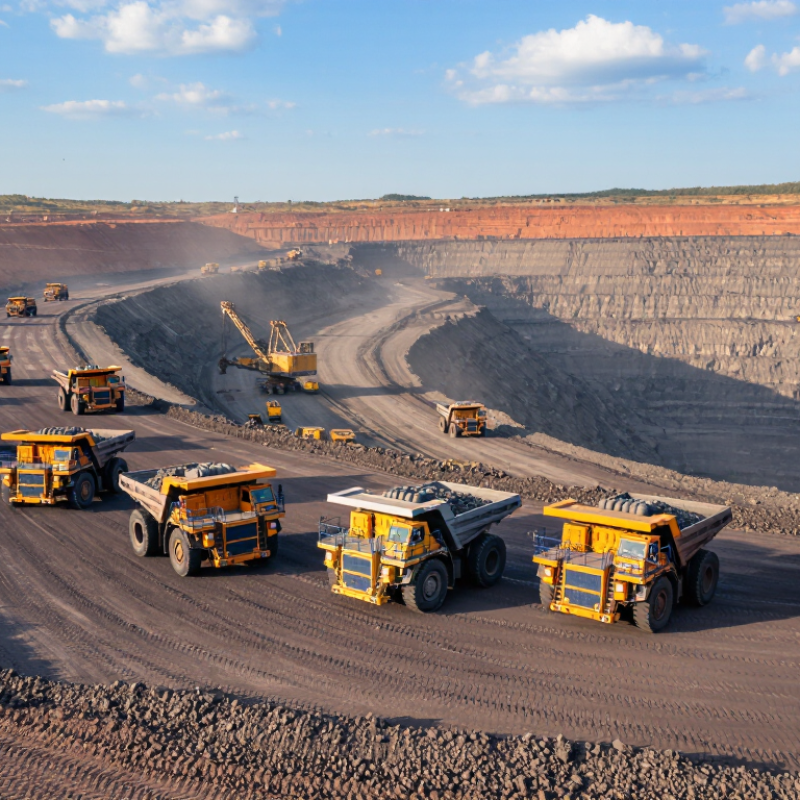
Mining trucks are classified by payload, chassis design, and the work they perform. In 2026, buyers should match these categories to haul distance, road conditions, and loading equipment. Rigid-frame trucks typically serve large, established haul roads, while articulated models can suit uneven or softer ground. Payload matters.
Evaluation starts with the machine’s rated capacity, but the number alone can mislead. Compare fuel use per tonne moved, cycle time, tire costs, and expected maintenance intervals. Check how the truck handles gradients and turning areas on your actual site. Small details count: a poorly matched turning radius can slow loading queues.
For-sale listings rarely show the whole operating picture. Request service records, inspection results, and evidence of component wear before comparing prices. Ask how availability was calculated, and whether downtime includes planned maintenance. A spreadsheet can hide site-specific problems, so treat estimates as estimates. No score is perfect. Recheck assumptions against real shift data; even a careful comparison may miss changing ground conditions or operator needs.

Mining buyers comparing ten leading trucks available for sale in 2026 should match the machine to the haul road, payload, and shift pattern. Options include 40-, 60-, and 90-ton rigid-frame trucks for smaller pits, plus 150- and 220-ton models for heavier routes. Ultra-class trucks, often rated around 300 tons, suit high-volume operations with wide, well-maintained roads. Articulated 6x6 trucks handle uneven ground and tighter turns. Underground low-profile trucks fit restricted tunnels. Electric-drive and hybrid-assist configurations may suit sites prioritizing efficient power delivery. Rebuilt used trucks can reduce purchase costs, but condition matters greatly.
Check the payload rating against the actual material density; overloaded cycles can accelerate tire and frame wear. Ask for maintenance records, component hours, tire condition, and an inspection of the braking and suspension systems. A neat spreadsheet can still miss reality. Dust, steep grades, and long queues change operating costs fast. Compare fuel or energy use under similar duty cycles, not just brochure figures. Confirm parts access and technician support near the mine before signing. Stock and specifications vary by seller and region, so verify the exact unit, year, and configuration. A lower price may hide deferred repairs, and that risk deserves a careful second look.
For 2026 buyers, payload, power, and braking should be compared together. Published technical specifications for ultra-class haul trucks commonly span roughly 240–400 short tons of payload and 2,500–4,000 horsepower. These are broad ranges, not a promise of site performance. A loaded truck climbing a long ramp needs different cooling and retarding capacity from one moving on a short, flat haul road. Check tire size, turning radius, and body volume against the actual route.
Energy use makes the comparison practical, not cosmetic. The U.S. Department of Energy’s Mining Industry Energy Bandwidth Study estimated that materials handling represented about 29% of U.S. mining energy use. That figure covers more than truck haulage, but it shows why cycle time and rolling resistance deserve attention. Compare payload per cycle, fuel or energy use per tonne moved, and service access. A bigger number on the spec sheet can still mean slower loading or more tire wear. That trade-off is easy to miss.
Tip: Ask suppliers for payload and fuel data from routes with similar grades, distances, and temperatures. Check the assumptions. The Global Mining Guidelines Group’s standardized time-classification framework can also help teams compare operating and delay records consistently. In my view, availability figures need context; a tidy percentage can hide long repair waits.
Choosing a mining truck starts with the site, not the largest payload on a sales sheet. Match truck capacity to the loading equipment, haul distance, road width, and expected production. If the loader fills the body in too few passes, payload may be poorly balanced; too many passes can slow the cycle. Check ramp gradients and turning space, too. A truck that handles a flat haul comfortably may lose efficiency on a steep, narrow route.
Look closely at operating conditions. Dust, heat, rain, and uneven surfaces affect tires, cooling, braking, and maintenance schedules. Ask how quickly common parts can be supplied and whether technicians can support your shift pattern. Small delays add up. Compare fuel use and maintenance needs alongside purchase price, using realistic site data where possible. A paper match can mislead; wet, rutted roads may change the picture. It is worth reviewing the choice with operators and maintenance staff, then checking the assumptions against a trial or reliable operating records. The “best” truck is not always the biggest one. It is the one your site can load, run, and maintain consistently.
A practical, non-branded comparison of mining-truck classes. Payload figures are indicative class ranges, not specifications for a particular truck; confirm rated payload, dimensions, and availability with the seller.
| Option | Truck class / configuration | Indicative payload | Best suited to | Key site and operating considerations |
|---|---|---|---|---|
| 1 | Underground articulated haul truck | About 30–60 metric tonnes | Underground mines with confined haulage routes and low-clearance areas | Check tunnel width and height, turning radius, ventilation requirements, and compatibility with loaders and ore passes. |
| 2 | Small rigid-frame off-highway truck | About 40–45 metric tonnes | Small open pits, short hauls, and support work on restricted sites | Useful where maneuverability matters; compare tire availability, road width, and loading-tool match. |
| 3 | Medium rigid-frame haul truck | About 60–65 metric tonnes | Smaller production mines and moderate-volume earthmoving | Assess grade, rolling resistance, cycle time, and whether the truck can be loaded efficiently by the site's excavator or loader. |
| 4 | Large rigid-frame haul truck | About 90–100 metric tonnes | Established pits with regular haul roads and medium-to-high production targets | Confirm access-road capacity, loading match, braking performance on descents, and parts support. |
| 5 | Heavy rigid-frame haul truck | About 130–150 metric tonnes | Large open-pit operations seeking higher output per truck | Requires haul roads, loading equipment, and maintenance facilities sized for heavy equipment; monitor payload to avoid overloading. |
| 6 | Extra-heavy rigid-frame haul truck | About 180–190 metric tonnes | High-volume mines with long-term production plans and robust infrastructure | Evaluate tire supply, fuel or energy use, component rebuild capability, and the total cost per tonne moved. |
| 7 | Ultra-class rigid-frame haul truck | About 220–240 metric tonnes | Large, high-throughput open pits with suitable loading and dumping areas | Model fleet productivity against shovel capacity, haul profile, road maintenance, and availability of trained technicians. |
| 8 | Large ultra-class rigid-frame haul truck | About 290–300 metric tonnes | Major open-pit mines with high annual material movement | Requires careful assessment of road geometry, bridge and dump-point limits, tire logistics, and workshop lifting capacity. |
| 9 | Very large ultra-class rigid-frame haul truck | About 360–400 metric tonnes | Very large mines designed around high-capacity haulage fleets | Purchase only after checking full-route gradients, turning areas, payload control, infrastructure limits, and lifecycle support. |
| 10 | Electric-drive rigid-frame haul truck | Typically about 180–400 metric tonnes, depending on truck class | Sites prioritizing electric traction and evaluating energy or maintenance benefits | Electric drive is a drivetrain choice, not a payload class; compare duty cycle, energy use, service capability, and the complete haul profile. |
A mining truck’s advertised payload is only a starting point. Check that its rated capacity suits your average load, haul distance, gradients, and road conditions. The International Energy Agency’s Global Critical Minerals Outlook 2024 estimates that announced projects could supply only about 70% of projected copper demand and 50% of lithium demand in 2035. This uncertain supply outlook makes dependable equipment and realistic maintenance planning especially important.
Inspect the frame, welds, suspension, brakes, retarder, and tires in person. Look for fresh paint covering repairs, uneven tire wear, and oil leaks beneath the engine or transmission. Compare engine hours with recorded maintenance, and ask for service logs, oil-analysis results, and major-component replacement records. A clean cab proves little. Have an independent heavy-equipment technician assess the truck under load, if possible. Confirm parts availability and service support near the mine; a low purchase price can become costly when the truck sits idle.
Please fill out this form and we will get an order or estimate ready for you. Please give us as much detail as you can for us to get started, and we will contact you to finsh the work order.