Which Film Coating Machine Type Is Best in 2026?
Choosing the best Film Coating Machine in 2026 is not about buying the largest unit or the newest touchscreen. It is about matching the coating process to the product, batch size, and production goals. A perforated pan may suit many tablet batches, while a fluid-bed system can be appropriate for pellets or particles. Continuous coaters may fit steady, high-volume production, but they can demand tighter process control. Small details matter. Picture tablets tumbling beneath fine spray as warm air moves through the bed. Uneven motion, poor drying, or an unsuitable spray pattern can affect coating uniformity.
Pharmaceutical coating researcher Dr. James F. McGinity is a relevant authority on polymeric coatings. No verified quotation from him was provided for this introduction, so the following is an editorial paraphrase, not his verbatim words: “Choose coating equipment by the product and process requirements, not by capacity alone.” That is a sensible starting point, not a complete purchasing rule. A careful comparison should also consider airflow, spray control, batch flexibility, cleaning access, and scale-up needs. Ask vendors for trial data using a representative product. Inspect how the machine handles loading, discharge, and routine cleaning. Then compare measurable outcomes, including coating consistency and process time. There is no universal winner. And a machine that works beautifully in a brochure may behave differently on your factory floor. This guide examines the main Film Coating Machine types and the practical trade-offs that can help teams make a better-informed choice in 2026.
Film Coating Machines: Core Functions and Operating Principles
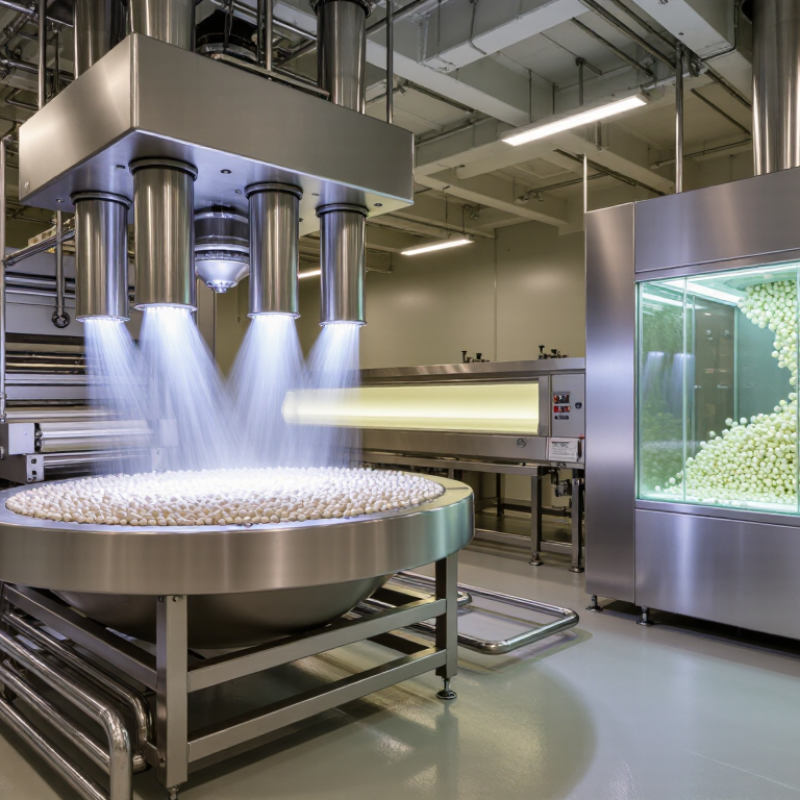
A film coating machine applies a thin, even layer of polymer solution to tablets or other solid doses. Its core functions are spraying, mixing, drying, and controlling the coating environment. A spray gun breaks liquid into fine droplets, while moving product exposes fresh surfaces. Warm, filtered air removes solvent or water before droplets can form sticky patches. Small details matter: nozzle distance, pan speed, and airflow can change the finish.
Common designs use a rotating pan or a fluidized bed. In a pan coater, tablets tumble as spray reaches their surfaces; baffles help lift and turn the load. Perforated pans draw drying air through the tablet bed, supporting efficient heat and moisture transfer. In a fluid-bed system, upward air suspends particles while spray coats them. The choice depends on product shape, batch size, and the coating’s sensitivity to heat or abrasion.
The operating principle is a balance between wetting and drying. If spray arrives too quickly, tablets may stick together or develop rough spots. If drying is excessive, droplets can dry before spreading evenly. Operators monitor inlet and exhaust temperatures, spray rate, atomizing pressure, and product movement. A smooth appearance can be reassuring, but it does not prove uniform coating thickness. That part needs measurement. Real batches also behave less neatly than process diagrams suggest.
The Main Film Coating Machine Types Available in 2026
In 2026, film coating machines generally fall into four groups: perforated-pan coaters, solid-pan coaters, fluid-bed systems, and continuous coaters. Each handles product movement and drying differently. There is no universal winner.
Perforated-pan machines are common for tablet batches. Tablets tumble inside a rotating drum while heated air passes through perforations, helping remove moisture during spraying. Operators can adjust pan speed, spray rate, airflow, and inlet temperature. Solid-pan machines use a non-perforated drum, with drying air directed over the tablet bed. They may suit certain processes, but drying can be less direct. Watch the tablet movement closely. Poor mixing can leave uneven color or rough patches.
Fluid-bed coaters suspend granules or pellets in moving air and spray them as they circulate. They are useful when the product form and process suit fluidization; fragile particles may need careful handling. Continuous coaters process material in a steady flow, making them worth evaluating for repeat, high-volume production. However, setup and process control matter, and frequent product changes can complicate operation. Lab and pilot-scale machines help develop settings, but their results do not always transfer perfectly to production. That gap deserves real testing, not assumptions. Compare product shape, batch size, drying needs, cleaning time, and scale-up evidence before choosing.
Key Criteria for Comparing Film Coating Machine Types
Choosing a film coating machine starts with the product, not the machine’s advertised capacity. Perforated pans suit many tablet batches because controlled airflow passes through the bed during spraying and drying. Solid pans may fit simpler processes, but drying can be less direct. Fluid-bed systems can coat pellets or granules, though particle movement and spray settings need close evaluation. Match the machine to product shape, batch size, coating target, and material sensitivity.
Compare how evenly the machine distributes spray, removes moisture, and moves the product. Ask for evidence from trials using similar materials, not just a demonstration with ideal test tablets. Inspect nozzle access, cleaning steps, changeover time, and whether operators can monitor inlet temperature, exhaust conditions, and spray rate. Check scale-up data too. A larger vessel does not automatically reproduce the same coating quality; airflow and bed movement may change. One detail is easy to miss: verify that the smallest intended batch still forms a stable, well-mixed bed.
Tips: Request a small-batch trial and inspect samples from several locations, including the batch edges. Record defects, drying time, and cleaning effort. Then challenge your own assumptions—one promising run is useful, but it is not proof of repeatability.
Choosing the Best Machine Type for Your 2026 Application
Choosing the best film coating machine in 2026 starts with the product and process, not a trend. For tablets, a perforated-pan coater can provide controlled airflow and practical visibility during spraying. A conventional pan may suit simpler batches, but drying and coating uniformity depend heavily on load and operator settings. Fluid-bed systems are often considered for pellets or granules that need gentle, even exposure. No type wins every application.
Tips: Test a representative batch before committing. Check spray pattern, exhaust temperature, cleaning access, and product loss. Ask operators to record actual cycle times, not just target times.
Match machine capacity to realistic batch sizes and available utilities. A large vessel is not automatically more efficient if production runs are small. Review how the system manages inlet air, exhaust, spray rate, and temperature across the intended operating range. These details affect film appearance, drying, and repeatability. Confirm that equipment records support your quality procedures and that routine cleaning can be completed without awkward access points. A neat specification sheet can still mislead; site layout and operator experience matter. Leave room for adjustment, because early trials may expose assumptions that looked sound on paper.

