
What Is the Best Energy Storage System in China? The answer depends on the application, grid conditions, and project budget. A coastal solar farm needs a different solution from a factory facing evening demand peaks. China’s market includes pumped-hydro storage, lithium-ion batteries, flow batteries, and emerging technologies. Each option has practical strengths and weaknesses.
For short-duration projects, lithium iron phosphate batteries often provide strong efficiency, fast response, and competitive costs. They can balance solar output, support microgrids, and reduce peak electricity charges. However, battery temperature, fire protection, degradation, and recycling require careful management. Larger projects may favor pumped-hydro storage because it offers long service life and substantial capacity. Yet, suitable geography, construction time, and environmental approvals can limit its use. Flow batteries appear promising for longer-duration storage, although their commercial scale and economics remain uneven.
Haisheng Chen, chairman of the China Energy Storage Alliance, has stated, “Energy storage is a key technology for the energy transition.” His observation reflects China’s changing power system. Renewable generation can be abundant at noon, while demand rises after sunset. An effective Energy Storage System must connect these two moments safely and economically.
The best choice is not always the cheapest battery. It should match duration, cycling frequency, safety requirements, maintenance capability, and local electricity prices. That sounds simple. It is not. Some project comparisons still overemphasize initial cost and overlook degradation or replacement planning. A reliable evaluation must examine real operating data, supplier experience, warranty terms, and total lifecycle value. This article compares China’s leading storage options through those practical measures.
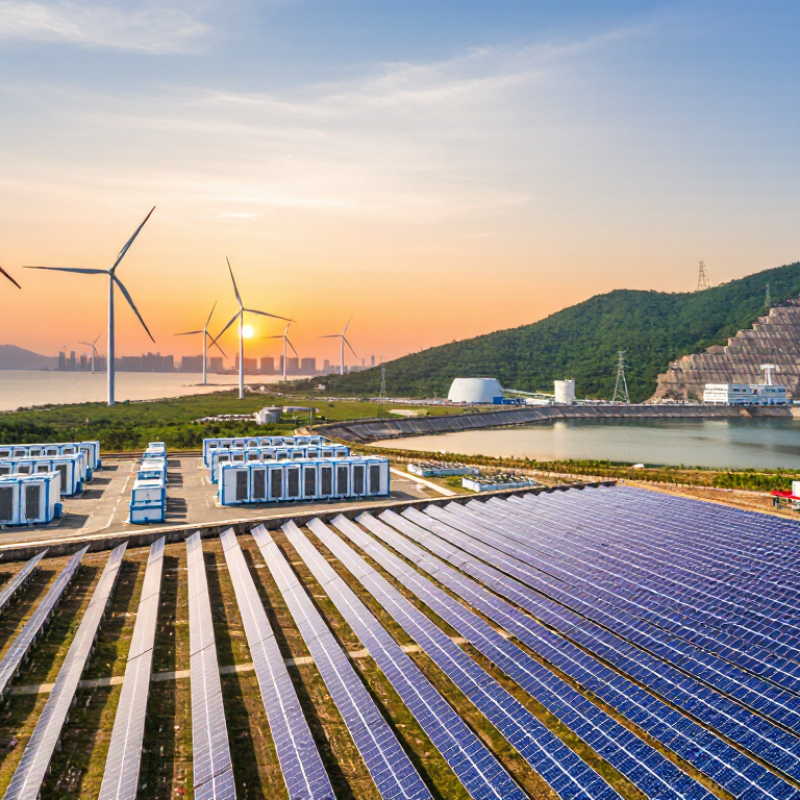
The best energy storage system in China is not simply the one with the largest capacity. It must match local grid conditions, weather, land limits, and daily electricity demand. A system serving a factory may need fast response during afternoon peaks, while a rural project may value stable backup power more. Practical design begins with measured load data, not sales promises.
Safety defines quality. Engineers should examine cell chemistry, fire separation, ventilation, insulation, and emergency controls. A reliable system keeps temperatures balanced across thousands of cells. It should also provide clear monitoring records, fault alarms, and tested shutdown procedures. In hot coastal areas, humidity protection matters. In northern regions, winter performance needs close attention. Small details matter.
Lifecycle value is equally important. Buyers should compare usable capacity, round-trip efficiency, degradation, maintenance access, and replacement costs. A five-year forecast may reveal more than a low purchase price. Recycling plans and responsible material handling also support long-term reliability. No system is perfect. Field data can be incomplete, and predicted cycle life may change under harsh operating conditions. That uncertainty deserves honest discussion. The strongest choice combines verified testing, trained service teams, transparent warranties, and design flexibility for future grid rules.

Long service life is one important measure of value. The chart compares typical full-cycle-life ranges for major energy storage technologies used or developed in China. A system’s best fit also depends on duration, round-trip efficiency, safety, site conditions, and total cost.
Values represent typical industry ranges and can vary with operating temperature, depth of discharge, maintenance, and system design.
China’s energy storage market is no longer a one-technology race. The National Energy Administration reported 73.76 GW of new-type energy storage capacity by the end of 2024. Lithium-ion systems dominated this expansion because they respond quickly, occupy limited land, and suit two-to-four-hour projects. The International Energy Agency identifies lithium-ion as the most commercially mature option for short-duration storage, although its supply chain remains sensitive to mineral prices and recycling capacity.
Pumped hydro remains China’s strongest long-duration technology. It can discharge for many hours, provide grid stability, and operate for decades. However, suitable reservoirs require mountains, water resources, and lengthy construction schedules. Compressed-air storage offers another large-scale pathway. It uses underground or engineered chambers, but project performance depends heavily on geology and system design. The Global Energy Monitor recorded China’s rapidly growing pipeline of compressed-air projects, yet operating experience is still limited.
Flow batteries deserve attention where frequent cycling matters. Their liquid electrolytes can reduce fire risk and allow easier capacity expansion, but current costs remain high. Sodium-ion systems may reduce dependence on lithium and perform better in cold conditions. Their commercial track record is still developing. Real projects often expose an uncomfortable truth: the cheapest battery is not always the best system. Duration, land, safety, grid connection, and local climate can change the answer. Data reports help, but field performance should carry more weight.
| Evaluation Dimension | Pumped-Storage Hydropower | Lithium-Ion Batteries | Flow Batteries | Compressed-Air Energy Storage | Thermal Energy Storage | Hydrogen-Based Storage |
|---|---|---|---|---|---|---|
| Typical discharge duration | 4–12+ hours | 1–4 hours | 4–12 hours | 4–24 hours | 4–15 hours | Hours to several days |
| Round-trip efficiency | 70–85% | 85–95% | 65–85% | 45–70% | 40–75% | 25–45% |
| Response speed | Seconds to minutes | Milliseconds to seconds | Seconds to minutes | Minutes | Seconds to minutes | Minutes to hours |
| Expected service life | 40–80 years | 10–20 years | 15–25 years | 25–40 years | 15–30 years | 10–30 years, depending on equipment |
| Cycle capability | Very high; suitable for daily operation | Approximately 3,000–10,000 cycles | 10,000–20,000+ cycles | High; limited mainly by machinery | High; depends on storage medium | Moderate; depends on conversion equipment |
| Energy and power scaling | Large-scale energy and power are closely linked to site design | Power and energy scale together through additional battery units | Power and energy can be scaled relatively independently | Suitable for large energy capacities; geological conditions are important | Flexible, depending on heat medium and application | Very suitable for seasonal or multi-day energy storage |
| Land and site requirements | High; requires suitable elevation, water and geology | Low to moderate; can be installed near load centers | Moderate; requires tanks and supporting systems | High; suitable caverns or storage vessels may be needed | Moderate; depends on heat demand and insulation | Moderate to high; requires production, storage and reconversion facilities |
| Safety considerations | Mature civil and operational safety practices | Requires thermal management, fire prevention and battery monitoring | Generally low fire risk; electrolyte management is required | Requires pressure, cavern integrity and air-quality management | Requires control of high temperatures and heat-transfer materials | Hydrogen leakage, ignition and high-pressure risks require strict controls |
| Environmental profile | Low operating emissions; major ecological impact can occur during construction | Low operating emissions; recycling and material supply chains are important | Low operating emissions; electrolyte treatment and recycling are required | Low operating emissions; site geology and construction impacts matter | Potentially low emissions, especially when using surplus renewable heat | Very low emissions when produced with renewable electricity; efficiency is lower |
| Best application in China | Bulk balancing, peak shifting and grid stability | Fast frequency response, renewable integration and short-duration peak shaving | Longer-duration renewable integration and frequent cycling | Large-scale, multi-hour storage where suitable geology is available | Industrial heat, district heating, solar-thermal and combined heat-and-power systems | Seasonal storage, industrial feedstock and hard-to-electrify sectors |
| Overall suitability | Best for proven, long-life bulk storage | Best all-round choice for short-duration flexibility | Strong option for durable long-duration cycling | Promising for large-scale long-duration storage | Best when electricity and useful heat can be integrated | Best for seasonal storage and cross-sector energy use |
Note: Performance ranges are indicative engineering values. Actual results depend on project design, operating conditions, resource availability, market rules and the local grid.
China’s best energy storage system depends on the application, not a simple ranking. The National Energy Administration reported 73.76 GW of new-type storage capacity by the end of 2024. Average duration was about 2.3 hours, showing China’s strong focus on short-duration flexibility.
Lithium-ion batteries suit solar shifting, peak shaving, frequency control, and urban backup power. They respond quickly, but heat management, degradation, and fire safety require careful engineering.
Pumped hydro fits large, daily cycling projects near suitable mountains and reservoirs. It offers long service life, yet construction can take years.
Compressed-air storage may support multi-hour grid balancing where underground geology is favorable.
Flow batteries suit longer-duration projects with frequent cycling, although their energy density remains lower.
Thermal storage can serve industrial heat, district heating, and concentrated solar applications more efficiently than electricity storage.
Tips:
Match storage duration to the load profile. Measure round-trip efficiency, land, water, safety systems, and replacement costs. Check local grid rules before selecting equipment.
Data definitions differ between reports, so compare project boundaries carefully. A battery that looks cheapest may perform poorly under high temperatures or heavy cycling.
That is an uncomfortable point. In practice, hybrid systems can be stronger than one technology alone, but controls become more complex.
Project owners should test seasonal demand, not only a single day’s data.
Choosing the best energy storage system in China requires more than comparing purchase prices. A low-cost battery may become expensive if installation, cooling, replacement, and maintenance are overlooked.
I would calculate the total cost over its usable life, including electricity losses and capacity decline. Levelized storage cost offers a clearer comparison than the initial quotation.
Safety should be tested under realistic conditions, not only shown in brochures. Review cell quality, battery management controls, thermal monitoring, fire isolation, and emergency shutdown procedures.
Independent testing and documented compliance with recognized standards add credibility. Site design matters too.
A well-built battery can still perform poorly in a crowded room with weak ventilation.
Small details matter.
Efficiency depends on the complete system. Check round-trip efficiency at the intended charge and discharge rate, not just the highest published figure.
A system rated at 95% may deliver less after inverters, cables, cooling, and standby power are included. Lifespan should be judged by cycle count, operating temperature, depth of discharge, and remaining capacity after warranty conditions.
Ten years sounds convincing. It may not reflect daily stress in a hot installation.
I once saw a capacity forecast that ignored seasonal heat, which made the estimate look better than reality. That mistake is easy to repeat.
Reliable evaluation needs measured field data, transparent assumptions, and regular performance reviews.
Selecting the right energy storage system in China starts with the project’s operating reality, not its advertised capacity. The China Energy Storage Alliance reported about 21.5 GW of new energy storage installations in 2023. The market is expanding quickly. However, larger capacity does not automatically mean better value.
Match the system to the load profile. A factory needing two-hour peak shaving requires different equipment from a solar project providing evening power. Check usable energy, round-trip efficiency, response time, and degradation under local temperatures.
In coastal areas, humidity protection matters. In northern regions, low-temperature charging deserves close attention. Lithium iron phosphate systems often suit stationary projects because of their thermal stability and cycle performance. Still, chemistry alone cannot guarantee safety.
Review the battery management system, thermal monitoring, fire protection, and emergency isolation design. Confirm testing against applicable Chinese standards, including GB/T requirements, before comparing prices. The International Energy Agency noted that China added nearly 20 GW of battery storage in 2023, increasing pressure on suppliers and installers. That growth can shorten delivery times, but quality control may vary.
I would request third-party test records, warranty exclusions, and five-year degradation data. Ask who responds at 2 a.m. during an alarm.
A low upfront price can hide replacement costs. Sometimes, the cheaper system wins. Sometimes, it simply postpones the bill.
Please fill out this form and we will get an order or estimate ready for you. Please give us as much detail as you can for us to get started, and we will contact you to finsh the work order.