What Is an Aluminum Extrusion Die and How Does It Work?
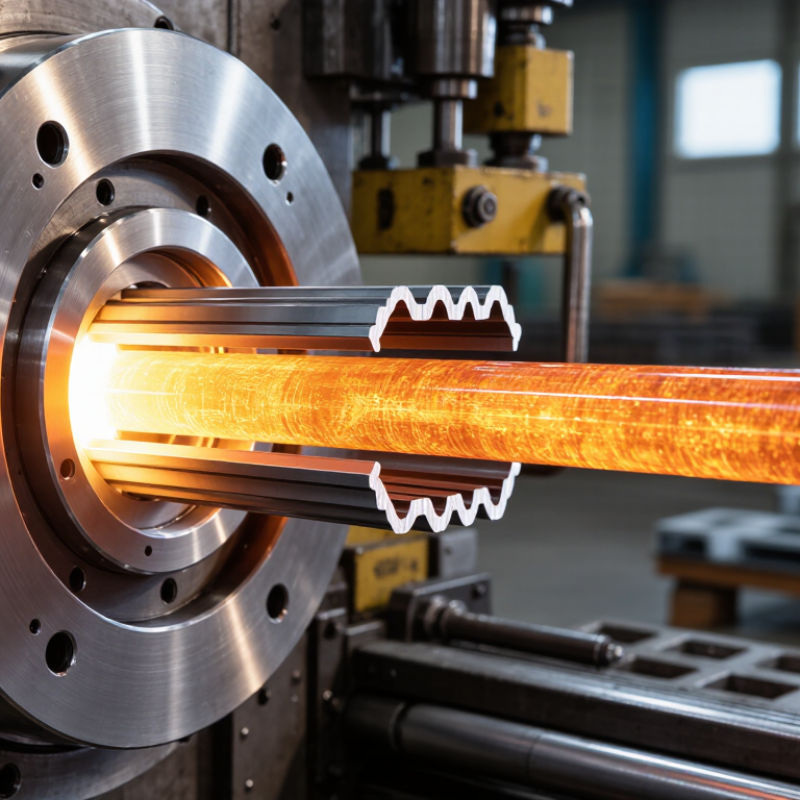
An aluminum profile begins as a heated billet and a carefully engineered opening. That opening belongs to the Aluminum Extrusion Die, a hardened-steel tool that guides softened metal into a precise cross-section. Pressure forces the billet through the die, while its bearing surfaces help regulate flow and profile dimensions. The metal emerges hot, continuous, and recognizable—perhaps as a window frame, heat sink, or structural rail. Small design choices matter. Uneven flow can cause twists, surface marks, or dimensional variation.
The International Aluminium Institute’s 2021 report, Aluminium for Climate, projects global aluminium demand rising from 86.2 million tonnes in 2020 to 119.5 million tonnes by 2030. That growth makes reliable tooling more important, though demand forecasts do not guarantee success for any single product. In his technical work, extrusion authority Thomas Sheppard emphasizes a practical principle: die design must manage metal flow as well as define the final shape. A useful reminder.
A solid die is not simply a hole in steel. Its bearing lengths, ports, and weld chambers are designed around the alloy, profile, press, and production goals. For hollow sections, metal streams divide and rejoin inside the tool. That hidden process can surprise newcomers. Even experienced teams may need trials and adjustments, because real billets and presses do not behave perfectly. This introduction explains what the die contains, how metal moves through it, and why thoughtful design affects profile quality, production efficiency, and tool life.
Definition and Purpose of an Aluminum Extrusion Die
An aluminum Extrusion Die is a hardened steel tool with a shaped opening, called a profile or bearing. A press forces a heated aluminum billet through this opening, and the metal emerges with a matching cross-section. The die does not simply stamp a shape. Its internal passages and contact surfaces guide how the softened metal flows.
Its purpose is to make long, consistent profiles such as window frames, channels, and heat-sink fins. Die design affects wall thickness, corners, surface finish, and how evenly the profile exits the press. For example, a thin fin may need carefully balanced metal flow; otherwise, it can twist or emerge unevenly. Small changes matter.
A die also has to withstand heat, pressure, and repeated production cycles. Designers consider the alloy, profile dimensions, press capacity, and expected output before choosing its geometry. Complex shapes may require bridges or support features inside the die, which can leave visible weld lines where metal streams rejoin. These lines are often acceptable, but not always. In practice, the first trial may reveal uneven flow, so adjustments are sometimes needed. A drawing alone cannot predict every behavior.
What Is an Aluminum Extrusion Die and How Does It Work?
Typical temperature ranges during aluminum extrusion
An extrusion die is a hardened tool with an opening shaped to produce the desired aluminum profile. A heated billet is pressed through the die, which guides the softened aluminum into that shape. Temperatures vary with alloy, profile, and production conditions; the ranges shown are illustrative typical process ranges, not fixed specifications.
Main Components and Their Functions
An aluminum extrusion die shapes a heated billet as a press forces metal through a formed opening. Its components work together to control flow, profile shape, and surface quality. The die’s bearing land—the narrow surface around the opening—sets resistance and helps balance metal speed across the profile. A thick section may need a longer bearing than a thin wall. Small differences matter.
The die assembly may include a die plate, mandrel, and backer. The plate forms the outer profile; a mandrel creates hollow spaces, while the backer supports the die against press loads. For hollow sections, metal flows around bridges and rejoins in a welding chamber. Heat, pressure, and clean contact help form those seams.
The International Aluminium Institute reported 70.8 million tonnes of global primary aluminium production in 2023. That figure is not an extrusion total, but it illustrates the scale of aluminium supply—and why stable tooling matters. (Source: International Aluminium Institute, Global Primary Aluminium Production, 2023.)
Even experienced die designers can misjudge flow on a complex shape. Trial runs reveal what drawings miss.
Tips: Inspect bearings for wear, keep the die at a controlled temperature, and check profile dimensions after start-up. Record changes; a small adjustment can shift wall thickness.
Preparing the Billet and Die for Extrusion
Before extrusion, the billet and die must be clean, correctly heated, and matched to the alloy. Aluminum Extruders Council process guidance places common billet temperatures around 400–500°C, though the suitable setting depends on alloy, profile shape, and press speed. Too cool, and metal may resist flow or leave surface defects. Too hot, and the profile can tear or lose dimensional control. The billet should be heated evenly; a cold core can behave differently from a hot outer skin. Small differences matter.
The die needs its own controlled preheat, often near the billet’s working temperature, according to the same industry guidance. Technicians inspect the bearing surfaces and openings for damage, residue, or blocked passages before loading it into the press. Even a tiny nick can mark a long run of extrusions. The International Aluminium Institute’s Aluminium Sector Greenhouse Gas Pathways to 2050 report also highlights the sector’s significant energy demands, making stable heating and reduced scrap practical priorities. Temperature readings help, but they do not tell the whole story. In practice, operators also watch metal flow, press load, and the first few metres of profile. A neat setup can still need adjustment. That part is easy to underestimate.
How Metal Flows Through the Die
Inside an aluminum extrusion press, a heated billet is pushed through a steel die by a powerful ram. The die opening shapes the metal, but the flow is not always even. Aluminum moves more easily through some areas than others, depending on temperature, pressure, and the die’s design. A thin section may fill quickly while a thick section lags behind.
The bearing land, a narrow surface around the die opening, helps regulate speed and final dimensions. Longer bearing areas generally slow the metal; shorter ones allow faster flow. For hollow profiles, metal streams may split around supports, then meet in a welding chamber under pressure. The seams can become strong as the hot metal bonds. Small changes in die geometry can alter the result, so manufacturers inspect profiles and adjust tooling when needed. In practice, the flow is rarely perfect on the first try.
Tips: Keep billet temperature consistent, and check for twists or uneven wall thickness along the profile. A quick glance can miss subtle variation.
Metal flow also responds to press speed and friction. If one edge exits faster, the profile may bend or distort as it cools. Die makers balance these forces through testing and careful measurement. It is a practical process, not guesswork, though some adjustments still require patience.
Factors That Affect Extrusion Quality and Die Performance
What Is an Aluminum Extrusion Die and How Does It Work?
Factors That Affect Extrusion Quality and Die Performance
An extrusion die shapes heated aluminum as a press forces the billet through its opening. Quality depends on alloy, billet temperature, press speed, and die design. A temperature mismatch can make metal flow unevenly, leaving thin walls, rough surfaces, or twisted profiles. ASM Handbook, Volume 14A, describes hot extrusion as a process where temperature and deformation conditions influence metal flow and product quality. Small changes matter.
Die performance also depends on bearing length, which controls how quickly metal exits different parts of the opening. Uneven flow can create surface streaks or dimensions that drift along a long profile. Die wear and press alignment add further variation. The Aluminum Design Manual lists aluminum’s elastic modulus at about 69 GPa; although this is a material property, it helps explain why thin sections can flex under load or during cooling. A die that works well for one alloy or shape may need adjustment for another.
Tips: Track billet temperature, press speed, and profile dimensions together. Inspect die bearings for wear, especially when defects recur in the same location. Keep records. Real production conditions can still surprise you, so treat each setup as a starting point, not a guarantee.

