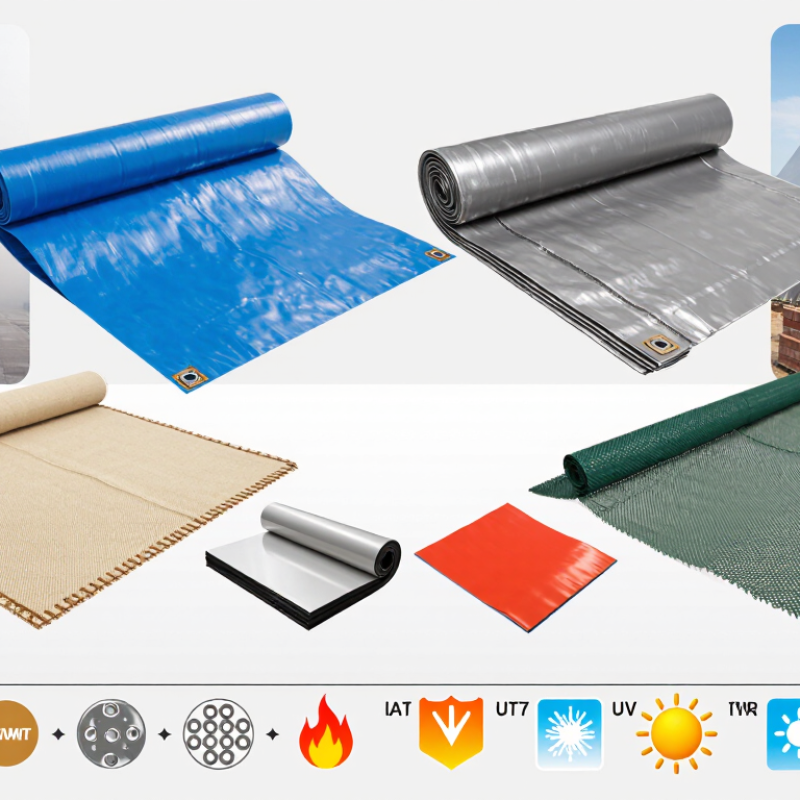
| PE Tarpaulin | Woven polyethylene fabric with laminated PE coatings | 70–250 g/m² | Water-resistant, lightweight, economical, easy to fold, and available in many colors | Temporary covers, agricultural storage, construction materials, truck loads, and outdoor protection | Check fabric density, coating thickness, edge reinforcement, eyelet spacing, and UV treatment |
| PVC-Coated Tarpaulin | Polyester scrim coated with polyvinyl chloride | 300–1,000 g/m² | High tensile strength, strong tear resistance, excellent waterproofing, and good weldability | Truck curtains, industrial covers, warehouses, sports shelters, and long-term outdoor use | Heavier than PE; buyers should compare coating thickness, temperature flexibility, and seam strength |
| Canvas Tarpaulin | Cotton, polyester, or cotton-polyester woven fabric | 280–600 g/m² | Breathable, abrasion-resistant, durable, and less likely to trap condensation than fully coated sheets | Equipment covers, furniture protection, workshops, transportation, and storage requiring ventilation | Water resistance depends on treatment; natural cotton may require more maintenance and can absorb moisture |
| Mesh Tarpaulin | Woven polyethylene, PVC-coated polyester, or high-density synthetic mesh | 90–450 g/m² | Allows airflow, reduces wind load, provides shade, and helps control dust and debris | Scaffolding, fencing, shade structures, truck side curtains, and agricultural applications | Select mesh openness according to the required balance between airflow, visibility, shade, and containment |
| Silicone-Coated Tarpaulin | Technical woven fabric coated with silicone | 30–200 g/m² | Very lightweight, flexible, water-resistant, heat-tolerant, and suitable for compact packing | Outdoor gear, emergency shelters, lightweight covers, and applications where low weight is important | Usually costs more than basic PE; evaluate coating adhesion, fabric strength, and repair compatibility |
| Fire-Retardant Tarpaulin | PVC-coated polyester or treated synthetic fabric | 350–900 g/m² | Designed to slow flame spread and may meet specified fire-performance requirements | Event structures, industrial partitions, welding screens, temporary buildings, and public-use areas | Request test reports for the destination market because fire classifications and test methods differ by region |
| Insulated Tarpaulin | Multi-layer fabric with foam, foil, or thermal insulation core | 500–1,500 g/m² | Reduces heat transfer, improves temperature stability, and can provide light and moisture protection | Cold-chain support, temporary partitions, industrial equipment, and temperature-sensitive storage | Compare thermal resistance, total thickness, foldability, condensation control, and cleaning requirements |
| Truck and Trailer Tarpaulin | PVC-coated polyester or heavy-duty PE fabric | 450–700 g/m² | High tensile strength, waterproof construction, abrasion resistance, and compatibility with tensioning systems | Cargo protection for flatbed trucks, trailers, rail transport, and logistics operations | Confirm finished dimensions, hem construction, buckle or eyelet layout, welding quality, and load conditions |
| Agricultural Tarpaulin | UV-stabilized PE, woven PP, or coated synthetic fabric | 90–250 g/m² | Weather protection, UV resistance, flexible handling, and suitability for repeated seasonal use | Hay and grain covers, silage protection, machinery, greenhouse support, and farm storage | Prioritize UV stability, waterproof seams, drainage design, wind resistance, and resistance to mildew |
| Groundsheet Tarpaulin | Coated polyester, PE, or abrasion-resistant laminated fabric | 100–350 g/m² | Moisture barrier, puncture resistance, easy cleaning, and protection from soil and surface abrasion | Camping, construction sites, temporary flooring, outdoor storage, and landscaping | A reinforced hem and rounded or protected eyelets help prevent tearing during anchoring |