
Choosing the 2026 best Stainless Steel Plates requires more than comparing prices or polished surfaces. The right plate must match its working environment, fabrication method, and expected service life. A kitchen wall, chemical tank, marine deck, and pressure vessel demand different performance. Grade 304 remains widely used for general applications. Grade 316L offers stronger resistance to chlorides and many corrosive chemicals. Duplex 2205 can provide higher strength, but fabrication requires tighter control. Grade 430 may suit dry indoor uses, especially when cost matters.
Stainless steel historian and metallurgist Harold M. Cobb stated, “Stainless steel is a family of alloys, not a single material.” That principle shapes this guide. We compare corrosion resistance, tensile strength, thickness tolerance, surface finish, weldability, and traceable certification. ASTM and EN references can support reliable comparisons. Mill test certificates, heat numbers, and independent inspection reports also matter. A bright finish may look impressive. It does not prove superior performance.
Real purchasing experience reveals an uncomfortable truth. Some buyers choose a plate by grade alone, then regret ignoring surface damage, poor flatness, or unsuitable welding conditions. No ranking is perfect. Service conditions change. Supplier quality can vary between batches. Even accurate technical data needs careful interpretation. This guide therefore examines the leading Stainless Steel Plates for 2026 through practical evidence, not marketing claims. It also identifies compromises, because the strongest option may not be the most economical or easiest to fabricate.
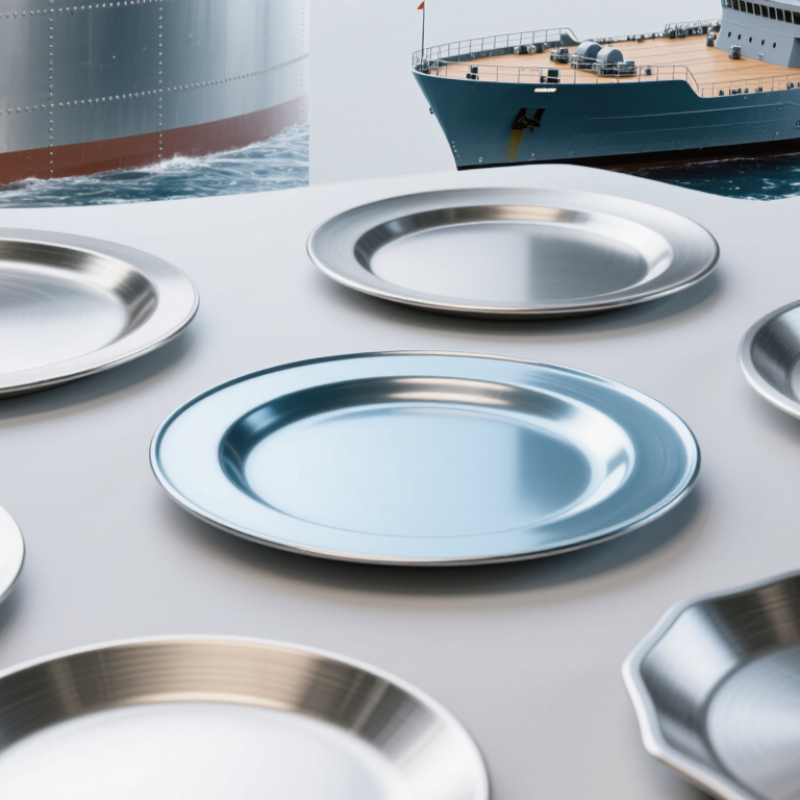
A stainless steel plate stands out in 2026 when its performance matches its stated specification. Grade selection remains important, but it is only one part of the decision. A reliable plate should show consistent thickness, clean edges, and a uniform surface finish. In practical workshop checks, small variations can affect welding, forming, and installation. Ask for material test certificates, heat numbers, and inspection records. These details support traceability and reduce costly surprises.
Corrosion resistance also depends on the environment. A plate used near saltwater needs different protection from one installed in a dry indoor space. Surface cleanliness matters. Trapped iron particles, rough grinding marks, or poor storage can create early staining. I have seen attractive plates fail because handling was careless. Appearance alone is not proof of quality. That lesson still deserves attention.

The best stainless steel plate depends on exposure, strength, fabrication, and budget. No grade wins everywhere. Grade 304 remains a practical choice for food equipment, kitchen panels, tanks, and indoor structures. It contains about 18% chromium and 8% nickel, providing reliable corrosion resistance in ordinary environments. Grade 316L performs better near saltwater, chlorides, and chemical processing areas. Its molybdenum content improves resistance to pitting corrosion. The International Stainless Steel Forum reported 58.4 million tonnes of global stainless crude steel production in 2023. That scale reflects continuing demand across construction, transport, energy, and manufacturing.
Grade 430 suits decorative panels, appliances, and dry indoor applications. It costs less than many nickel-bearing grades, but it needs careful exposure control. Grade 410 offers higher hardness for wear-resistant parts, although its corrosion resistance is lower. Duplex 2205 provides high strength and strong chloride resistance for bridges, pressure equipment, and marine structures. The World Steel Association recorded approximately 1.88 billion tonnes of global crude steel production in 2024, showing the wider market’s enormous material choice. Still, plate selection requires more than market popularity. Welding, forming, surface finish, thickness, and inspection records can change the result.
Tips: Confirm the mill certificate, heat number, thickness tolerance, and corrosion environment before ordering. Ask for ASTM or EN compliance when specifications require it. A bright surface can look excellent while hiding poor grade selection. Test representative samples when conditions are severe. Small mistakes become expensive on large fabricated assemblies.
Which Are the 2026 Best Stainless Steel Plates?
How to Compare Strength, Corrosion Resistance, and Surface Finish
The best stainless steel plate depends on its working environment, not its sales label. Check yield strength, tensile strength, thickness, and forming needs together. A strong plate may resist bending, yet become difficult to cut or weld. Ask for mill certificates, and verify the stated grade with traceable test results. A caliper can also reveal thickness variation across the sheet.
Corrosion resistance needs practical judgment. Chlorides, moisture, heat, and trapped dirt can cause pitting, especially around welds and edges. Grades containing molybdenum generally perform better in chloride-rich environments. Still, no grade is automatically corrosion-proof. Surface contamination from carbon steel tools can create misleading rust marks. Clean samples carefully before judging them. Laboratory testing helps, but one salt-spray result cannot represent every service condition.
Surface finish affects appearance, cleaning, and long-term performance. A 2B finish suits many industrial applications, while brushed surfaces can hide light scratches. Polished plates look impressive, but fine marks often become obvious under strong lighting. Roughness readings provide useful evidence, although visual inspection remains important. I would compare samples under the same light and viewing angle. My comparison is not perfect; handling, packaging, and storage can alter the surface before installation. Small details matter.
Which Are the 2026 Best Stainless Steel Plates?
The best stainless steel plate depends on the working environment, not only the price. For food-processing equipment, 304 stainless steel offers reliable corrosion resistance, cleanability, and easy fabrication. Its smooth No. 4 finish suits tanks, worktables, and conveyor components. However, salt exposure can reveal its limits.
Marine structures and chemical-processing equipment often require 316 stainless steel plate. Molybdenum improves resistance to chlorides and certain acids. For dry indoor panels, appliance parts, and decorative applications, 430 plate can be a practical choice. It costs less, but it is less suitable for persistent moisture. Choose carefully.
Heavy engineering projects may benefit from duplex 2205 plate. It combines high strength with strong chloride resistance, reducing weight in some structures. Welding requires controlled procedures and qualified inspection. That detail is easy to overlook. Buyers should verify thickness tolerance, surface condition, heat treatment, and material certificates before production. Independent testing can confirm chemical composition, mechanical properties, and corrosion performance. In my experience, a plate that looks flawless may still fail after cutting or forming. Edge quality matters. So does storage. Keep plates dry, separated from carbon steel, and protected from contamination. No plate is perfect. The right option balances grade, finish, thickness, fabrication method, and service conditions.
Top stainless steel plate options for different industries, compared by representative minimum yield strength.
The chart compares widely used stainless steel plate grades by representative minimum yield strength. 304L is commonly selected for food-processing equipment, 316L for marine and chemical environments, 430 for architectural and indoor applications, 2205 duplex stainless steel for demanding offshore service, and 17-4 PH for high-strength engineering components. Actual performance depends on heat treatment, plate thickness, corrosion conditions, fabrication, and the applicable material standard.
Which Are the 2026 Best Stainless Steel Plates?
Choosing the best stainless steel plate in 2026 starts with the service environment, not the lowest quotation. Check the required grade, thickness tolerance, surface finish, and heat treatment records. The International Stainless Steel Forum reported global crude stainless steel production of about 58.4 million tonnes in 2023. That scale supports broad availability, but it does not guarantee consistent quality. Mill certificates should show chemical composition, mechanical results, heat numbers, and applicable standards such as ASTM A240 or EN 10088. A certificate without traceability is a warning sign.
Corrosion resistance depends on more than chromium content. Chlorides, welding, temperature, and stagnant water can change performance quickly. For coastal equipment, a higher alloy grade may be safer than a basic austenitic grade. For structural use, confirm yield strength and flatness under the project specification. The World Steel Association reported global crude steel production near 1.89 billion tonnes in 2023, showing the market’s enormous capacity. Yet large output can hide uneven inspection practices. I have seen plates look polished while edges carried deep handling marks. Appearance alone is weak evidence.
Tips: Compare test certificates with random thickness measurements. Ask for surface roughness data when hygiene matters. Inspect the plate under angled light. Leave room for cutting loss and future corrosion allowance. Do not assume a thicker plate fixes poor material selection. That shortcut often fails. Recheck weldability with the fabricator before ordering.
What to Check Before Choosing a Stainless Steel Plate in 2026
| Grade | Typical Chemical Composition wt.% | Density g/cm³ | Minimum Yield Strength MPa, annealed | Minimum Tensile Strength MPa, annealed | Magnetic Behavior | Corrosion Resistance | Weldability | Best-Fit Applications | Key Checks Before Selection |
|---|---|---|---|---|---|---|---|---|---|
| 304 / 304L | Cr 18–20; Ni 8–10.5; C ≤0.08 for 304 and ≤0.03 for 304L | Approx. 8.0 | 205 | 515 | Generally non-magnetic when annealed; may become slightly magnetic after cold working | Excellent general atmospheric and food-processing resistance; limited resistance to chlorides | Excellent; 304L is preferred for welded sections requiring reduced sensitization risk | Kitchen equipment, tanks, architectural panels, food processing, general fabrication | Check chloride exposure, weld heat input, surface finish, plate thickness, and forming requirements |
| 316 / 316L | Cr 16–18; Ni 10–14; Mo 2–3; C ≤0.08 for 316 and ≤0.03 for 316L | Approx. 8.0 | 170 | 485 | Generally non-magnetic when annealed; may become slightly magnetic after cold working | Higher pitting and crevice-corrosion resistance than 304 due to molybdenum | Excellent; 316L is preferred for welded equipment and corrosive service | Marine environments, pharmaceutical equipment, chemical processing, desalination, medical equipment | Verify chloride concentration, temperature, crevice conditions, weld procedure, and required corrosion allowance |
| 430 | Cr 16–18; Ni typically ≤0.75; C ≤0.12 | Approx. 7.7 | 205 | 450 | Magnetic | Good in mild atmospheric and indoor environments; lower chloride resistance than austenitic grades | Fair to good; requires greater control than 304 or 316 to reduce weld embrittlement and distortion | Appliance panels, automotive trim, indoor architectural work, exhaust components, decorative panels | Check magnetic requirements, forming radius, weld design, humidity, and exposure to salt or chemicals |
| 2205 Duplex | Cr 22–23; Ni 4.5–6.5; Mo 3–3.5; N 0.14–0.20; C ≤0.03 | Approx. 7.8 | 450 | 620 | Low to moderately magnetic because of its ferritic-austenitic structure | Very high resistance to chloride stress-corrosion cracking, pitting, and crevice corrosion | Good, but heat input and interpass temperature must be controlled to preserve phase balance | Pressure vessels, offshore structures, chemical tanks, heat exchangers, desalination equipment | Confirm design code, phase balance, heat treatment, weld qualification, temperature range, and plate certification |
Please fill out this form and we will get an order or estimate ready for you. Please give us as much detail as you can for us to get started, and we will contact you to finsh the work order.